How Much Does a House in Greece Cost? 2026 Prices by Region and Size
How much does a house in Greece cost? In 2026 the answer ranges from under €600 per square metre in parts of northern Greece to over €7,000 in Vouliagmeni on the Athens Riviera. Average asking prices rose 6.1% across Greece in the year to Q2 2026. This guide brings together the latest data by region and by home size, shows what common budgets buy, where cheap houses are, and which costs come on top of the price.
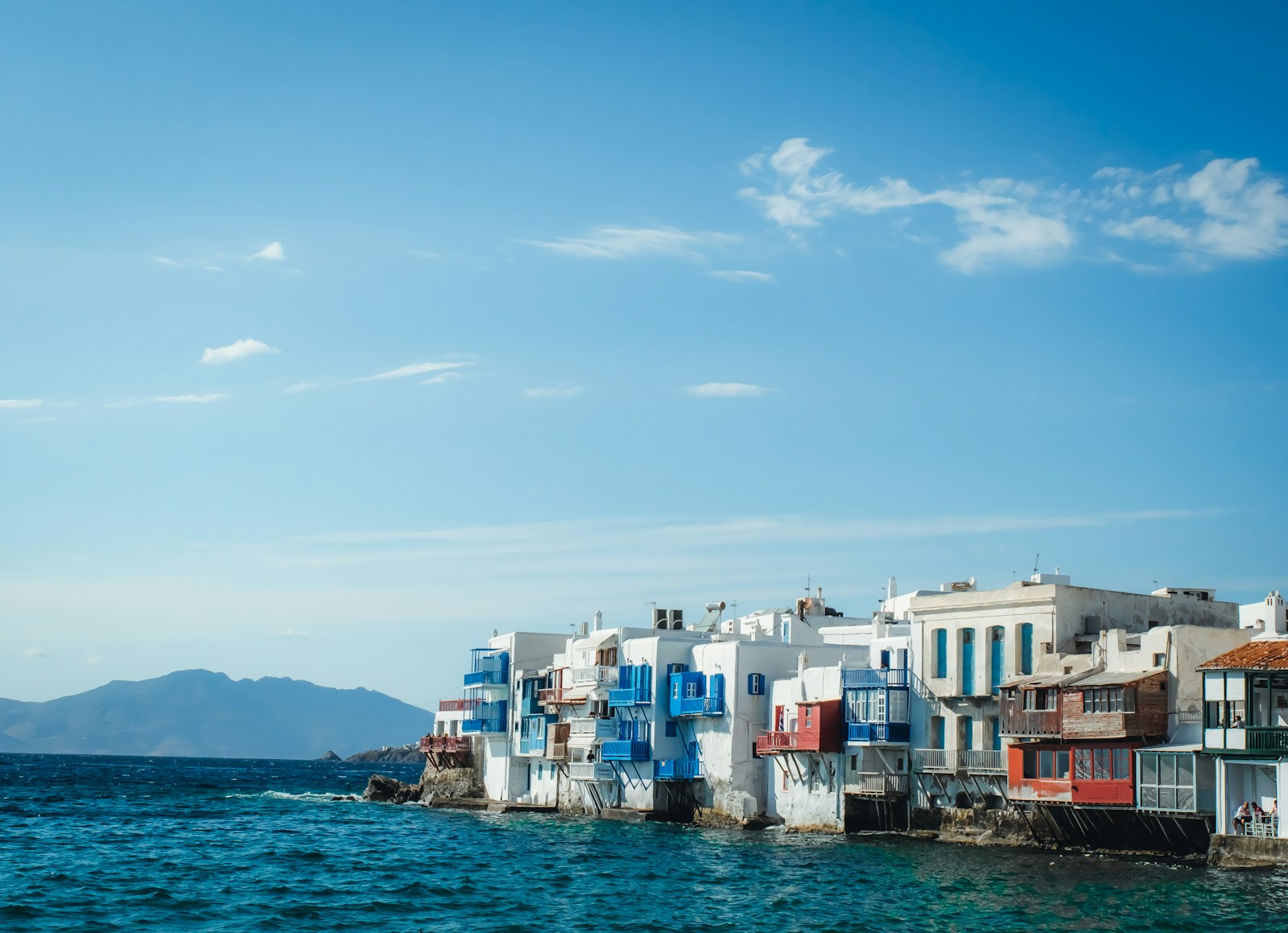
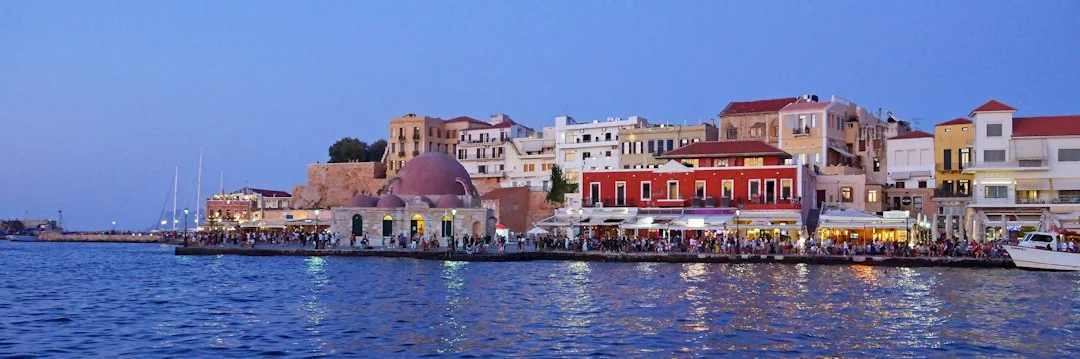
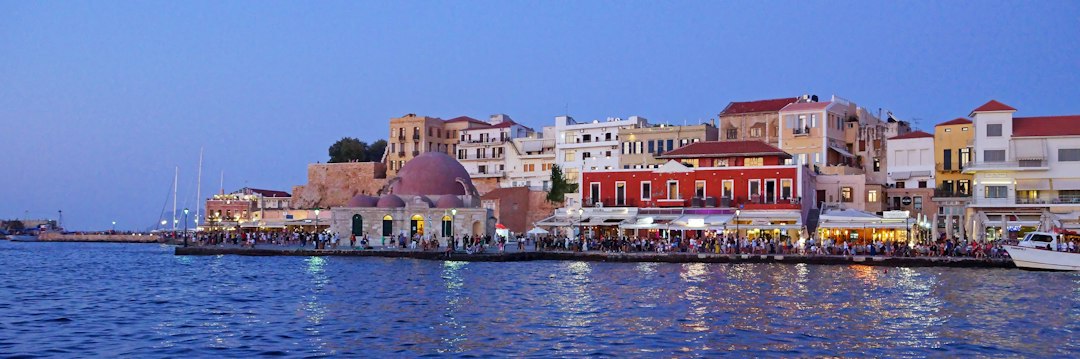
Photo: Nikos Kavvadas / Unsplash
Key facts
National asking-price growth
+6.1% in the year to Q2 2026 (Spitogatos)
Most expensive area
Vouliagmeni, €7,364/m² asking
Cheapest regional unit
Kastoria, €585/m² asking
City of Athens, flats up to 80 m² (Q3 2026)
€3,087/m² (xe.gr)
Thessaloniki, Kalamaria
€3,175/m² (Q2 2026)
Extra costs
Transfer tax of generally 3%, plus notary, Cadastre and lawyer fees
Average asking prices; final sale prices can be lower.
Contents
How much does a house in Greece cost on average in 2026?
The Spitogatos price index, based on asking prices in advertisements, rose 6.1% nationally in the year to Q2 2026, against 9.7% a year earlier. Attica rose 5.3% and Thessaloniki 7.7% (Spitogatos via Athens News). Official Bank of Greece data, based on valuations, showed apartment prices up 7.8% in 2025. Growth is slowing, but prices are still rising.
Prices by region
Area
Average asking price (Q2 2026)
Athens southern suburbs
€4,231/m²
Cyclades
€4,063/m²
Athens northern suburbs
€3,519/m²
Lefkada (regional unit)
€3,302/m²
Kalamaria, Thessaloniki
€3,175/m²
Chania (regional unit)
€3,102/m²
Thessaloniki centre
€3,056/m²
Karditsa
€741/m²
Kilkis
€707/m²
Kozani
€682/m²
Florina
€673/m²
Kastoria
€585/m²
Source: Spitogatos price index, Q2 2026, via Athens News.
Athens prices by home size
Within a city, price per square metre also depends on size. xe.gr publishes asking prices by size band:
Area
Up to 80 m²
81–120 m²
Over 120 m²
City of Athens
€3,087
€2,874
€3,086
Piraeus
€3,245
€2,931
€2,573
Marousi
€4,028
€4,093
€3,625
Kifisia
€4,819
€4,439
€4,434
Glyfada
€5,498
€5,432
€6,682
Average asking price per m², xe.gr, Q3 2026.
How much does a house cost in Greece by size?
100 m² home in Kastoria at the regional average: about €58,500.
100 m² home in Chania: about €310,000.
100 m² flat in the City of Athens (81–120 m² band): about €287,000.
100 m² flat in Marousi: about €409,000.
100 m² home in Vouliagmeni: about €736,000.
These are averages multiplied by size, not valuations. Condition, age, view, floor and land can move a price a long way.
Where to buy a house in Greece cheaply
The cheapest regional units in Q2 2026 were in western Macedonia and Thessaly: Kastoria, Florina, Kozani, Kilkis and Karditsa. Within Attica, the lowest averages were in Varnavas (€1,407/m²), Agia Varvara (€1,500/m²), Perama (€1,688/m²), and Patisia and Acharnes (€1,700/m²). Cheap houses often need renovation, and rural homes need checks on permits, boundaries, water and access. For islands, see the cheapest Greek islands to buy property.
Costs on top of the price
Transfer tax: generally 3% of the taxable value on resale homes (AADE).
VAT: 24% on some new builds, unless the developer uses the suspension to 31 December 2026.
Notary, Cadastre and lawyer fees, plus any agent fee.
Engineer’s checks for unlicensed works and condition.
Renovation for older homes, and annual ENFIA, insurance and maintenance.
If you need a Golden Visa, the price floor depends on the zone: €800,000 in Attica, Thessaloniki, Mykonos, Santorini and islands over 3,100 residents, €400,000 elsewhere, with 120 m² of main space, or €250,000 for conversions and listed restorations. See Golden Visa eligible property.
Asking prices versus sale prices
Both Spitogatos and xe.gr report asking prices. Final prices are often lower after negotiation, inspection and valuation, especially for older homes. Bank of Greece indices use valuations and move more smoothly. When you make an offer, ask our partner lawyers or a valuer for recent sales of comparable homes nearby.
What affects the price of a house in Greece
Location: the biggest factor, from city centre to island to village.
Age and energy class: newer, energy-efficient homes cost more and have been gaining value faster.
Floor and view: higher floors, sea or Acropolis views add a premium.
Legal status: unlicensed works or Cadastre problems reduce value until fixed.
Land and access: for houses, plot size, road access, water and building rights.
How much does a house cost in Greece compared with rent?
Rents give another view of value. In the City of Athens, xe.gr asking rents for flats up to 80 m² averaged €13.13/m² a month in Q3 2026, against asking prices of €3,087/m², a gross yield of about 5.1%. In Glyfada the yield is lower, about 3.8%, because prices are higher relative to rents. Higher-yield areas tend to be cheaper, denser districts.
Buying cheaply: what to watch
Very cheap houses in Greece are often in remote villages, need major renovation or have legal problems such as missing permits or unclear boundaries. Budget for an engineer’s survey, a title check by our partner lawyers and realistic renovation costs, and check access to water, electricity and roads. A cheap house can still be a good buy if the total cost, including work, makes sense for how you will use it.
It depends on location. Spitogatos asking prices in Q2 2026 ranged from €585/m² in Kastoria to €4,231/m² in the southern suburbs of Athens and €7,364/m² in Vouliagmeni. A 100 m² home therefore costs from under €60,000 in parts of northern Greece to over €700,000 on the Athens Riviera.
Where can I buy a cheap house in Greece?
The cheapest regional units in Q2 2026 were Kastoria, Florina, Kozani, Kilkis and Karditsa, all under €750/m² on average. In Attica, Varnavas, Agia Varvara and Perama had the lowest averages. Cheap homes often need renovation, so budget for an engineer’s survey and building work before you buy.
How much is a house in Athens?
In Q3 2026, xe.gr asking prices in the City of Athens averaged €3,087/m² for homes up to 80 m² and €2,874/m² for 81–120 m². Kifisia, Kolonaki and the Riviera cost much more: Vouliagmeni averaged €7,364/m² and Glyfada €5,669/m² in Spitogatos data for Q2 2026.
Are house prices in Greece still rising?
Yes, but more slowly. National asking prices rose 6.1% in the year to Q2 2026, against 9.7% a year earlier, and Attica rose 5.3%. Bank of Greece data showed apartment prices up 7.8% in 2025 after 9.1% in 2024. Engel & Völkers expects 4–7% growth in 2026.
What costs are added to the price of a house in Greece?
Buyers usually pay transfer tax of about 3% of the taxable value on resale homes, or VAT on some new builds, plus notary, Cadastre and lawyer fees, an engineer’s checks and any agent fee. After buying, owners pay ENFIA property tax each year, insurance and maintenance.
Can foreigners buy houses in Greece?
Yes. Citizens of any country can buy houses in Greece. EU citizens buy on the same terms as Greeks, and non-EU buyers need prior permission only in designated border areas, which include some islands and parts of northern Greece. You need a Greek tax number and, in practice, a Greek bank account.
Last checked: October 2026. General information only, checked against the sources listed above. It is not legal, tax or immigration advice, and rules change. Before you commit, ask our partner lawyers to confirm your own case, and a tax adviser for tax questions. AtticaKey may receive a referral fee from its partner lawyers; you are free to use your own lawyer instead.
Free Golden Visa consultation
Tell us what you are looking for and we will reply by email within one working day with eligible properties, the current investment thresholds and the next steps. No obligation.
Greece Golden Visa Real Estate Investment: 2026 Returns, Costs and Strategy
A Greece Golden Visa real estate investment has two jobs: it must qualify for the permit and it should hold its value. The rules shape the investment: one property above the zone threshold, at least 120 m² of main space on the higher routes, no short-term lets, and a replacement purchase before any sale. This guide looks at the numbers in 2026 (price growth, rental yields, costs and tax) and the strategies investors use to balance residence with returns.
Key facts
Golden Visa thresholds
€800,000 / €400,000 single property (120 m²), €250,000 conversion or listed restoration
Apartment price growth
+7.8% in 2025 nationally (Bank of Greece); Athens +5.9% in Q4 2025
Asking-price growth, Greece
+6.1% in the year to Q2 2026 (Spitogatos)
Gross yields, small Athens flats
About 4–5% at average asking prices (xe.gr, Q3 2026)
Rental tax from 2026
15% up to €12,000; 25%, 35%, 45% above
Capital gains tax
Suspended for individuals until 31 December 2026
Yields are our calculation from asking rents and prices; net returns are lower.
Contents
How the rules shape a Greece Golden Visa real estate investment
One property: you cannot spread the threshold across several smaller flats, which concentrates risk.
120 m² of main space: on the €800,000 and €400,000 routes you buy a large home, which suits families and long lets more than holiday rentals.
No short-term platform lets: income must come from long leases or leases to tourism businesses.
Replacement before sale: under the 2026 circular you must buy a qualifying replacement before selling if you want to keep the permit.
Price growth: what the data shows
Greek property has risen strongly since 2018, but growth is slowing. Apartment prices rose 7.8% in 2025 after 9.1% in 2024, and Athens rose 5.9% year on year in Q4 2025, according to Bank of Greece data cited by Engel & Völkers (source). Asking prices nationally were up 6.1% in the year to Q2 2026, against 9.7% a year earlier (Spitogatos). Engel & Völkers forecasts 4–7% nationwide growth for 2026, with energy-efficient homes near new infrastructure expected to outperform.
Rental yields on qualifying homes
Large homes usually earn less rent per square metre than small flats. The table compares asking rents and prices for homes over 120 m², the size most Golden Visa buyers need.
A worked example of Greece Golden Visa real estate investment returns
Take an illustrative 220 m² home in Marousi at the average asking price for large homes, about €800,000. At the average asking rent of €11.61/m², it would let for about €2,550 a month, or €30,650 a year: a gross yield of 3.8%. Rental tax on that income, on the 2026 scale and before any deductions, would be about €7,100 (15% on the first €12,000, 25% on the next €12,000 and 35% on the rest) (Ministry of Finance). After tax, ENFIA, insurance, building charges, maintenance and a month of vacancy, the net yield would be well under 3%.
The example is simplified and ignores deductions and financing; it shows why Golden Visa buyers should not rely on rent alone. Capital growth and the value of residence are usually the main returns.
Costs that affect returns
Purchase: transfer tax of generally 3% on resale homes or VAT on some new builds, plus notary, Cadastre, lawyer and agent fees.
Permit: €2,000 for the main applicant, €150 per adult family member, €16 per card, and health insurance.
Holding: ENFIA (up to 20% off in 2026 for insured homes), insurance, building charges and maintenance.
Exit: capital gains tax for individuals is suspended until 31 December 2026; check the rules at the time you sell.
Investment strategies that work with the rules
Family home in a strong suburb: a large apartment or maisonette in the northern suburbs or Nea Smyrni, let long term to families or used by you.
Riviera premium: a smaller qualifying home near Glyfada or Voula, with lower yield but strong demand linked to Ellinikon.
Central renovation: a 120 m²+ flat in an older Athens building, renovated to a high energy class.
€250,000 conversion: a converted apartment in the centre, let long term, with a lower entry price.
€400,000 zone: a home on the mainland or a smaller island, chosen mainly for use rather than yield.
You can sell at any time, but your permit depends on the property. If you want to keep residence, buy a qualifying replacement first, notify the authority, and then sell, as the 2026 circular requires. Liquidity is best for well-located, energy-efficient homes; Engel & Völkers notes that older homes without energy upgrades are becoming harder to sell.
Risks to weigh
Concentration: one large property carries all the risk.
Liquidity: large homes and older buildings can take longer to sell.
Regulation: Golden Visa rules have changed several times since 2023.
Natural hazards: insure against earthquake, fire and flood; insured homes also got up to 20% off ENFIA in 2026 (AADE).
Currency: if your wealth is in dollars, pounds or other currencies, euro movements affect returns.
Greece Golden Visa real estate investment checklist
Confirm the zone, value and 120 m² main space with our partner lawyers.
Compare asking rents and prices for homes of the same size in the same area.
Model net yield after tax, ENFIA, insurance, charges and vacancy.
Check energy class and renovation costs.
Plan the exit: replacement purchase first if you want to keep the permit.
A Greece Golden Visa real estate investment works best when you would want the home anyway. Buying the right home in the right area, rather than chasing the highest yield, protects both the permit and the capital.
Financing and ownership structure
Most Golden Visa buyers pay cash, but some Greek banks lend to foreigners; see mortgages in Greece and ask our partner lawyers how a loan affects eligibility. The property can be bought in your own name, jointly, or through a company you wholly own, subject to conditions. Each structure has tax and succession consequences, so take advice before you sign.
Is Greek Golden Visa real estate a good investment?
It can be, but returns come mainly from capital growth and the value of residence rather than rent. Greek apartment prices rose 7.8% in 2025, and asking prices were up 6.1% in the year to Q2 2026. Gross yields on large qualifying homes are about 3–5%, and net yields are lower after tax and costs.
What rental yield can I expect on a Golden Visa property?
On xe.gr averages for homes over 120 m² in Q3 2026, gross yields range from about 3.2% in Voula to about 5% in the City of Athens. Net yields are lower after rental tax from 15%, ENFIA, insurance, building charges, maintenance and vacancy. Short-term letting is not allowed for Golden Visa homes.
Can I sell my Golden Visa property?
Yes, but to keep your permit you must first buy a qualifying replacement property, notify the migration authority and then sell the original, under the 2026 circular. If you sell without a replacement, the permit is no longer supported. Capital gains tax for individuals is suspended until 31 December 2026.
Can I rent my Golden Visa property on Airbnb?
No. Properties used for the Golden Visa may not be let short term through digital platforms such as Airbnb. Long-term leases and leases to tourism businesses for professional use are allowed. Rental income is taxed at 15% up to €12,000 a year, with higher bands above that from 2026.
Which areas are best for Golden Visa investment?
There is no single best area. Central Athens offers the highest gross yields on large homes, the northern suburbs and Nea Smyrni offer family demand and space, and the Riviera offers a premium location linked to Ellinikon with lower yields. Energy-efficient homes near metro stations have performed best.
What is the Greek investment visa?
It is the common name for the Golden Visa, a five-year renewable residence permit for non-EU investors. The best known route is a property purchase from €250,000 to €800,000, depending on location and type. Financial routes, such as €500,000 in Greek government bonds or a fixed-term deposit, also exist.
Last checked: October 2026. General information only, checked against the sources listed above. It is not legal, tax or immigration advice, and rules change. Before you commit, ask our partner lawyers to confirm your own case, and a tax adviser for tax questions. AtticaKey may receive a referral fee from its partner lawyers; you are free to use your own lawyer instead.
Free Golden Visa consultation
Tell us what you are looking for and we will reply by email within one working day with eligible properties, the current investment thresholds and the next steps. No obligation.
Greece Golden Visa Properties: Where to Look in Each Zone (2026)
A Greece Golden Visa property is not an ordinary home purchase. Under Law 5100/2024 it must be a single property above the threshold for its zone, with at least 120 m² of main area on the two higher routes, and it cannot be let short term. This guide shows where buyers look in each zone, what the budget buys, how to filter listings and what to check before paying a deposit. For the programme itself, read our guide to Golden Visa property in Greece. To see what is on the market, browse homes for sale, or request a free consultation.
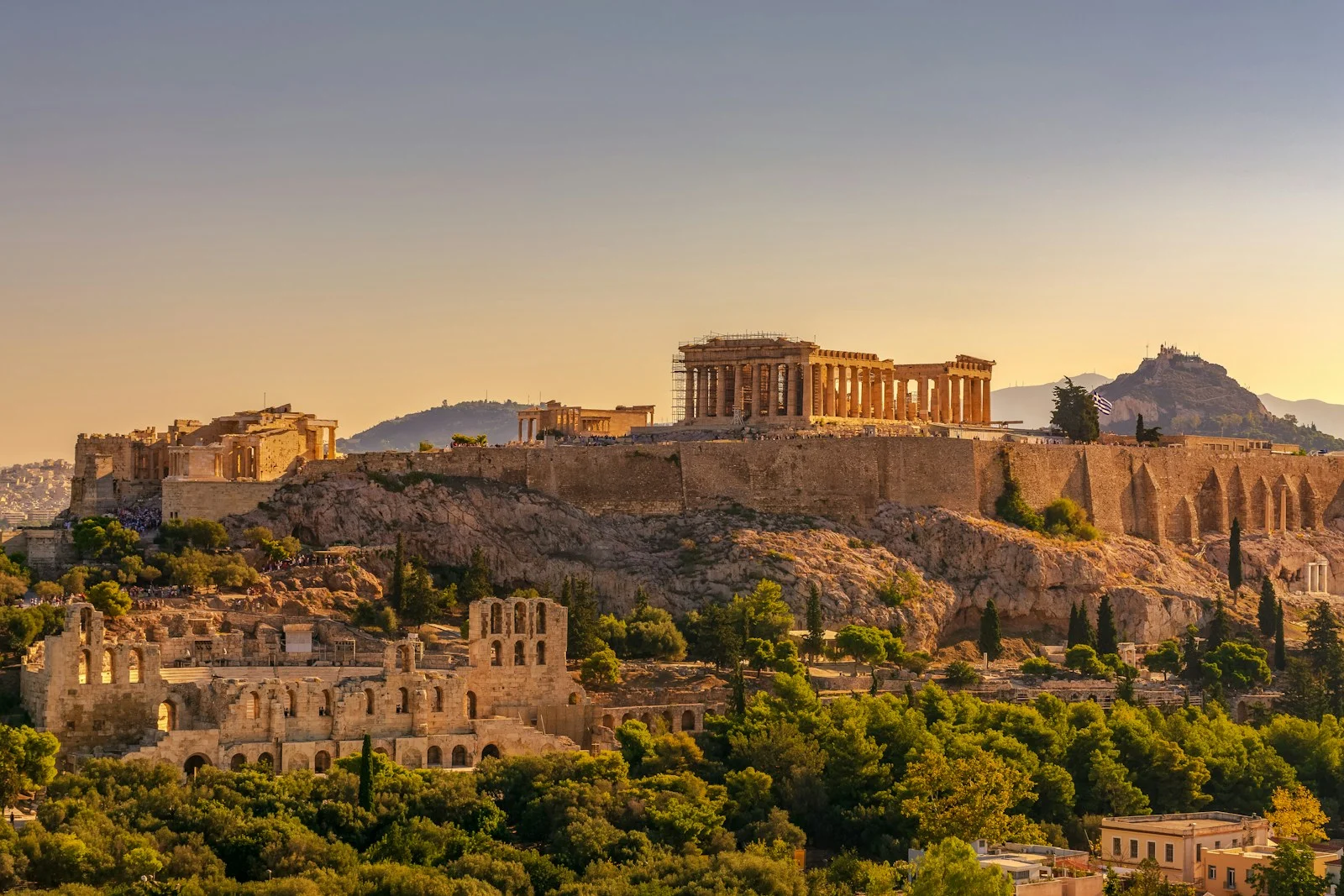
Photo: Harrison Fitts / Unsplash
Key facts
The rules fit in one table: a price threshold set by zone, one qualifying property, 120 m² of main area on the two higher routes, and no short-term letting.
Item
Rule
€800,000 zone
Attica, Thessaloniki, Mykonos, Santorini (Thira), islands with more than 3,100 residents
€400,000 zone
Rest of Greece, including most of the mainland and smaller islands
€250,000 route
Conversion of commercial space to residential use. A listed-building route also exists; confirm its threshold on mitos.gov.gr before relying on it
Size rule
At least 120 m² of main area on the €800,000 and €400,000 routes
Single property
The threshold must be met by one property
Letting
Short-term letting is banned; no holiday-platform income
Permit
Valid for 5 years, renewable; completion deadline of 50 days as listed on mitos.gov.gr
Which Greece Golden Visa property qualifies: the zone map
Three value thresholds apply, depending on where the property is and what it is. Attica, Thessaloniki, Mykonos, Santorini (Thira) and islands with more than 3,100 residents are in the €800,000 zone. The rest of Greece is in the €400,000 zone, and €250,000 applies to converting commercial space to residential use (Law 5100/2024 Art. 64(1); Circular 9/24.09.2024 on migration.gov.gr).
Zone
Where
Minimum value
Main-area rule
€800,000
Attica, Thessaloniki, Mykonos, Santorini (Thira), islands with more than 3,100 residents
€800,000, single property
At least 120 m²
€400,000
Rest of Greece
€400,000, single property
At least 120 m²
€250,000
Conversion of commercial to residential use
€250,000
The 120 m² rule applies to the two higher routes only
Listed buildings
A separate route exists
Confirm on mitos.gov.gr
Confirm on mitos.gov.gr
Ask our partner lawyers to confirm which zone your exact address falls into. The island test depends on the island’s resident population, so an advert’s description of a place as “large island” or “small island” is not enough.
A ministry circular dated 21 April 2026 (Circular 1/21.04.2026) has been summarised by EY Greece. We have only found that secondary summary, not the official text, so this guide does not rely on it.
120 m² and single-property rules
On the €800,000 and €400,000 routes, one property must meet both the price threshold and the 120 m² main-area minimum. The €250,000 conversion route is not subject to the 120 m² rule (Law 5100/2024 Art. 64(1); migration.gov.gr). Because the two tests work together, price alone never settles eligibility.
One property. The threshold must be met by a single property. Do not plan on combining two flats, and ask our partner lawyers before you reserve more than one home.
Main area, not advertised area. Adverts often quote totals that include balconies and common areas. Ask for the official plans and have an engineer or our partner lawyers confirm how the main area is measured.
Parking and storage. Ask our partner lawyers whether spaces sold in the same contract count towards the price. Do not assume they count towards the area.
No short-term letting. Short-term letting is banned on Golden Visa properties, so do not budget for holiday-rental income.
A quick budget test shows why area matters. Divide the zone threshold by the asking price per m² and compare the result with 120 m². At Q3 2026 asking prices for larger homes, €800,000 divided by €6,682/m² in Glyfada gives about 120 m², with no margin. In Voula, €800,000 divided by €6,866/m² gives about 117 m², below the minimum. A result under 120 m² means a qualifying home in that area costs more than the threshold. Asking prices are not sale prices, so treat the result as a first filter only.
How to filter Greece Golden Visa properties
Filter by zone and price first, then confirm area, legal status and use from documents rather than from the advert. Treat any “Golden Visa” label in a listing as a sales description, not a legal confirmation.
Location: inside which zone, and whether the property is in a border area, which affects non-EU/EFTA buyers (see the border-area section below).
Price: at or above the zone threshold for one property.
Main space: at least 120 m² on the official plans, not the advertised total including balconies and common areas.
Legal status: completed, or with an issued building permit, and no unlicensed works.
Use: suitable for long-term living, because holiday-platform letting is not allowed.
Listings rarely state the main-space area. Ask for the plans, the building permit and the title documents before you view, so that you do not spend a trip on a home that cannot qualify.
€800,000 zone: Athens and the Riviera
All of Attica is in the €800,000 zone, so the 120 m² rule decides which areas work. The table shows Q3 2026 asking prices for homes over 120 m², from the Riviera down to central Athens, and the size €800,000 would buy at each price.
Area
Asking price, homes 121 m²+ (Q3 2026)
Approx. size for €800,000
Voula
€6,866/m²
about 117 m²
Glyfada
€6,682/m²
about 120 m²
Elliniko
€6,507/m²
about 123 m²
Alimos
€5,807/m²
about 138 m²
Palaio Faliro
€4,489/m²
about 178 m²
Kifisia
€4,434/m²
about 180 m²
Marousi
€3,625/m²
about 221 m²
Chalandri
€3,558/m²
about 225 m²
Nea Smyrni
€3,380/m²
about 237 m²
City of Athens
€3,086/m²
about 259 m²
Source: xe.gr asking prices, Q3 2026. Indicative arithmetic only. On the Riviera, a qualifying home usually costs more than €800,000. In the northern suburbs, Nea Smyrni and central Athens, the threshold buys a large apartment or maisonette, often with money left over for renovation.
Space first: Marousi, Chalandri, Nea Smyrni and the City of Athens give the most area per euro in the table.
Sea and lifestyle first: Glyfada, Voula and Elliniko sit at the top of the price range, so expect a budget above €800,000 for a qualifying home.
In between: Alimos, Palaio Faliro and Kifisia sit between the two, with roughly 140 to 180 m² at the threshold.
€800,000 zone: Thessaloniki and the large islands
Thessaloniki, Mykonos, Santorini and every island with more than 3,100 residents are also in the €800,000 zone. Examples are Crete, Rhodes, Corfu, Paros and Naxos, but check the island you are considering. Prices vary widely: Spitogatos reported Kalamaria in Thessaloniki at €3,175/m² and Chania on Crete at €3,102/m² in Q2 2026, while the Cyclades averaged €4,063/m² (Spitogatos via Athens News).
At those averages, €800,000 buys around 250 m² in Kalamaria or Chania, and much less on Mykonos or Santorini. On the islands, also check access, water supply, building permits and the legal status of the plot. If the island is near a border, see the border-area section below.
€400,000 zone: mainland and small islands
Outside the €800,000 areas, €400,000 buys a single home of at least 120 m². Buyers look at the Peloponnese coast, Pelion, Halkidiki, the Ionian mainland and smaller islands below the population limit. Our guide to the cheapest Greek islands to buy property shows where island prices are lower.
The price threshold and the 120 m² minimum work together in lower-priced markets. A 120 m² home that sells for well under €400,000 does not qualify, so buyers in those areas usually need a larger house, a villa or a property with more land to reach the threshold. Rural homes need extra checks: plot boundaries, forest maps, access roads, water and permits.
€250,000 route: conversions and listed buildings
The €250,000 threshold applies to converting commercial space to residential use, anywhere in Greece, and the 120 m² rule does not apply. Smaller city apartments in former offices can therefore qualify. The procedure is on the mitos.gov.gr change-of-use page.
Ask for the change-of-use permit, the completion documents and the energy certificate, and confirm that the property will be used as a home. Ask our partner lawyers at what stage of the conversion the property can be used for an application. The same €250,000 minimum applies to a listed building bought for restoration, and a transfer before the restoration is complete is void (Law 5100/2024, Art. 64).
Border areas and islands: permission for non-EU buyers
If the property is in a border area and you are not an EU or EFTA national, you need prior permission before you buy, and a sale made without it is void (Law 1892/1990 Art. 25). The check depends on where the property is, not on its price, so it comes before any deposit. This matters for buyers from the US, UK, UAE, South Africa and other non-EU/EFTA countries.
Border areas include many locations near Greece’s land and sea borders, so an island purchase is more likely to be affected than a purchase in central Athens.
Ask our partner lawyers to check the exact location against the official designation before you reserve.
Ask whether the pre-contract should be conditional on the permission being granted.
Do not assume that an agent’s description of the area settles the question.
What to check before you reserve
Before you reserve, a Greek lawyer (one we work with or one of your choice) should confirm that the property fits the zone, the size rule and the title. Do not pay a deposit until these checks are done or the pre-contract makes them a condition.
A written opinion from our partner lawyers on whether the property fits the route and zone. Eligibility is decided by the Greek authorities.
Title, Cadastre (Ktimatologio) entry, encumbrances and unlicensed works.
The main-space area on the official plans, confirmed by an engineer or our partner lawyers.
Whether the location is a border area that needs permission.
The Energy Performance Certificate.
Whether the price includes VAT (some new builds) or carries transfer tax (resale).
For new builds: the building permit, completion date and payment schedule.
The route runs from agreeing the price to an online permit application, with legal checks before money moves. The order below is the usual sequence; our partner lawyers confirm the order for your property.
Agree the price and sign a pre-contract with a deposit if checks need more time.
If the property is in a border area and you are a non-EU/EFTA buyer, obtain the prior permission.
Get a Greek tax number (AFM) and open a Greek bank account. We help you get your AFM and open a Greek bank account, and our partner lawyers can obtain the AFM and help open an account under a power of attorney.
Pay transfer tax or VAT, then sign the final contract before a notary.
Pay the price through a Greek bank and register the contract with the Cadastre.
Apply online for the permit, give biometrics and receive your card.
If you cannot travel, a power of attorney lets a Greek lawyer act for you in some steps. At the Greek consulate in London the fee is the equivalent of €60 per double-sided sheet, including one certified copy. London signs only for Greek, British and EU citizens, and others must contact the consulate first (Greek Ministry of Foreign Affairs). Other consulates, including those in the US, may differ, so check the one you plan to use.
Costs on top of the price
Budget for taxes, professional fees and permit fees on top of the purchase price. Only the permit fees below are fixed figures; the others vary by property or are agreed with each professional.
Qualifying homes fall into five broad types, and each suits a different buyer. Which one fits depends on the zone, the budget and how you plan to use the home.
Large city apartments of 120 m² or more in central Athens, Kolonaki or Pangrati, often in older buildings that need renovation.
Family apartments and maisonettes in the northern suburbs, such as Marousi, Kifisia and Chalandri, or in Nea Smyrni and Palaio Faliro.
Riviera homes in Glyfada, Voula and Vouliagmeni, where 120 m² usually costs more than €800,000.
Villas and houses on the mainland and smaller islands in the €400,000 zone.
Converted apartments in former offices or commercial buildings from €250,000.
New builds or resale?
Resale homes are usually cheaper per square metre and available immediately, while new builds offer better energy performance and lower running costs. Both can qualify if they meet the zone, price and size rules.
Factor
Resale
New build
Tax on purchase
Transfer tax
VAT may apply instead
Condition
Older buildings may need work on insulation, plumbing and lifts
Better energy performance, parking and lower running costs
Availability
Usually immediate
Depends on the completion date
Key checks
Title, unlicensed works, encumbrances
Building permit, completion date, payment schedule
Engel & Völkers reports that homes up to five years old have been gaining value faster than older ones (source). Check whether a new-build price includes VAT. Off-plan homes can raise extra questions about the stage of construction and building permit, so ask our partner lawyers how your contract fits the rules before you sign.
Using agents and listings
Listings for Greece Golden Visa properties appear on Greek portals and agency websites, but few of them can tell you whether a home qualifies. Filter by price first, then ask for the official plans to confirm the main space. You can also start from our homes for sale.
In Greece, agents may work for the seller, the buyer or both. Ask whom the agent represents and what the fee is before any viewing. Questions to put to every agent: Is there an issued building permit? Is the area on the plans at least 120 m²? Are there encumbrances or unlicensed works? Is the property in a border area? Our partner lawyers can review whether a property meets the rules, but eligibility is decided by the Greek authorities. You are free to appoint a lawyer of your choice instead.
Timeline from search to permit
The only official timeline figure for the permit is the 50 days listed on mitos.gov.gr, and every earlier stage depends on your own situation. We do not give typical durations for the earlier stages, because they vary too much.
Stage
What it depends on
Search and viewings
Zone, budget and how many properties you view
AFM, bank account and legal checks
Often run in parallel; depends on your documents and appointments
Border-area permission, if needed
The location of the property
Contract, payment, Cadastre registration
Title and property status; a clean resale is simpler than a complicated title
The permit is valid for 5 years and is renewable. Start your search with a written brief: zone, budget including costs, minimum main space, number of bedrooms and how you will use the home. It speeds up every later step.
Related guides
These guides cover the costs, the lawyer’s role and the wider programme in more detail.
What property qualifies for the Golden Visa in Greece?
A single property worth at least €800,000 in Attica, Thessaloniki, Mykonos, Santorini or islands with more than 3,100 residents, or €400,000 elsewhere, with at least 120 m² of main area. Converting commercial space to residential use qualifies from €250,000. Eligibility is decided by the Greek authorities, so ask our partner lawyers to check your property.
Where is the cheapest Golden Visa property in Greece?
The lowest threshold is €250,000, for converting commercial space to residential use. For standard homes, the €400,000 zone covers most of the mainland and smaller islands, but the 120 m² rule applies. Within the €800,000 zone, northern Athens suburbs, Nea Smyrni and Thessaloniki offer more space per euro than the Riviera or the Cyclades.
Can I find a Golden Visa home in Athens for €800,000?
Yes, in many areas, though not everywhere. At Q3 2026 asking prices for homes over 120 m², €800,000 buys about 180 m² in Kifisia, 220 m² in Marousi and over 250 m² in the City of Athens. On the Riviera, a qualifying 120 m² home usually costs more than €800,000.
Do Golden Visa listings show the main-space area?
Often not. Advertised areas usually include balconies, storage and a share of common spaces. Ask the seller for the official plans and building permit, and have our partner lawyers or an engineer confirm at least 120 m² of main area before you pay a deposit, unless you are using the €250,000 route.
Can I rent out a Golden Visa property?
Short-term letting is banned, so do not plan Airbnb-style income from a Golden Visa property. Whether and how you let it on a longer lease is a question for our partner lawyers, and a tax adviser can explain how Greek rental income is taxed in your situation.
Can I buy an off-plan property for the Golden Visa?
Possibly, but the stage of construction, building permit, contract value and main area all have to fit the rules, and eligibility is decided by the Greek authorities. New builds may also carry VAT. Ask our partner lawyers to review the completion date, guarantees and payment schedule before you sign any pre-contract.
Last checked: October 2026. General information only, checked against the sources listed above. It is not legal, tax or immigration advice, and rules change. Before you commit, ask our partner lawyers to confirm your own case, and a tax adviser for tax questions. AtticaKey may receive a referral fee from its partner lawyers; you are free to use your own lawyer instead.
Free Golden Visa consultation
Tell us what you are looking for and we will reply by email within one working day with eligible properties, the current investment thresholds and the next steps. No obligation.
Mortgage in Greece: 2026 Guide for Foreign Buyers and Non-Residents
Looking for a mortgage in Greece as a foreign buyer? Several Greek banks lend to non-residents, but they generally apply tighter terms than they do for locals: lower loan-to-value ratios, shorter terms and more documents. This guide compares what the main banks publish, explains how a Greek mortgage works from pre-approval to registration, and lists the costs and checks to plan for, so you can decide whether to borrow or pay cash. If the purchase is also meant to support a residence permit, start with our guide to Golden Visa eligible property, because the permit rules shape how you structure the purchase. For the wider picture, see our guide to non-resident property investment in Greece.
Only the bank can approve a loan, and each bank decides case by case. Everything below is general information drawn from the banks’ own pages. Terms change, so ask for a written offer before you rely on any figure.
Photo: Constantinos Kollias / Unsplash
Key facts
Topic
What the banks publish
Who lends to foreigners
Alpha Bank, Eurobank, National Bank of Greece and others, on their own terms
Alpha Bank: 25 years (EU), 20 years (non-EU); Eurobank: 15 years floating
Age limit
Loan repaid by age 75 (Alpha Bank, Eurobank)
Average new mortgage rate
2.95% (fixed up to 5 years, February 2026, Bank of Greece data as cited by Engel & Völkers)
Currency
Loans in euros; NBG accepts income in EUR, USD, GBP, CHF, CAD, AUD, SAR, AED or ILS
Contents
Bank terms as published; each bank assesses applications individually, and limits and rates change.
Can foreigners get a mortgage in Greece?
Yes. You do not need to be a Greek citizen or resident to borrow from a Greek bank. Alpha Bank, Eurobank and the National Bank of Greece all publish products for international buyers. The bank looks at three things: your income, your existing debts and living costs, and the value of the property you offer as security (Alpha Bank). Being a non-resident mainly affects how much you can borrow and for how long.
In practice the bank is answering three questions. Can you repay, judged by income and debts? Is the security sound, judged by valuation, title and building permits? Does the loan fit its rules for borrowers who live abroad, covering loan-to-value, term, currency and age at maturity? The rest of this guide follows those three questions.
Mortgage Greece: what banks typically require from non-residents
Banks that lend to non-residents typically want documented income, a credit history they can check, a Greek tax number (AFM) and a property with clean title and permits. They usually lend a smaller share of the value than they would to a resident. Each bank’s non-resident page sets the exact conditions.
Across the bank pages we cite, the same themes recur:
Residence changes the terms. Alpha Bank sets a higher maximum loan-to-value and a longer term for EU residents than for non-EU residents. Eurobank quotes 65% for non-Greek and non-Cypriot citizens.
Income must be documented. Expect to evidence several years of income (see the documents list below).
Euro loan, foreign income. The loan is in euros. NBG says it accepts income in nine currencies, so the currency risk stays with you.
A Greek footprint. A Greek tax number (AFM) and, usually, an account with the lending bank.
An age limit at maturity. Alpha Bank and Eurobank both require the loan to be repaid by age 75.
Security. The bank values the property using its own certified engineer, checks the title and permits, and requires insurance against fire and earthquake.
Questions to put to the bank in writing
What maximum loan-to-value applies to my country of residence and my income currency?
What is the maximum term, and does the age limit shorten it for me?
Is the rate fixed, for how long, and what are the floating-rate index and spread afterwards?
Which fees apply at each stage, including valuation, legal review and early repayment?
Which documents must be translated or certified, and in what form?
Can I sign remotely, for example through a power of attorney, or must I attend in person?
Does the bank require the valuation before or after pre-approval?
Greek banks that lend to non-residents
Alpha Bank, Eurobank, National Bank of Greece and Piraeus Bank each publish mortgage information on their websites. Those pages are the primary source for current terms, so check them before relying on any summary, including ours.
Bank
What the page covers
Official page
Alpha Bank
Mortgage loan for foreigners: loan-to-value by EU or non-EU residence, term, documents
Other Greek banks also lend. We list only the banks whose pages we cite, and we quote rates only where a bank page or the Bank of Greece data gives them.
How much can you borrow with a mortgage in Greece?
The loan-to-value ratio (LTV) is the loan as a percentage of the property’s value. Greek banks base it on the commercial value set by their own certified engineer, not on the price you agreed, and when buying the loan cannot exceed the price in the contract (Eurobank).
Bank (published terms)
Maximum LTV
Maximum term
Notes
Alpha Bank
80% if you live in the EU; 70% outside the EU
25 years (EU); 20 years (non-EU)
From €15,000; up to age 75 at maturity
Eurobank
65% for non-Greek/Cypriot citizens
15 years floating (181 months fixed); 20 years for Israeli residents
Fixed from 2.90% for 3 years; euros only
National Bank of Greece
Set case by case
Set case by case
Income in EUR, USD, GBP, CHF, CAD, AUD, SAR, AED or ILS accepted
Sources: bank websites and leaflets. Terms change; ask for a written offer.
In practice, a non-EU buyer should plan to fund at least 30–35% of the value in cash, plus purchase costs, which are not financed.
How the bank values the property
The loan is the lower of two numbers: the LTV applied to the bank’s valuation, and the price in the contract. Cash needed is the contract price minus the loan, plus purchase costs. If the bank’s engineer values the home below the agreed price, the loan shrinks and your cash contribution grows. Treat the valuation as the real cap on borrowing and ask the bank how it is carried out.
Income and affordability
Banks test whether the monthly instalment fits your documented income after your other debts and living costs. Shorter terms, which non-residents often face, raise the instalment for the same loan, so affordability can limit you before LTV does. We do not quote an income multiple here because we have no official bank or Bank of Greece figure to cite. Ask each bank for its written affordability criteria.
Interest rates in 2026
Greek mortgage rates have fallen with European rates. According to Bank of Greece data cited by Engel & Völkers, the average rate on new housing loans with a fixed period of up to five years was 2.95% in February 2026 (source). Eurobank advertises fixed rates for non-residents from 2.90% for the first three years, after which the loan can switch to a floating rate linked to 3-month Euribor plus a spread. Your own rate depends on the bank’s assessment, the LTV and the fixed period.
Fixed or floating?
A fixed rate gives predictable instalments for the fixed period, and what happens when it ends matters as much as the headline rate. A floating rate moves with Euribor, so your instalment can rise or fall. Ask which index applies, what the spread is, and whether you can fix again or repay early without a charge.
What to ask for
Request a written offer that shows the rate, the fixed period, the spread, every fee and the total cost of the loan over its life. Compare offers on that total, not on the headline rate alone. If your income is in pounds or another currency, add the cost of converting each month to euros.
Documents Greek banks ask for
Passport or ID, and proof of address in your country of residence.
Proof of income for the last three years: tax returns, payslips for the last two months for employees, or financial statements for the self-employed.
A credit report from your home country.
Statements of deposits and investments.
A Greek tax number (AFM) and, usually, an account with the lending bank.
Property documents: the title, plans, building permit and the pre-contract or agreed terms.
Alpha Bank accepts documents in English or officially translated into Greek (source). Ask other banks what they require.
Build one folder early, with names spelled the same way on every document. Expect anti-money-laundering questions too, so be ready to show where your own contribution comes from. Missing or inconsistent papers are the most common cause of delay.
Step by step: getting a mortgage in Greece
Get your AFM and open an account with the bank. We help you get your Greek tax number (AFM) and open a Greek bank account, and the lawyers we work with can obtain the AFM and help open an account under a power of attorney.
Ask for pre-approval with your income documents. Eurobank says pre-approval can take a few days once documents are complete. Pre-approval is not a final commitment.
Agree the property and sign a pre-contract that allows for financing. Have a Greek lawyer (one we work with or one of your choice) review it before you sign.
Valuation and legal check by the bank’s engineer and lawyer. This serves the bank’s lending decision. It does not replace your own legal checks on title, permits and encumbrances, and an engineer can inspect the building for you.
Final approval and loan contract; insurance against fire and earthquake is required.
Purchase contract and mortgage registration at the Cadastre (Ktimatologio, the Greek land registry), after which the bank pays the seller. Confirm the exact order of signing, registration and payment with the bank and the notary.
If you cannot travel, a power of attorney can cover some steps. At the Greek consulate in London, a power of attorney costs the equivalent of €60 per double-sided sheet, including one certified copy. London signs only for Greek, British and EU citizens; other nationalities must contact the consulate first (Greek Ministry of Foreign Affairs). Banks set their own rules on whether they accept a power of attorney to sign a loan, so ask first.
Costs of a Greek mortgage
Valuation and legal review fees charged by the bank.
Registration of the mortgage pre-notation at the Cadastre, and related notary and lawyer fees.
Property insurance against fire, earthquake and weather as a condition of the loan (Eurobank lists these as a minimum).
Currency costs if your income is not in euros.
Cost
Who sets it
What to do
Valuation and legal review
The bank
Ask for the fee in writing before you apply
Notary and Cadastre fees
Proportional to value, set by ministerial decision (KYA 111376/2011 as amended)
Ask the notary for the current figure for your price
Lawyer
The lawyer you appoint
Agree the scope and fee in writing
Insurance
Insurers, as the bank requires
Get quotes that meet the bank’s minimum cover
Currency conversion
Your bank or payment provider
Compare the total cost of each route
Ask each bank for a written list of fees. Our cost of buying property in Greece worksheet covers the purchase costs that come on top.
Mortgages and the Golden Visa
If the purchase is also for a Golden Visa, the price must be paid through a Greek bank, and the property must meet the zone, value and 120 m² rules. Eligibility is decided by the Greek authorities. Ask our partner lawyers in writing whether and how a loan-financed part of the price affects eligibility before you apply for a loan.
The official thresholds are €800,000 in Attica, Thessaloniki, Mykonos, Santorini (Thira) and islands with more than 3,100 residents, and €400,000 in the rest of Greece. A single property of at least 120 m² main area is required on those two routes, and short-term letting is not allowed (migration.gov.gr). So do not plan to repay a loan from short-term rental income on a Golden Visa property. See Golden Visa eligible property.
Should you borrow or pay cash?
Many international buyers pay cash because of the lower LTV, the documents involved and currency risk. A mortgage can still make sense if you want to keep capital invested elsewhere, if your income is in euros, or if Greek rates are lower than at home. Remortgaging at home or borrowing against other assets is another option; compare the total cost, including currency conversion.
Factor
Points towards borrowing
Points towards cash
Currency
Your income is in euros
Your income is in pounds or dollars and you want no euro instalments
Capital
You prefer to keep savings or investments in place
You have the funds and want a simpler purchase
Cash needed up front
You can still fund the gap between loan and price, plus costs
The LTV would leave a large gap anyway
Paperwork
You can document several years of income
Your income is hard to evidence or untranslated
Flexibility
Early repayment terms are acceptable
You may want to sell or change plans without a lender involved
Alternatives: home-country equity release and other funding
If Greek bank terms do not suit you, you can fund the purchase from sources at home: borrowing against a property you already own, using investments as security, or other family and personal funds. Terms, eligibility and regulation depend on your country, so speak to a regulated adviser there. This is general information, not financial advice.
Remortgage or further borrowing on your home. You release capital by borrowing more against property you own. Your home becomes the security for the extra amount.
Equity release products. Where offered, these let older homeowners draw on the value of their home. Availability and rules vary by lender and country.
Loans secured on investments. You keep the portfolio invested, but you take on the risk of margin calls if values fall.
Sale of assets. This avoids debt but may trigger tax at home, so ask a tax adviser first.
Compare each route on total cost, including fees, interest and currency conversion. Also compare what is pledged, the repayment currency, early repayment charges and the effect on future borrowing. Bring the funds into Greece by bank transfer and keep the paperwork showing their source.
Mortgage in Greece: worked example
Take a non-EU buyer purchasing a €400,000 apartment, with the bank valuing it at the same amount. At a 70% loan-to-value ratio, the maximum loan would be €280,000, so the buyer needs €120,000 of their own money for the price, plus purchase costs such as transfer tax on a resale home (or VAT on a new build) and notary, Cadastre and lawyer fees. At 65%, the maximum loan falls to €260,000 and the cash needed rises to €140,000. If the bank values the home below the agreed price, the loan is calculated on the lower figure.
Scenario
Bank valuation
Maximum loan
Own money for the price
80% LTV (Alpha Bank, EU residents, for comparison)
€400,000
€320,000
€80,000
70% LTV (Alpha Bank, non-EU residents)
€400,000
€280,000
€120,000
65% LTV (Eurobank, non-Greek citizens)
€400,000
€260,000
€140,000
70% LTV with a lower valuation (illustrative)
€370,000
€259,000
€141,000
Arithmetic illustration on a €400,000 contract price. Purchase costs are extra and are not financed.
Banks also test affordability: the monthly instalment must fit your documented income after other debts. A shorter term, which non-residents often face, means higher instalments for the same loan.
Common reasons applications are delayed
Income documents that are incomplete, untranslated or hard to verify.
A valuation below the agreed price, which reduces the loan.
Unlicensed building works or Cadastre discrepancies found in the bank’s legal check.
Missing insurance against fire and earthquake.
Age limits: the loan must end by age 75 at Alpha Bank and Eurobank.
A property in a border area, where non-EU/EFTA buyers need prior permission and a sale without it is void (Law 1892/1990, Art. 25).
Signing logistics, such as a power of attorney the bank will not accept.
Ask the bank for a written list of documents at the start and have our partner lawyers check the property’s title before you apply, so problems surface early.
Shortlisting a property a bank can finance
A property is easier to finance when its title is clear and its building permit and Cadastre entries match the real building. Ask for those documents before you commit. Our homes for sale pages are a starting point. For area-specific listings, see Marousi property for sale and Nea Smyrni property for sale.
Once you have a shortlist, request a free consultation, or write to info@atticakey.gr. We will reply by email within one working day.
Yes. Greek banks such as Alpha Bank, Eurobank and the National Bank of Greece lend to foreign buyers, including non-residents. They assess your income, debts and the property’s value. Expect a lower loan-to-value ratio and a shorter term than residents get, and more documents, including three years of income proof.
How much deposit do I need for a mortgage in Greece?
It depends on the bank and where you live. Alpha Bank lends up to 70% of the property’s commercial value to borrowers living outside the EU and 80% to EU residents, and Eurobank up to 65% for non-Greek citizens. Non-EU buyers should plan for at least 30–35% in cash, plus purchase costs.
What are mortgage rates in Greece in 2026?
The average rate on new housing loans with up to five years fixed was 2.95% in February 2026, according to Bank of Greece data. Eurobank advertises fixed rates for non-residents from 2.90% for the first three years. Your own rate depends on the bank’s assessment, the loan-to-value ratio and the fixed period.
How long can a Greek mortgage last?
For non-residents, Alpha Bank offers up to 25 years if you live in the EU and 20 years outside it, while Eurobank offers up to 15 years on a floating rate for non-Greek citizens. Alpha Bank and Eurobank both require repayment by age 75.
Can I get a mortgage in Greece with foreign income?
Yes, if you can document it. The National Bank of Greece lists income in euros, US dollars, pounds, Swiss francs, Canadian and Australian dollars, Saudi riyals, UAE dirhams and Israeli shekels. Loans are in euros, so you carry the currency risk. Other banks set their own rules.
Can I use a Greek mortgage for a Golden Visa property?
Ask our partner lawyers before you apply. The Golden Visa requires the price to be paid through a Greek bank and the property to meet the zone, value and 120 m² rules. Eligibility is decided by the Greek authorities; ask our partner lawyers in writing how a loan-financed part of the price is treated before relying on financing.
Last checked: October 2026. General information only, checked against the sources listed above. It is not legal, tax or immigration advice, and rules change. Before you commit, ask our partner lawyers to confirm your own case, and a tax adviser for tax questions. AtticaKey may receive a referral fee from its partner lawyers; you are free to use your own lawyer instead.
Free Golden Visa consultation
Tell us what you are looking for and we will reply by email within one working day with eligible properties, the current investment thresholds and the next steps. No obligation.
Real Estate Investment in Greece: Prices, Areas and Risks in 2026
Real estate investment in Greece has been one of Europe’s strongest stories since 2018, driven by tourism, foreign buyers and the Golden Visa. Prices rose sharply, and in 2026 growth is slowing. This guide sets out the official data, where investors buy, how rental income is taxed, the rules that limit short-term letting, and the risks to price in before you invest in Greek real estate.
It is written for non-resident buyers who want a clear framework rather than a sales pitch. For the Athens market in particular, start with our Athens real estate guide. We do not quote yields we cannot verify: rental returns vary too much by street and property to generalise honestly. Where a figure matters we link the official source, and where we could not confirm one we say so.
Key facts
Prices are still rising but more slowly, the main taxes are known, and short-term letting is tightly regulated. The table summarises the figures used in this guide; each is explained and sourced in the sections that follow.
Registration required; banned for Golden Visa homes
Golden Visa
€800,000 / €400,000 / €250,000 by zone and type (Ministry of Migration and Asylum)
Contents
The state of the market in 2026
Greek residential prices are still rising, but more slowly than at the height of the recovery. Both official and asking-price data show the pace easing through 2025 and into 2026.
According to the Bank of Greece, apartment prices across Greece rose by 13.9% in 2023 and 9.1% in 2024, and were 7.7% higher year on year in Q3 2025. In Athens the rise was 8.5% in 2024 and 6.6% in Q3 2025. Spitogatos asking-price data shows the same slowing trend into 2026: +6.1% nationally and +5.3% in Attica in the year to Q2 2026, compared with +9.7% and +9.4% a year earlier.
Measure
Period
Change
Source
Apartment prices, Greece
2023
+13.9%
Bank of Greece
Apartment prices, Greece
2024
+9.1%
Bank of Greece
Apartment prices, Greece
Q3 2025, year on year
+7.7%
Bank of Greece
Apartment prices, Athens
2024
+8.5%
Bank of Greece
Apartment prices, Athens
Q3 2025, year on year
+6.6%
Bank of Greece
Asking prices, Greece
Year to Q2 2026 (a year earlier: +9.7%)
+6.1%
Spitogatos
Asking prices, Attica
Year to Q2 2026 (a year earlier: +9.4%)
+5.3%
Spitogatos
Asking prices, Thessaloniki
Year to Q2 2026
+7.7%
Spitogatos
How to read these numbers
National averages hide local differences. A street, a building and a floor can each move differently from the city or country as a whole.
Asking prices are not sale prices. Listing data shows what sellers hope to achieve; official indices compiled by the central bank measure something different. Use both, and ask for comparable recent sales before you make an offer.
Price growth is not yield. A rising price index says nothing about the rent a specific flat will earn after costs and tax.
Dates matter. Every figure above is tied to a period. The Bank of Greece publishes new releases on its real estate market statistics page, so check the latest quarter before you rely on a number.
What a maturing market means for an investor
For an investor, this points to a maturing market. The easy gains of the recovery years are behind us; returns now depend more on buying the right property at the right price and managing it well. That favours buyers who do their homework on legal status, building condition and realistic rents over buyers who rely on the market rising.
Why investors look at Greece: six reasons and the condition behind each
Investors are drawn to Greek property by a recovering price trend, a residency route for non-EU buyers, steady rental demand and euro-area membership. Each reason comes with a condition, and the conditions matter as much as the headline.
A price recovery with official data behind it. The Bank of Greece series shows apartment prices rising in 2023, 2024 and 2025. The condition: growth is slowing, so past gains are not a forecast.
A residency route for non-EU investors. The Golden Visa offers a five-year renewable permit. The condition: one qualifying property, a minimum size on the main routes, and no short-term letting.
The euro. Greece uses the euro, which removes exchange-rate risk on the asset for euro-based investors. The condition: US, UK, UAE or South African investors who earn in another currency remain exposed to exchange-rate moves.
Rental demand from students, professionals and visitors. Central Athens and Thessaloniki are the clearest examples. The condition: short-term letting is regulated, and new registrations are suspended in parts of central Athens.
Regeneration. Elliniko on the Athens Riviera is the best-known project. The condition: timing and delivery of large projects can shift, so avoid paying today for a neighbourhood that does not yet exist.
A wide choice of property and regions. Options run from city flats to islands. The condition: liquidity differs sharply between a central apartment and an unusual island property.
Where investors buy Greece investment property
Most investors concentrate on Athens and its coast, with Thessaloniki and selected islands as alternatives. Each area suits a different strategy, from long-term family lets to seasonal income, and each carries its own watch-points.
Central Athens
Central Athens has strong demand from students, young professionals and visitors, but new short-term rental registrations are restricted in parts of the centre (see the short-term rental section below). Walkable neighbourhoods close to the centre are covered in our Koukaki & Pangrati property page. For older blocks, check the building’s condition, lift, heating system and service-charge history before you price the rent.
Athens Riviera
The Athens Riviera has higher prices and long-term demand from families and executives, with regeneration at Elliniko. See Glyfada & Vouliagmeni property for sale for the coastal neighbourhoods. Attica sits in the €800,000 Golden Visa bracket, so a Golden Visa buyer here needs a single property at or above that threshold.
Northern suburbs
The northern suburbs are mainly a family-rental market near schools and offices. Rents there depend on the quality of the building and on proximity to the schools and workplaces tenants care about, so test your assumptions against comparable long-term lets.
Piraeus and the south
Piraeus is a port city with its own metro and ferry connections, and can suit investors looking for a different price level from the Riviera. See Piraeus property for sale. South of the centre, Nea Smyrni property for sale covers an established residential suburb, typically aimed at long-term tenants and owner-occupiers.
Thessaloniki
Thessaloniki is Greece’s second city, with a large student population; asking prices rose 7.7% in the year to Q2 2026 (Spitogatos). It falls in the €800,000 Golden Visa bracket.
Islands
Islands offer seasonal rental income and higher running costs. Mykonos and Santorini (Thira) are in the €800,000 Golden Visa bracket, together with islands of more than 3,100 residents (Ministry of Migration and Asylum); check which bracket applies to the exact location before you commit. Some island and border locations require prior permission for non-EU/EFTA buyers; a sale without it is void (Law 1892/1990, Art. 25). For lower-priced islands, see the cheapest Greek islands to buy property.
Value areas
Value areas near new metro lines or regeneration can offer lower entry prices, with higher risk: infrastructure timing, building quality and resale depth are all less certain than in established districts.
Browse current homes for sale across the regions we cover.
Residential, commercial or land: which asset type fits your plan?
Most overseas investors start with residential property because it is easiest to understand, let and resell. Commercial property and land can fit specific plans but need more specialist checks, and land produces no rent.
Asset type
What drives the return
Main checks
Residential
Long-term rent and resale value
Title, legality of works, building condition, service charges
Commercial
Lease terms and tenant quality
Permitted use, lease length, condition of the unit, what happens when the tenant leaves
Land
Capital growth only; no rent while empty
Building rights and zoning, access, boundaries in the Cadastre, border-area permission for non-EU/EFTA buyers
One link between the categories is worth knowing. The €250,000 Golden Visa route is for converting commercial property to residential use (Ministry of Migration and Asylum). It is a project with a change-of-use procedure, not a simple purchase, and eligibility is decided by the Greek authorities. If you are weighing residential homes, our homes for sale page is the place to start.
Rental income: rules and taxes
Greek-source rental income is taxed in Greece on a progressive scale, whether the owner lives in Greece or abroad. Your home country may also tax it, usually with treaty relief.
Rental income from Greek property is taxed in Greece on its own scale, which was reformed for income earned from 1 January 2026 by Law 5246/2025. Non-residents are taxed on Greek-source rental income; your home country may also tax it, with treaty relief. Some incentives exist for long-term leases in certain cases, so ask a tax adviser which apply to you. Ask a Greek accountant to model your net return.
What to include in your model
ENFIA, the annual Greek property tax.
Common charges (service charges) and maintenance.
Insurance.
Management or agency fees, if you do not manage the letting yourself.
Vacancy between tenants.
Rental income tax in Greece, and any tax in your home country after treaty relief.
Accountant costs for annual Greek tax filings.
Practical set-up for non-residents
To let a property, you will normally need a Greek tax number (AFM) and a Greek bank account to receive rent and pay local bills. We help you get your Greek tax number (AFM) and open a Greek bank account, and the lawyers we work with can obtain the AFM and help open an account under a power of attorney if you are abroad.
Long-term and short-term letting
Long-term letting gives predictable income and fewer regulatory hurdles. Short-term letting requires registration with the AADE short-term rental register and compliance with local rules. Properties used for the Golden Visa cannot be let short-term through platforms, as explained in the short-term rental section below.
Golden Visa as part of the investment case
For non-EU investors the Golden Visa adds a five-year renewable residence permit for the family, but it constrains the investment: one property meeting the threshold, a minimum 120 m² main area on the two main routes, and no short-term letting. Eligibility is decided by the Greek authorities.
Route
Threshold
Attica, Thessaloniki, Mykonos, Santorini (Thira) and islands with more than 3,100 residents
€800,000
Rest of Greece
€400,000
Conversion of commercial property to residential use
€250,000
Sources: Law 5100/2024, Art. 64(1) (replacing Art. 100 of Law 5038/2023); Circular 9/24.09.2024; and the Ministry of Migration and Asylum Golden Visa page. The threshold must be met by a single property, with at least 120 m² main area on the €800,000 and €400,000 routes.
How it changes the investment case
No short-term letting. Your income model must rest on long-term rents or on owner use.
One property. You cannot combine several smaller purchases to reach the threshold.
Size and zone. The 120 m² minimum and the threshold bracket narrow your choice of building.
Holding and exit. Ask our partner lawyers what conditions apply while you hold the property and how a future sale would interact with the permit.
Greek property is taxed at four points: when you buy, while you own it, while you rent it, and when you sell. Which taxes apply depends on whether the property is a resale or a new build and on how you use it.
Notary and Cadastre registration fees are in addition. They are proportional to the property’s value and set by ministerial decision, so ask for a written estimate for your specific purchase. Legal fees depend on the lawyer you appoint, and you are free to choose one of your own or one we work with.
Most individual investors buy in their own name because it is the simplest route. A company or other structure can change the tax, reporting and succession picture, so it should be decided with a Greek lawyer and a tax adviser before you sign, not after.
Question
Personal name
Company or other structure
Set-up and running
No extra entity
Formation, accounting and filing obligations
Tax on rent and sale
Personal rules apply
Can differ; ask a tax adviser
Home-country rules
Usually more direct
May add reporting or anti-avoidance rules
Golden Visa
Standard route
Eligibility decided by the Greek authorities; ask our partner lawyers
Succession
Depends on your will and applicable law
Depends on how the entity is held
We do not recommend a structure here, and this table is a list of questions, not advice. Ask the lawyers we work with, or a Greek lawyer of your choice, to confirm your own case, and a tax adviser for the tax effects in Greece and at home.
Main risks of real estate investment in Greece
The main risks of real estate investment in Greece are regulatory change, legal defects in the property, limited liquidity, seasonality, building condition and currency. Most can be reduced by checks done before you buy.
Regulatory change
Rental and Golden Visa rules have changed several times since 2023. Build a margin into your numbers so that a rule change does not turn a sound investment into a poor one.
Legal status
Unauthorised works or title gaps can block resale. Have our partner lawyers, or a Greek lawyer of your choice, check the title and the Ktimatologio (Hellenic Cadastre) registration, and have an engineer review the building permits and any extensions.
Liquidity
Selling can take months, especially for unusual properties. A standard apartment in an established area is easier to sell than a large villa, a plot of land or a property with legal complications.
Seasonality
Island income is concentrated in a few months, while running costs continue all year. Model the year, not the best month.
Building condition
Older blocks need investment: roofs, facades, lifts, heating systems and shared pipework are common cost lines. Ask for the building’s service-charge statements and for any approved works.
Currency
For non-euro investors, exchange-rate moves affect returns on both income and sale proceeds. Decide in advance which currency you measure success in.
It can be wise if you buy for a clear purpose, pay a price supported by comparable sales, complete legal checks, and model net returns after tax and costs. It is riskier if your plan depends on short-term letting or a quick resale.
It is more likely to suit you if
You can hold the property for years and do not need to sell quickly.
Your income model works on long-term rent, or you plan to use the property yourself.
You have checked title, permits and building condition before paying a deposit.
You have taken tax advice for Greece and your home country.
It deserves more caution if
Your numbers depend on short-term rental income that local rules may not allow.
You are buying only for residency and have not thought about how you will use or sell the property.
You are relying on past price growth to continue.
The property has unclear paperwork, unauthorised works or a seller who cannot produce documents.
A disciplined approach to invest in Greece real estate
A disciplined approach starts with the purpose of the purchase and ends with the exit. Work through these steps in order, and do not pay a deposit until the legal checks are complete.
Decide whether you are buying for income, growth, residency or use.
Model net returns with realistic costs and vacancy.
Choose the area and asset type that fit that purpose.
Buy legally clean property and check it thoroughly.
Choose long-term letting if you need predictable income.
Get a Greek tax number (AFM) and a Greek bank account ready before completion.
Take tax advice on holding structure, rental tax and your home-country position.
Plan the exit: who will buy this property from you in ten years?
Checks before you sign
Title: the seller’s ownership chain and any mortgages or encumbrances.
Cadastre: registration and a plan that matches the property as built.
Permits: building permit and legality of any extension or change of use.
Building: an engineer’s review of the condition of the structure and common areas.
Costs: ENFIA, service charges, and any outstanding balances.
Energy certificate: available and in date.
Border areas: prior permission if you are a non-EU/EFTA buyer and the location requires it.
Our partner lawyers can carry out legal checks, or you can appoint a Greek lawyer of your choice. If you would like to talk through your plan, request a free consultation; we will reply by email within one working day. You can also write to info@atticakey.gr. We work in English and Greek.
Real estate investment in Greece: rental yield maths
Investors should work from net yield, not gross yield. Start with realistic rent, then subtract vacancy, building charges, maintenance, insurance, ENFIA and income tax, and divide what is left by your total purchase cost.
The method
Total cost: purchase price plus transfer tax or VAT, notary and Cadastre fees, legal fees and any renovation.
Annual rent: based on comparable long-term lets in the same building or street, not on the best listing you can find.
Annual costs: vacancy, building charges, repairs, insurance, ENFIA and management.
Tax: Greek rental income tax, and any home-country tax after treaty relief.
Net yield: (annual rent − annual costs − tax) ÷ total cost.
From tax year 2026, the first band of Greek rental income tax is 15% on income up to €12,000 a year, with higher bands above that (Ministry of Finance). As arithmetic only, not a market figure, €10,000 of taxable rental income falling entirely in the first band would carry €1,500 of tax. Check the Ministry’s guide for the current scale and ask a tax adviser how it applies to you.
Line
How to estimate
Gross rent
Comparable long-term listings in the same building or street
Vacancy
Allow at least a month a year between tenants
Building charges and repairs
Ask for the last 12 months of service-charge statements
Insurance and ENFIA
Get an insurance quote; check the ENFIA notice for the property and ask a tax adviser about any discounts
Rental income tax
15% first band up to €12,000; higher bands above
Management
Agency fee if you do not manage yourself
Stress-test the result
Run the calculation three times: a base case, a cautious case with lower rent and longer vacancy, and a stress case that adds a major repair. If the investment only works in the base case, it is probably too thin. A property that still makes sense in the cautious case is a better candidate.
Short-term rental restrictions
Short-term letting in Greece requires registration and is restricted in parts of central Athens, and Golden Visa properties may not be let short term at all. Base your numbers on long-term rents unless you have checked the specific address.
New short-term rental registrations are suspended in Athens’ 1st, 2nd and 3rd municipal districts until 31 December 2026 under a ministerial decision. Check whether the suspension has been extended before you rely on any date. Golden Visa properties cannot be let short term at all. Investors relying on Airbnb-style income should check each address carefully or base their numbers on long-term rents.
Questions to ask about any address
Is the property in an area where new registrations are suspended?
Is the property already registered, and for whom?
Do the building’s own rules or local restrictions add limits?
Is the property, or will it be, used for a Golden Visa? If so, short-term letting is excluded.
Ask our partner lawyers to confirm what applies to your specific property.
Exit planning
Plan the exit before you buy. The two things that most affect a future sale are the property’s legal paperwork and the tax position at the time you sell.
The 15% capital gains tax on property sales by individuals is suspended until 31 December 2026 (Law 5162/2024, Art. 90). Check the position with a tax adviser before you sell, because the rule can change. Resale demand depends on location, condition and legal status, so keep all certificates (legality, energy, Cadastre) up to date. Holding through a company changes the tax picture; get advice before buying, and see the holding-structures section above.
Questions to ask before you buy
Who is the likely buyer in ten years: a local family, an investor, a foreign second-home buyer?
Will the property’s constraints (size, building age, Golden Visa conditions) narrow that group?
Is real estate investment in Greece still worth it in 2026?
It can be, but the easy gains have passed. Bank of Greece and Spitogatos data show prices still rising in 2025–2026 at a slower pace. Returns now depend on buying at a fair price, checking legal status, modelling net rent after tax and costs, and choosing a letting strategy that the rules allow.
What returns can I expect from Greek property?
Rental yields vary widely by area, building and letting strategy, so we do not publish an average. Ask for actual rents on comparable long-term lets, then subtract vacancy, building charges, maintenance, insurance, ENFIA and income tax. Net yield is the figure to compare, not the gross yield quoted in listings.
Can foreigners invest in Greek real estate?
Yes. EU and non-EU investors can buy Greek property. Non-EU and non-EFTA buyers need prior permission in border areas, and a sale made without it is void (Law 1892/1990, Art. 25). Our partner lawyers can check whether a specific address is affected before you commit to a purchase.
Is there capital gains tax on Greek property?
A 15% capital gains tax on private property sales exists but is currently suspended. The suspension has an end date set in law, so the position can change. Gains by business-like sellers may be taxed differently. Ask a tax adviser to confirm the rules that apply to your own sale before you list.
Can I do Airbnb with a Golden Visa property?
No. Golden Visa properties may not be let short term, including through platforms such as Airbnb. Long-term letting is a separate question, so ask our partner lawyers to confirm what applies to your property. If short-term income is central to your plan, a Golden Visa property is the wrong fit.
Is it wise to buy property in Greece?
It can be wise if you buy for a clear purpose, pay a price supported by comparable sales, complete legal checks on title and permits, and model net returns after tax and costs. It is riskier if your plan depends on short-term letting or a quick resale. Think in years, not months.
Last checked: October 2026. General information only, checked against the sources listed above. It is not legal, tax or immigration advice, and rules change. Before you commit, ask our partner lawyers to confirm your own case, and a tax adviser for tax questions. AtticaKey may receive a referral fee from its partner lawyers; you are free to use your own lawyer instead.
Free Golden Visa consultation
Tell us what you are looking for and we will reply by email within one working day with eligible properties, the current investment thresholds and the next steps. No obligation.
Can Americans Buy Property in Greece? A Step-by-Step Guide
Can Americans buy property in Greece? Yes. US citizens can buy a house or apartment in Greece on the same basis as Greeks and other foreign buyers, without living there and without a visa. What changes for Americans is the paperwork around money (US banking rules and Greek anti-money-laundering checks), the 90-day Schengen limit on visits, and US tax reporting after the purchase. If you also want residency through property, start with our guide to the Golden Visa through property in Greece.
This guide walks through each step in order, from the Greek tax number (AFM) to the signing at the notary. For the bigger picture, read our guide for American buyers, and browse current homes for sale in Greece to see what is on the market.
€800,000 in Attica, Thessaloniki, Mykonos, Santorini and islands with more than 3,100 residents; €400,000 elsewhere. One property, at least 120 m² of main area (Ministry of Migration and Asylum)
Short-term letting of a Golden Visa property
Not allowed
Greek tax number
Required (AFM)
Border-area restriction
Prior permission for non-EU buyers; a sale without it is void (Law 1892/1990, Art. 25)
Lawyer at the contract
Not mandatory, but recommended for foreign buyers
Contents
Can Americans buy property in Greece? The legal position
Yes. Greek law does not restrict property ownership by US citizens across most of the country, and you do not need residency to buy. The main exception is a set of border areas, where non-EU buyers need prior permission before buying, and a sale made without it is void (Law 1892/1990, Art. 25; see the ELRA summary). Athens purchases are not normally affected, but our partner lawyers confirm this for every rural or island property.
In practice, the legal work is about the property, not your nationality. It covers whether the seller owns it, whether it is registered in the Cadastre (Ktimatologio, the Greek land registry), whether any debts or charges are registered against it, and whether what is built matches the permits. Since Law 4093/2012, a lawyer’s presence at the contract is no longer mandatory (Lawyers’ Code, Law 4194/2013). For a buyer abroad, though, a Greek lawyer (one we work with or one of your choice) is the practical way to carry out these checks.
The five steps at a glance
Get a Greek tax number (AFM).
Open a Greek bank account.
Run the legal and technical checks.
Agree the offer, deposit and preliminary contract.
Transfer the funds and sign before a notary.
Do you need to live in Greece to buy?
No. You can buy a home in Greece and keep living in the United States. Buying does not by itself give you residency or extra time in the country. Without a permit, US citizens may stay in Greece and the rest of the Schengen area for up to 90 days in any 180-day period, and days spent in other Schengen countries count towards the same 90 (US Department of State).
If you want to spend longer, you need a residence permit such as the Golden Visa, the Financially Independent Person (FIP) permit or the Digital Nomad permit. See do US citizens need a visa for Greece, and the section on living in Greece as a US citizen below.
Step 1: get a Greek tax number (AFM)
Every buyer needs an AFM (Αριθμός Φορολογικού Μητρώου, the Greek tax number). The notary, the bank and the tax authority all use it. Non-residents usually apply through our partner lawyers or an accountant under a power of attorney, so you do not have to travel for this step. AtticaKey helps you get your Greek tax number (AFM); to start, request a free consultation. See also non-resident property investment in Greece.
Typically you will need:
a copy of your passport;
proof of your address;
your US taxpayer identification number, because the application usually asks for a foreign tax ID;
a signed power of attorney, if someone applies on your behalf.
Our partner lawyers confirm the current document list. A power of attorney can be signed before a US notary, usually with an apostille so that it is recognised in Greece, or at a Greek consulate. Consulates differ in who they will sign for. The Greek consulate in London, for example, signs only for Greek, British and EU citizens and asks others to contact it first (Greek Ministry of Foreign Affairs). Ask before you book an appointment, and have our partner lawyers confirm the form of the document.
Step 2: open a Greek bank account
The price must be paid through a bank, so you will normally need a Greek bank account in your own name. Greek banks apply strict know-your-customer checks to US persons because of FATCA reporting. AtticaKey helps you open a Greek bank account, and the lawyers we work with can assist under a power of attorney. Whether an account can be opened remotely depends on the bank and on your profile, and some banks ask you to visit in person.
Expect to provide:
your passport and proof of address;
your US taxpayer ID and a US tax-status declaration;
evidence of the source of funds, such as bank statements, the sale papers of a home you sold, or gift or inheritance documents;
the purpose of the account (here, a property purchase).
FATCA and FBAR: the banking hurdle for US persons
FATCA requires foreign banks to identify their US account holders and report on them (IRS). For you, that can mean longer onboarding, more questions than an EU customer would face, and extra US tax forms. Banks set their own policies, so if one is reluctant, ask another; our partner lawyers can approach banks on your behalf.
Once the account is open, your own reporting duties begin. You may have to include it in an FBAR if your foreign accounts together exceed $10,000 at any time in the year (FinCEN). The details are in the US reporting section below.
Step 3: legal checks by our partner lawyers, plus an engineer
This is the step that protects your money, so do not skip it or rush it. Our partner lawyers check:
the seller’s title and the chain of ownership;
the Cadastre record and the property’s boundaries;
mortgages, charges and other encumbrances;
unpaid property taxes and municipal charges;
planning and building permits;
whether the property sits in a border area that needs permission for non-EU buyers;
if you want a Golden Visa, whether the property can qualify.
An engineer checks for unauthorised works and confirms floor areas. Floor area matters twice: the plans must match what is built, and the Golden Visa needs at least 120 m² of main area on the €800,000 and €400,000 routes. Read the pitfalls of buying property in Greece before you sign anything.
Step 4: offer, deposit and preliminary contract
After an offer is accepted, buyers often pay a reservation deposit or sign a notarised preliminary agreement. Make the deposit conditional on satisfactory checks. Before paying anything, ask our partner lawyers to confirm in writing:
what conditions release the deposit back to you, for example a failed title check or a refused border-area permission;
who holds the money, and that it is paid by bank transfer, never in cash;
the date by which the final deed must be signed;
whether the contract is conditional on the property qualifying for a Golden Visa, if that is your aim.
Step 5: transfer funds and sign before a notary
Wire funds from the US to your Greek account in good time, keeping the bank records. Transfer tax, generally 3% of the taxable value on resale homes, is paid before signing (AADE). The AADE page explains how the taxable value is determined. The notary then executes the final deed, which is registered with the Cadastre. If you cannot attend, a power of attorney lets a representative sign for you.
Paying from a US bank: wires, FX and proof of funds
Pay by international bank wire from an account in your own name to your Greek account, and keep every record. The Greek bank and the notary will want to see where the money came from.
Wire details: get the IBAN, SWIFT/BIC and payment reference in writing and confirm them through a second channel before sending, because fraudsters can impersonate agents or lawyers in property deals.
Same-name rule: send from an account in your own name. Payments from third parties or companies can trigger extra anti-money-laundering questions.
Currency: prices are normally in euros. Your US bank converts at its own rate and may charge fees, so compare it with a transfer service. Decide when to convert, because the rate can move between the deposit and completion.
Bank limits: tell your US bank in advance, since large international wires may be held for checks or hit daily limits.
Proof of funds: assemble statements showing the history of the money, closing papers for any home you sold, gift or inheritance documents, and tax returns or business accounts for income. Ask our partner lawyers whether translations are needed.
Personal ownership, a US LLC or a trust: what to ask first
Most buyers hold Greek property in their own name, or jointly with a spouse. Some Americans ask whether to buy through a US LLC or a trust for liability, estate or privacy reasons. This is a question for a Greek lawyer (one we work with or one of your choice) and a US tax adviser together, because the answer touches two legal systems. Ask these questions before you sign the preliminary contract:
Greek tax: does a company or trust owner face different property taxes or filing duties than an individual?
Paperwork: what will the notary and the Cadastre require to identify the entity, its signatory and its beneficial owners?
US reporting: does the structure change your FBAR, Form 8938 or entity-level filings?
Golden Visa: would the structure qualify at all? Eligibility is decided by the Greek authorities.
Succession: how does the property pass on death under the structure, compared with your will?
Costs for American buyers
Item
Typical amount
Note
Transfer tax
Generally 3% of taxable value
Resale homes; VAT may apply to new builds
Notary
Proportional to value
Set by ministerial decision (KYA 111376/2011, as amended)
Cadastre registration
Proportional to value
Set by ministerial decision; plus certificates
Lawyer
Agree in writing
Confirm the scope of work
Engineer
Agree in writing
Certificate on unauthorised works
Power of attorney and translations
Varies
Consular or notary fees, apostille
FX and wire costs
Varies
Compare bank and transfer-service rates
We do not quote notary or Cadastre percentages here because they follow ministerial decisions that are amended from time to time. Our cost worksheet helps you collect current quotes and compare them.
The Golden Visa for Americans
US citizens can apply for the Greek Golden Visa after buying a qualifying property. Eligibility is decided by the Greek authorities, so have our partner lawyers confirm your case before you sign. The thresholds are:
€800,000: Attica, Thessaloniki, Mykonos, Santorini (Thira) and islands with more than 3,100 residents.
€400,000: the rest of Greece.
€250,000: conversion of a commercial property to residential use. A listed-building route also exists; ask our partner lawyers for its current threshold.
On the €800,000 and €400,000 routes, the investment must be a single property with at least 120 m² of main area, and it may not be let short term (Law 5100/2024, Art. 64(1), replacing Art. 100 of Law 5038/2023; Circular 9/24.09.2024; Ministry of Migration and Asylum). Do not plan on holiday-rental income from a Golden Visa property.
The permit lasts five years, can be renewed, and covers your spouse, children under 21 and both sets of parents. The official fees are:
Item
Fee
Source
Permit, main applicant
€2,000
Law 5038/2023, Art. 171; Mitos code 2112
Each family member
€150; minors exempt
Law 5038/2023, Art. 171(1)(b) and 171(2)(c); Mitos code 2107
Yes, but not on the strength of a property purchase alone. To live in Greece beyond the 90-day visitor limit, a US citizen needs a residence permit. The main routes for property owners are:
Golden Visa: granted on a qualifying property investment, as described above.
Financially Independent Person (FIP) permit: for people with stable income from outside Greece, such as pensions or investments.
Digital Nomad permit: for remote workers whose work is for clients or employers outside Greece.
Each route has its own eligibility rules, income requirements and fees, and eligibility is decided by the Greek authorities. Our residence permit in Greece guide compares the options, and moving to Greece from the US covers the practical side. Spending long periods in Greece can also change your Greek tax position, so ask a tax adviser before you plan your days.
US tax and reporting after you buy
The US taxes citizens on worldwide income, so Greek rental income is reportable in the US. Foreign tax credits and, where it applies, the US–Greece tax treaty can help avoid double tax.
Greek bank accounts above the FBAR threshold must be reported to FinCEN, and FATCA Form 8938 may apply.
On sale, a US capital gain may arise even where no Greek capital-gains tax is due. US tax is calculated in dollars, so currency movements can affect the result.
Speak to a US tax adviser familiar with Greece before you buy.
Where Americans buy in Greece
Americans buy mainly in Athens, in the southern coastal suburbs and the central neighborhoods, and in Crete, the Peloponnese and the Ionian islands, with Mykonos and Santorini at the top end. The right choice depends on how you will use the home. Compare options in our guides to Athens real estate and buying an apartment in Athens.
Value-minded buyers often look beyond Athens. Our guide to the cheapest Greek islands to buy property explains how islands compare, including their Golden Visa thresholds. Some islands lie in border areas that need permission for non-EU buyers (see the next section).
Your priority
Where to start looking
City life and easy access to services
Central Athens neighborhoods such as Kolonaki, Koukaki and Pangrati
Seaside living near the capital
Glyfada and Vouliagmeni
A quieter holiday home
Crete, the Peloponnese or the Ionian islands
Residency through property
Check the threshold for each location first
If you are unsure which fits, browse homes for sale and tell us what you have in mind. You can also email info@atticakey.gr.
Can Americans buy property in Greece anywhere? Border areas
Americans can buy almost anywhere in Greece, but in border areas, such as parts of northern Greece and islands including the Dodecanese, Lesvos, Chios and Samos, non-EU buyers need prior permission under Law 1892/1990, Art. 25. A sale made without it is void (ELRA).
Ask our partner lawyers to check whether your specific property falls in a restricted area before you pay a deposit. Make the deposit conditional on the permit, and do not plan travel or move-in dates until it is granted, because the timing varies.
US reporting for Greek property and accounts
Owning Greek real estate directly is not itself reported on FBAR, but a Greek bank account is if your foreign accounts together exceed $10,000 at any time in the year (FinCEN).
Form 8938 thresholds for US taxpayers living abroad start at $200,000 (single) at year end (IRS); thresholds differ if you live in the US or are married.
Rental income from Greece must be reported on your US return; Greek tax paid can usually be credited.
If you live and work in Greece, the 2026 foreign earned income exclusion is up to $132,900 per person (IRS); it does not cover rental income.
Greek taxes after you buy
Owning Greek property brings Greek taxes as well as US reporting. Rules and rates are revised often, so confirm current figures with a tax adviser before you rely on them.
Rental income: taxed in Greece at 15% up to €12,000, 25% to €24,000, 35% to €36,000 and 45% above (Law 4172/2013, Art. 40).
ENFIA: the annual property tax paid by owners. A reduction applies to homes insured against earthquake, fire and flood: 20% where the taxable value is up to €500,000 and 10% above that, for a full year of cover (AADE decision A.1002/2025).
Capital gains: the 15% capital-gains tax on property sales by individuals is suspended until 31 December 2026 (Law 5162/2024, Art. 90).
Yes. US citizens can buy property in almost all of Greece on the same basis as Greeks, without needing residency or a visa. The main exception is border areas, where non-EU buyers need prior permission under Law 1892/1990. You will also need a Greek tax number (AFM) and a Greek bank account for the purchase.
Can Americans live in Greece if they buy a house?
Buying alone does not give residency. Without a permit, US citizens can stay in Schengen for up to 90 days in any 180. To stay longer you need a residence permit, such as the Golden Visa if your property qualifies, or another route. Eligibility is decided by the Greek authorities.
How much do Americans need for a Greek Golden Visa?
The Golden Visa needs a single property of at least €800,000 in Attica, Thessaloniki, Mykonos, Santorini or islands with more than 3,100 residents, or €400,000 elsewhere, with at least 120 m² of main space. A €250,000 route exists for converting commercial property to residential use. Eligibility is decided by the Greek authorities.
Do Americans pay US tax on Greek property?
Not for owning it, but for what it earns. The US taxes citizens on worldwide income, so Greek rental income and any gain on sale are reportable on your US return, with possible credit for Greek tax paid. Greek bank accounts may also trigger FBAR or Form 8938 reporting. Ask a US tax adviser about your own case.
Can I buy property in Greece without visiting?
Yes. Through a power of attorney, the lawyers we work with can obtain your tax number (AFM), help open a bank account and represent you at signing. Viewing in person is still strongly recommended. Check how your power of attorney must be signed and legalised before relying on it.
Last checked: October 2026. General information only, checked against the sources listed above. It is not legal, tax or immigration advice, and rules change. Before you commit, ask our partner lawyers to confirm your own case, and a tax adviser for tax questions. AtticaKey may receive a referral fee from its partner lawyers; you are free to use your own lawyer instead.
Free Golden Visa consultation
Tell us what you are looking for and we will reply by email within one working day with eligible properties, the current investment thresholds and the next steps. No obligation.
The cheapest Greek islands to buy property are rarely the famous ones. Mykonos and Santorini sit at the top of the market, while larger islands with year-round communities and quieter islands in the north and east of the Aegean usually offer more for the money. This guide shows how to compare islands, how the Golden Visa threshold changes with island size, and what to check before you commit. If residency matters to you, read it alongside our Golden Visa eligible property guide.
Attica, Thessaloniki, Mykonos, Santorini and islands with more than 3,100 residents (migration.gov.gr)
Golden Visa: €400,000
Rest of Greece, including smaller islands. On the €800,000 and €400,000 routes: one property, at least 120 m² main area, no short-term letting
Border areas
Non-EU/EFTA buyers need prior permission; a sale without it is void (Law 1892/1990, Art. 25)
Key island risks
Forest maps, coastal zone, access, water, ferries
Contents
What “cheap” means on the Greek islands
On a Greek island, “cheap” usually means a lower price for a comparable home, not a low island average. Three factors explain most of the difference: distance from the sea and the main port, whether the island has a year-round economy, and access by air. A village house 3 km inland on Crete can cost a fraction of a sea-view villa in the same municipality.
Published regional averages are a useful starting point. In Q2 2026 Spitogatos reported the Cyclades at €4,063/m², the regional unit of Lefkada at €3,302/m² and Chania at €3,102/m² (asking prices, reported on 15 July 2026; see also the Spitogatos property index), placing them among the five most expensive areas in Greece. We have not listed figures for islands where we could not find a published average.
Averages blend town centres, beach villages and mountain hamlets, and they are asking prices, not completed sales. When you look at houses for sale on Greek islands, compare like with like:
age and condition of the building;
built area versus plot size;
view and distance from the sea;
road access, paved or not, in winter as well as summer;
legal status: permits, cadastre registration and any restrictions.
A low price can be offset by renovation, water supply or travel costs, so read the running-cost section below before you rank islands by price alone.
Islands often considered good value
Large islands with year-round economies, islands close to Athens and the quieter north and east Aegean are the groups most often recommended to buyers seeking lower prices. We describe their character rather than invent prices; ask for recent comparable sales on the specific island.
Crete (inland and eastern Crete): Greece’s largest island, with international airports at Heraklion and Chania, hospitals and a year-round economy. Coastal Chania is expensive; inland villages and the east (Lasithi) are cheaper.
Evia: a large island connected to the mainland by bridges, within driving distance of Athens; prices are generally lower than in the Aegean islands.
Northern and eastern Aegean (Lesvos, Chios, Samos, Lemnos): authentic, less touristy, with airports but lower prices; note that some areas may be designated border regions needing extra permission for non-EU buyers.
Ionian alternatives: northern Corfu villages, Kefalonia and Zakynthos inland; Lefkada coast is more expensive.
Saronic islands such as Salamina and Aegina: close to Athens with ferries, popular with Athenians.
Island-by-island notes: access, winter life and healthcare
Before price, check how you reach the island, what it is like between November and March, and where the nearest hospital is. The notes below are general orientation, not price quotes. Timetables and services change, so confirm them directly before you commit.
Evia
Access: road link over the bridge at Chalkida, plus ferry crossings; within driving distance of Athens.
Winter life: year-round towns and villages; the north and south differ, so visit both.
Healthcare: a general hospital in Chalkida; check the distance from remote villages.
Check first: forest-map status and wildfire exposure, especially in the north, which saw major wildfires in 2021, and whether you can insure the property.
Lesvos, Chios and Samos
Access: each has an airport and ferry links to the mainland; confirm winter schedules.
Winter life: the main island towns keep shops and services open all year.
Healthcare: a hospital in each main town; ask which specialities are available.
Check first: border-area permission for non-EU/EFTA buyers (see the border-area section below).
Karpathos and Leros
Access: small airports with domestic flights and ferry links; services are thinner in winter.
Winter life: much quieter; ask which shops and restaurants stay open.
Healthcare: smaller facilities; ask how emergency transfers to a larger hospital work.
Check first: border-area permission, and ferry and flight frequency.
Kefalonia, Zakynthos and Lefkada
Access: Kefalonia and Zakynthos have airports; Lefkada is linked to the mainland by a causeway and bridge, and its nearest airport is Aktion, near Preveza.
Winter life: main towns stay active; many coastal villages are seasonal.
Healthcare: hospitals in the main towns; check specialist services.
Check first: the Ionian is among Greece’s more seismically active areas, so ask an engineer about construction quality and ask about earthquake cover.
Aegina and Salamina
Access: short ferry crossings, from Piraeus to Aegina and from Perama to Salamina.
Winter life: year-round communities, popular with Athenians.
Healthcare: Athens hospitals are within reach; check local services.
Check first: both islands belong to the Attica region, so ask our partner lawyers which Golden Visa band applies.
Crete, Corfu, Rhodes and Kos: why they dominate island lists, and what to check
These four large islands appear on most island property lists because each combines an international airport, a hospital, year-round towns and a deep supply of listings. That depth helps resale and daily life, but prices vary widely within each island, and they are not automatically the cheapest options. All four fall in the €800,000 Golden Visa band, and Rhodes and Kos are border-area islands for non-EU/EFTA buyers.
Crete
Access: airports at Heraklion and Chania, and ferries from Piraeus.
Winter life and healthcare: the larger towns are active all year, with hospitals including Heraklion and Chania.
Check first: coastal Chania is priced well above inland and eastern areas; check out-of-plan building rules and summer water supply.
Corfu
Access: an international airport and ferry links.
Winter life and healthcare: Corfu town works year-round and has a hospital; northern villages are quieter.
Check first: traditional-settlement and listed-building rules in and around the old town, and the coastal zone.
Rhodes
Access: an international airport and ferries.
Winter life and healthcare: Rhodes town is active all year and has a hospital; villages are much quieter.
Check first: border-area permission for non-EU/EFTA buyers, and distance from the town if you plan to live here in winter.
Kos
Access: an airport and ferries; check seasonal flight patterns.
Winter life and healthcare: Kos town has year-round services and a hospital; villages are cheaper than the town but quieter.
Check first: border-area permission for non-EU/EFTA buyers.
How the Golden Visa threshold changes on islands
The Golden Visa minimum is €800,000 on Mykonos, Santorini and every island with more than 3,100 residents, and €400,000 on smaller islands. This follows Law 5100/2024, Art. 64(1), which replaced Art. 100 of Law 5038/2023 (see migration.gov.gr and the legislation page, including Circular 9/24.09.2024). Crete, Rhodes, Corfu, Evia, Lesvos and other larger islands fall in the €800,000 band, while many small islands remain at €400,000.
In both bands the minimum must be met by a single property with at least 120 m² of main area, and short-term letting is not allowed. Population is based on official census figures, and eligibility is decided by the Greek authorities, so ask our partner lawyers to confirm the band for your island. Full rules are in our Golden Visa Greece guide.
Island type
Golden Visa minimum
Notes
Mykonos, Santorini
€800,000
Named in the law
Islands over 3,100 residents (e.g. Crete, Rhodes, Corfu)
€800,000
Most large islands
Islands in the Attica region (e.g. Aegina, Salamina)
€800,000
Attica band; ask our partner lawyers to confirm
Smaller islands elsewhere in Greece
€400,000
Check the latest census figure
Conversion of commercial to residential use
€250,000
Strict conditions; a listed-building route also exists, so ask our partner lawyers for its current threshold
A simple order of questions helps when the Golden Visa is part of your plan:
Is the island Mykonos, Santorini or above 3,100 residents, or does it belong to Attica? If so, the €800,000 band applies.
Can you find one property of at least 120 m² main area within your band?
Do you want to let it short term? If so, the Golden Visa and this property do not fit together.
Is the island a border area? If so, add the permission step for non-EU/EFTA buyers.
Running costs on the islands
Island homes usually cost more to run and maintain than comparable mainland homes, mainly because of water, transport and the sea climate. These costs can erase a low purchase price, so include them when you compare islands.
Water: some small islands rely on desalination or tankers in summer.
Ferries: winter schedules are reduced; check access to hospitals.
Maintenance: salt air, wind and humidity raise upkeep costs.
Building: materials and builders cost more on small islands.
Insurance: wildfire and storm cover.
Caretaking: someone to check the house, water and roof while you are away.
Legal checks for island property
Island property needs the same legal checks as any Greek purchase, plus a few that matter more on islands: forest maps, the coastal zone, archaeological and traditional-settlement rules, and unauthorised works. You are free to appoint a Greek lawyer of your choice, or to use one of the lawyers we work with, and an engineer should review the building and plot.
Check
What it means on an island
Who checks
Forest maps
Land classified as forest cannot normally be built on; records are held by the Hellenic Cadastre
Lawyer and engineer
Coastal zone (aigialos)
No private building on the foreshore
Lawyer and engineer
Archaeological zones
Common on islands and may restrict works
Lawyer and engineer
Out-of-plan plots
Minimum plot sizes and road frontage rules for building outside town plans
Engineer
Border regions
Non-EU/EFTA buyers may need permission on some eastern islands
Lawyer
Unauthorised works
Common in older island houses
Engineer, then lawyer
Title and registration
Confirm the seller’s title, cadastre registration and any charges before you pay
Buying a ruin or stone house on an island: permits and utilities
A ruin or old stone house can be the cheapest way into an island, but the purchase price is only part of the cost, and the permit position decides what you can actually do. Before you offer, find out whether the building can be restored, extended or rebuilt, and whether electricity, water and road access exist legally on the plot. An engineer and a Greek lawyer should check both.
Permits and legal status
Existence of the building: old village houses often lack plans, so check that it is registered and recognised as a building.
Planning status: inside a settlement boundary, in a traditional settlement or outside the town plan; each changes what you can restore or build.
Protection: archaeological, listed, Natura 2000 or forest status can limit works or materials.
Works approval: restoration normally needs approval from the planning authority; the scope depends on the status above.
Ownership: inherited island houses often have several co-owners; ask your lawyer to check the succession papers.
Utilities and access
Electricity: whether the grid reaches the plot, and who pays for a new connection.
Water: the municipal network, a cistern, a well or desalination; wells may need permission.
Drainage: a sewer connection or a septic tank.
Road access: legal access to the plot and the state of the road in winter.
Internet and mobile coverage: can be limited in remote villages, so test it on site.
Get written quotes from local builders before you make an offer, because costs vary by island and condition. If the Golden Visa is part of your plan, ask our partner lawyers early whether a property that needs works can meet the conditions. If you would rather buy new, see our guide to VAT on new-build property in Greece.
Holiday letting and island property
Many island buyers hope to cover costs through summer rentals. Short-term letting needs registration in the AADE short-term rental register, and the income is taxed in Greece on the rental scale (Law 4172/2013, Art. 40), and a home used for the Golden Visa may not be let short term through platforms at all. If rental income matters, decide early whether you want the Golden Visa or flexible letting.
If you do not need the Golden Visa, ask a tax adviser how rental income would be taxed for your case before you set a budget around it.
How to search for the cheapest Greek islands to buy property
Start with access and daily life, then compare prices, and only then look at individual houses. This order stops a cheap listing on an island that does not suit you from driving the decision.
Pick two or three islands with flights or fast ferries that suit you.
Visit in low season to see year-round life.
Ask for recent sale prices, not asking prices.
Have a local engineer review the house and plot before you make an offer.
Ask a Greek lawyer (one we work with or one of your choice) to check title, permits and, if relevant, the border-area step.
Budget for renovation, which often costs more on islands.
If you plan to finance the purchase, ask early whether a bank will lend on that island and property type; our mortgage guide lists the documents non-residents need.
We help you get your Greek tax number (AFM) and open a Greek bank account, and the lawyers we work with can obtain the AFM and help open an account under a power of attorney. If you are signing from the UK, the Greek consulate in London charges the equivalent of €60 per double-sided sheet for a power of attorney, including one certified copy. London signs only for Greek, British and EU citizens, and other nationalities must contact the consulate first (Greek Ministry of Foreign Affairs). You can request a free consultation or email info@atticakey.gr, and we will reply by email within one working day.
Greek island property for sale: how to search and what portals show
Greek island property for sale is advertised on Spitogatos and other Greek portals, usually by area name and with an asking price. Portals are good for seeing what is on the market and for rough comparisons, but they show asking prices, not completed sales, and they rarely show legal status. You can also browse our homes for sale.
A listing usually shows
A listing usually does not show
Asking price, area name, photos
The price finally agreed
Stated size in m² (check whether it is built area or plot)
Whether the building is registered and legally permitted
Basic features and condition
Forest, coastal or archaeological restrictions
The agent’s contact details
Water, power and winter road access
The same house is often advertised by several agents at different prices, so compare listings by address and photos, not by title. Ask each agent for the cadastre details and the permit documents before you travel. Our guide to how much a house in Greece costs shows how to read price data by region, size and budget.
Border-area islands: an extra step for non-EU buyers
Non-EU/EFTA buyers, including those from the UK and the US, need prior permission to buy in Greek border areas, and a sale without it is void (Law 1892/1990, Art. 25). Several islands that appear on “cheap island” lists are covered: the Dodecanese (for example Rhodes, Kos, Leros, Karpathos), Lesvos, Chios, Samos, Skyros and Santorini. Permission is granted by a committee of the decentralised administration (ELRA).
Ask our partner lawyers to confirm whether your island and plot are covered before you pay a deposit, and build the permit step into your plans when you shortlist the cheapest Greek islands to buy property. Our guide on whether Americans can buy property in Greece explains the steps for US citizens.
Cheapest Greek islands to buy property: what to compare
Compare islands on access, services and legal status first, and on price per square metre second. The table summarises what matters most on islands.
Factor
Why it matters on islands
Ferry and flight links
Determines access in winter and resale appeal
Year-round population
Affects shops, doctors and the Golden Visa band (3,100-resident threshold)
Water and power
Some small islands rely on desalination and limited grids
Building rules
Traditional settlements and Natura 2000 areas restrict building
Health services
Larger islands have hospitals; small ones may only have a health centre
Border-area status
Non-EU/EFTA buyers need prior permission before the sale
Legal status of the property
Title, cadastre registration and permits decide what you can do with it
Island costs after you buy
After purchase, the main recurring costs are ENFIA (the annual Greek property tax), insurance, maintenance and caretaking. Budget for sea-air maintenance (paint, metalwork, air-conditioning units), caretaking when you are away and higher transport costs for building materials. Rental income is taxed in Greece, and rates and bands change, so ask a tax adviser for the current position in your case; the rental scale is in Law 4172/2013, Art. 40.
Related guides
These guides cover the surrounding questions in more depth.
What is the cheapest Greek island to buy property on?
There is no single answer, because prices vary more within an island than between islands. Inland villages and less touristy parts of large islands, and quieter islands without international airports, are usually the cheapest. Compare recent sale prices for similar homes, not island averages, and check access and legal status before you compare costs.
Which Greek islands still qualify for the €400,000 Golden Visa?
Islands with 3,100 residents or fewer, excluding Mykonos and Santorini, fall in the €400,000 band; larger islands are in the €800,000 band. Either way you need a single property of at least 120 m² main area. Eligibility is decided by the Greek authorities, and our partner lawyers can confirm the band for your island.
Is Crete cheaper than the Cyclades?
On published averages, yes. Spitogatos asking prices for Q2 2026 averaged €4,063/m² in the Cyclades and €3,102/m² in the Chania regional unit on Crete, as reported in July 2026. Inland Crete is generally lower still, but asking prices are not sale prices, so ask for recent comparable sales.
Can foreigners buy property on any Greek island?
Yes, but non-EU/EFTA buyers need prior permission to buy in border areas, which include some eastern and southeastern islands, and a sale without it is void under Law 1892/1990. Ask our partner lawyers to check whether your island and plot are covered before you pay a deposit.
Can I rent out an island home?
Yes, in general, with registration and tax in Greece. The exception is a property used for the Golden Visa, which may not be let short term, so platform rentals are not an option. If rental income matters to your plan, decide early whether you want the Golden Visa or flexible short-term letting.
Last checked: October 2026. General information only, checked against the sources listed above. It is not legal, tax or immigration advice, and rules change. Before you commit, ask our partner lawyers to confirm your own case, and a tax adviser for tax questions. AtticaKey may receive a referral fee from its partner lawyers; you are free to use your own lawyer instead.
Free Golden Visa consultation
Tell us what you are looking for and we will reply by email within one working day with eligible properties, the current investment thresholds and the next steps. No obligation.
How to Buy an Apartment in Athens as a Foreigner (2026)
If you want to buy an apartment in Athens, Greece, foreigners can do so on the same terms as Greek citizens, and the process is more straightforward than many expect. The challenge is choosing well in a city of apartment blocks, where the building matters as much as the flat. This guide explains where to look, how Athens buildings work, what to check, and each step from tax number to keys. For current listings, see Athens apartments for sale and our wider Athens real estate guide. Our homes for sale page shows property across Greece.
AtticaKey helps buyers get a Greek tax number (AFM) and open a Greek bank account, and we work with Greek lawyers who carry out the legal checks. We do not give legal, tax or immigration advice ourselves.
Photo: Constantinos Kollias / Unsplash
Key facts
Foreign buyers need no residency to purchase in Athens. Most apartments are in older apartment blocks, and the main costs beyond the price are transfer tax or VAT, professional fees and ENFIA (the annual property tax).
Topic
Detail
Who can buy
EU and non-EU citizens; no residency needed
Typical building
Polykatoikia (apartment block), often 1960s–1990s
Price trend
Athens apartment prices +8.5% in 2024 and +6.6% year on year in Q3 2025 (Bank of Greece)
Not mandatory by law, but legal checks are strongly advisable
Time to complete
Depends mainly on how quickly the legal and technical checks are finished
Contents
Can foreigners buy an apartment in Athens?
Yes. There are no restrictions on EU or non-EU citizens buying an apartment for sale in Athens, and you do not need to live in Greece. Special permission applies only in designated border regions, which do not include Athens. In those regions, non-EU/EFTA buyers need prior permission, and a sale without it is void (Law 1892/1990, Art. 25).
You can complete the purchase through our partner lawyers with a power of attorney. A lawyer is not mandatory at the contract (Lawyers’ Code, Law 4194/2013; see the Athens Bar Association). Title, Cadastre, planning and debt checks are where mistakes are costly, though. You are free to appoint a Greek lawyer of your choice, or one of the lawyers we work with. US buyers can also read whether Americans can buy property in Greece.
Where to buy an apartment in Athens
The right area depends on whether you value walkability, space or the sea. Athens divides into four broad zones, and each of our area pages covers one in more detail.
Centre (Kolonaki, Koukaki and Pangrati, Thiseio, Plaka): walkable, historic, strong rental demand, older buildings.
Northern suburbs (Kifisia, Marousi, Chalandri, Psychiko): more space, greenery, schools.
Downtown Athens apartments are in the historic centre and the districts next to it, where daily life is on foot and the metro is close. Kolonaki and Koukaki–Pangrati are good places to start, and our pages on Kolonaki property and Koukaki and Pangrati property go into detail.
The trade-offs are older buildings, street noise and scarce parking. Buildings in historic districts may also carry extra planning rules, so ask our partner lawyers and an engineer what works are allowed before you plan a renovation. Short-term letting is regulated in the centre; see the rental sections below.
Understanding Athens apartment buildings
Most Athens flats for sale are in a polykatoikia, a reinforced-concrete block built under the post-war “antiparochi” system, in which landowners exchanged plots for flats. The building’s structure, roof, lift, shared heating and management affect your comfort and costs as much as the flat itself.
Feature
Why it matters
What to ask
Year of construction
Seismic and energy standards have tightened over time
Building permit date
Lift
Many older blocks have small or no lifts
Lift age and certificate
Heating
Shared oil or gas boilers are common
Annual heating cost per flat
Common charges
Cover cleaning, lift, heating, repairs
Last 12 months of statements
Floor
Higher floors get light, views and less noise
Penthouse terrace waterproofing
Parking and storage
Scarce in the centre
Included in the contract and Cadastre?
Building common charges (koinochrista), lift and parking: what to ask the building manager
Koinochrista are the shared building charges, normally collected by the building manager (diacheiristis). They are a recurring cost, so ask for the statements before you make an offer. Our partner lawyers can then confirm how any arrears are treated in the contract.
The last 12 months of charge statements, and the reserve fund balance.
Any arrears owed by the seller, and whether a clearance statement is available.
Planned or voted repairs (roof, facade, lift) and how the cost will be split.
The lift maintenance contract and the latest inspection certificate.
How heating works, who runs it, and what a typical season costs per flat.
Whether the parking space or storage room is a separate unit in the contract and the Cadastre, or only a right of use.
The building regulations, including rules on works, noise and use of the flat.
Step-by-step: how to buy an apartment in Athens
The purchase follows nine steps, from budget to after-sale tasks. Doing the tax number, bank account and legal checks first prevents most delays.
Budget: the price plus taxes, fees and any works (usually more for renovation). Use the checklist below.
Tax number (AFM): issued by the tax office; our partner lawyers can apply for you under a power of attorney.
Bank account: needed to pay the price; expect source-of-funds questions, and we can help you open one.
Lawyers and engineer: our partner lawyers and an engineer check the property before you pay any deposit.
Offer and reservation: often with a small deposit, made conditional on the checks.
Due diligence: title, Cadastre, permits, unauthorised works, energy certificate, debts and common charges.
Final contract: signed before a notary after transfer tax is paid.
Registration: the deed is registered with the Hellenic Cadastre (Ktimatologio, the land registry), by the notary or lawyer.
After completion: transfer utilities and building charges, and declare the property for ENFIA.
If you would like help with the first steps, request a free consultation. We will reply by email within one working day, or you can write to info@atticakey.gr.
Costs when you buy property in Athens
Beyond the price, the main costs are transfer tax on resale flats or VAT on many new ones, plus notary, Cadastre and professional fees. Ask for written quotes for each item before you commit.
Transfer tax: generally 3% of the taxable value for resale flats (AADE).
VAT: new apartments may carry 24% VAT, unless the developer uses the suspension to 31 December 2026 (Ministry of Finance).
Notary and Cadastre fees are proportional to the property value and set by ministerial decision, so we do not quote a rate here.
In Athens (Attica), the Golden Visa route requires a single property worth at least €800,000 with at least 120 m² of main area (Law 5100/2024, Art. 64(1); Circular 9/24.09.2024; Ministry of Migration and Asylum). Most of the rest of Greece has a €400,000 threshold. Eligibility is decided by the Greek authorities.
A €250,000 route exists for converting a commercial property to residential use. A listed-building route also exists, and its threshold should be confirmed on the official page. Ask our partner lawyers whether a parking space or storage room in the same contract counts towards the minimum. Golden Visa properties may not be let short term, so do not buy one counting on holiday-let income. See our Golden Visa property guide.
Renting out an Athens apartment
Long-term letting is the simplest route for an Athens apartment. Tenants include students, young professionals and families. Short-term letting needs registration and is restricted for new registrations in parts of the centre. Rental income is taxed in Greece, so read our Greek income tax guide before you rely on rental yield.
We do not quote yields here because they vary by area, condition and lease. Any figure you use should come from a source you can check.
One-bedroom and studio apartments in Athens
A one-bedroom apartment or studio in Athens is the entry point for many buyers, and the simplest to manage from abroad. Greek listings often describe a one-bedroom flat as a “2-room” apartment (living room plus bedroom), so check the floor plan rather than the label.
Size: confirm the area against the title and Cadastre documents, because advertised square metres can include balconies, walls or a share of common areas.
Golden Visa: a small flat will not meet the 120 m² minimum on the €800,000 route.
Costs: common charges are a larger share of the budget for small flats, so check them early.
Use: decide before you buy whether it is for you, for long-term tenants, or for resale.
Student apartments and buy-to-let near universities
Some buyers look for a student apartment in Athens near university campuses and metro lines, aiming at long-term letting. Demand can follow the academic calendar, and the building’s rules and condition matter to tenants. Do not rely on yield claims unless you can check the source.
Choose a short walk to a metro station and a well-kept building with a working lift.
Use a written lease, and check the building regulations for any restrictions on use.
Many buyers choose an older apartment in a good building and renovate it. Typical works include new kitchens and bathrooms, electrical rewiring, aluminium windows with double glazing, insulation and air conditioning. Minor internal works may need only a simple notification to the planning authority, while structural changes need a permit and an engineer.
Have an engineer inspect the flat before you buy, and again before major works.
Get at least two detailed written quotes and agree a schedule before you sign.
Check the building regulations for rules on works and the use of shared areas.
Apartment for sale in Athens: what drives price
Location, floor, building age and parking are the main drivers of the asking price of an apartment for sale in Athens. Bank of Greece data show Athens apartment prices rising in 2024 and in Q3 2025, but prices vary widely by area and condition (Bank of Greece).
Floor and view: upper floors with open views command a premium.
Building age: newer buildings generally meet stricter seismic and energy standards.
Parking: a parking space can add significantly to value in central areas.
Energy class: renovated, efficient flats sell faster.
Proximity to metro: a short walk to a station supports demand.
Athens flats for sale vs new developments
Resale flats are available immediately and pay transfer tax, but often need work. New developments in the southern suburbs and near Elliniko offer modern specifications but carry delivery risk and possibly VAT. See VAT on new-build property for the tax difference.
Rental rules to know before you buy an apartment in Athens
If you plan to rent the flat out, two rules matter. New short-term rental registrations are restricted in parts of central Athens, so many central apartments can only be let long term. Golden Visa properties cannot be let short term anywhere. Ask our partner lawyers to confirm the current rules for the exact address.
Long-term rental income is taxed at 15% up to €12,000, 25% up to €24,000, 35% up to €36,000 and 45% above, from tax year 2026 (Ministry of Finance). Ask a tax adviser how this applies to you.
Buy an apartment in Athens: budget checklist
A realistic budget covers the deposit, taxes, professional fees, works and yearly running costs. Use this table to ask for a written quote for each line.
Cost
When
Notes
Deposit
Preliminary contract
Make it conditional on legal and technical checks
Transfer tax 3% (resale) or VAT (new build)
Before signing
VAT on many new builds is suspended to 31.12.2026
Notary, Cadastre, lawyer, engineer
At and after signing
Ask for written quotes
Agent fee
At signing
Agree it in writing
Renovation
After purchase
Older flats often need wiring, plumbing and insulation
ENFIA and service charges
Yearly / monthly
Check current AADE rules for any ENFIA discounts
Floor, light and noise: what Athenians look for
Athenians look first at floor, orientation and street noise. Visit the flat at different times of day to judge all three.
Higher floors are usually worth more: more light, less street noise, better views.
Ground-floor and semi-basement flats (imiypogeio) are cheaper but can be damp and dark.
A south or east-facing balcony makes a big difference in winter.
Check whether the building has a lift, pilotis parking and a working central heating system.
Look for cross-ventilation and air conditioning, as summers are hot.
Yes. EU and non-EU citizens can buy an apartment in Athens on the same terms as Greek citizens, and you do not need to be a Greek resident. Special permission applies only in designated border areas, which do not include Athens. A Greek tax number (AFM) and a Greek bank account are the practical starting points.
How long does it take to buy an apartment in Athens?
There is no single answer. The timeline depends mostly on how quickly the title, Cadastre, permit and debt checks are completed, and on whether any paperwork needs correcting before the notary signing. Buyers who have their tax number, bank account and lawyer ready before they make an offer tend to avoid the most common delays.
What does it cost to buy an apartment in Athens on top of the price?
Beyond the price, budget for transfer tax (generally 3% of the taxable value on resale flats, according to AADE) or VAT on many new builds, plus notary, Cadastre and legal fees, any engineer’s report, an agent’s fee if one is used, and ongoing ENFIA and common charges. Ask for written quotes for each item.
Can I get a mortgage as a foreigner?
Some Greek banks lend to non-residents, but terms are generally stricter than for residents, and the bank will ask for income and source-of-funds documents. Many international buyers pay cash. Loan-to-value, rates and documents are covered in our mortgage guide, and each bank sets its own criteria.
Can I buy an apartment in Athens remotely?
Yes. You can buy an apartment in Athens remotely by signing a power of attorney in favour of a Greek lawyer, who can act at the notary on your behalf. The form and signing rules depend on where you sign, so ask our partner lawyers first. Viewing the flat and building in person is still recommended.
Last checked: October 2026. General information only, checked against the sources listed above. It is not legal, tax or immigration advice, and rules change. Before you commit, ask our partner lawyers to confirm your own case, and a tax adviser for tax questions. AtticaKey may receive a referral fee from its partner lawyers; you are free to use your own lawyer instead.
Free Golden Visa consultation
Tell us what you are looking for and we will reply by email within one working day with eligible properties, the current investment thresholds and the next steps. No obligation.
Pitfalls of Buying Property in Greece (and How to Avoid Them)
Most purchases in Greece go smoothly, but the pitfalls of buying property in Greece are real, and they are different from those in the UK, the US or Germany. Paperwork is decentralised, many buildings have small unregistered extensions, and Golden Visa rules add their own traps. This guide lists the twelve mistakes we see most often and how to avoid each one, so that buying a house in Greece stays a pleasure rather than a legal project. For the buying process itself, read our Golden Visa eligible property guide and our guide for UK buyers.
Key facts
Most common legal problem
Unauthorised building works (“afthaireta”) not legalised
Who checks title
Our lawyers, not the seller’s
Who checks the building
A licensed engineer (certificate required for sale)
Land registry
Hellenic Cadastre (Ktimatologio), now covering most of Greece
Transfer tax (resale)
Generally 3% of the taxable value
Golden Visa trap
€800,000 / €400,000 must be one property with 120 m² main space
Contents
1. Skipping proper legal checks
In Greece the notary drafts and executes the contract, but the notary is neutral and does not act for you. Our partner lawyers check the title chain, encumbrances, the Cadastre (Ktimatologio) record, planning status and the contract terms. Using a lawyer who also acts for, or is paid by, the seller or developer in the same transaction is one of the main pitfalls of buying property in Greece. Our partner lawyers never act for the seller or developer in the same deal, and you are free to appoint a lawyer of your choice. Agree a fixed or capped fee in writing before you start.
2. Ignoring unauthorised building works
Many Greek homes have small additions that were never permitted: an enclosed balcony, an extra room on the roof, a converted basement. Since 2011 a seller must provide an engineer’s certificate that there are no unauthorised works, or that they have been legalised under the relevant law. Ask your own engineer to compare the property with the permit drawings, because unlegalised works can block the sale, add cost or reduce the floor area you thought you were buying.
3. Trusting the advertised floor area
Listings often quote gross area including a share of common areas, balconies or even unpermitted space. For the Golden Visa what counts is the main floor area on the official plans: at least 120 m² for the €800,000 and €400,000 routes. A home advertised as 130 m² may have only 110 m² of main space. Check the permit and Cadastre data before you make an offer.
4. Not checking the Cadastre record
The Hellenic Cadastre has replaced the old mortgage-registry system across most of the country. The Cadastre entry should match the contract: owner, plot, area and rights such as parking or storage. Errors are common in older records and must be corrected before signing, which can take months.
5. Forest-land and coastal-zone issues
Outside cities, a plot may be classified as forest land on the forest maps, or sit within the coastal zone or an archaeological area. Each restricts building and can make an existing house hard to legalise. This is one of the most serious pitfalls when buying a house in Greece on the islands or in the countryside. Our partner lawyers and your engineer should check the forest maps and any zoning before you pay a deposit.
6. Buying a share of a plot without realising
Rural properties are often owned in undivided shares by several relatives, or sit on a plot that has been informally divided. Make sure the seller can transfer clear, full ownership and that all co-owners sign. Inheritance that was never formally accepted by the heirs is another frequent cause of delay.
7. Forgetting the costs beyond the price
Budget for transfer tax (generally 3% of the taxable value on resale homes, per AADE), notary and Cadastre fees, lawyer, engineer and any agent’s fee, plus renovation. New builds may carry 24% VAT instead of transfer tax, unless the developer has opted into the VAT suspension that runs to 31 December 2026. Our cost worksheet lists each item.
8. Paying in cash or outside the bank
The full price must be paid through a bank, by transfer or banker’s cheque, and recorded in the contract. Paying part of the price “off the record” exposes you to tax penalties and, for the Golden Visa, can make the application fail because the official price is below the threshold.
9. Golden Visa traps
Buying two cheaper homes to reach €800,000: since 2024 the minimum must be met by a single property.
Choosing a home under 120 m² of main space for the €800,000 or €400,000 routes.
Planning short-term holiday rentals: platform rentals are not allowed for Golden Visa properties.
Paying a deposit before our partner lawyers confirm the specific property qualifies.
10. Underestimating renovation and building issues
Older apartment blocks may need roof, façade or lift works that are shared among owners. Ask for the building’s common-charge history and any decisions on future works. In houses, check damp, insulation, the condition of the septic tank or drainage, and access roads.
11. Not planning for tax after the purchase
Owners pay ENFIA, an annual property tax, and declare rental income in Greece. If you spend more than 183 days a year in Greece you may become Greek tax resident, which changes how your worldwide income is taxed. Our guide to Greek income tax for foreigners and Greek property taxes explain the basics.
12. Rushing because of a “last chance” offer
Golden Visa rule changes in 2023 and 2024 created pressure to sign quickly, and some sellers still use deadlines to push buyers. A good property will still be good after our partner lawyers have done the checks. Never sign a preliminary agreement with a large deposit until title and planning have been reviewed.
A safe sequence to buy property in Greece
Define the brief and budget, including costs and tax.
Start the legal checks with our partner lawyers and get a Greek tax number (AFM).
Open a Greek bank account and prepare proof of funds.
Shortlist, view and make an offer subject to checks.
Lawyer and engineer review title, Cadastre, permits and floor area.
Sign before the notary, pay through the bank and register the deed.
13. Buying in a border area without permission
Non-EU and non-EFTA buyers need prior administrative permission to buy in Greek border areas under Law 1892/1990. These include the Dodecanese (Rhodes, Kos and the other islands), Lesvos, Chios, Samos, Santorini and Skyros, and parts of northern Greece such as Evros, Xanthi and Rodopi. A contract signed without permission is void and cannot be registered, according to ELRA. Make the deposit conditional on the permit and allow several months.
14. Assuming you can let the property short term
Golden Visa properties cannot be let on short-term platforms at all. In central Athens, new short-term rental registrations in the 1st, 2nd and 3rd municipal districts are suspended until 31 December 2026, and the government has announced an extension. If rental income is part of your plan, check the address and the building rules before you commit. Rental income is taxed at 15% up to €12,000 a year, 25% to €24,000, 35% to €36,000 and 45% above (from tax year 2026).
Pitfalls of buying property in Greece: who checks what
Check
Done by
Why it matters
Title chain and encumbrances
Our partner lawyers
Mortgages, seizures or disputed ownership
Cadastre record and boundaries
Lawyer and engineer
Mismatches delay or block the sale
Building permit, violations, floor area
Engineer
Certificate of legality is required at the sale
Energy certificate (PEA)
Accredited inspector
Required for the contract
Tax clearances (ENFIA, property tax)
Seller and notary
Needed before signing
Border-area permit (non-EU)
Lawyer
Without it the sale is void
After the purchase: pitfalls that appear later
Not declaring the property in your E9 property return, which feeds ENFIA.
Missing the ENFIA reduction for insured homes: in 2026 owners of homes insured against earthquake, fire and flood could get up to 20% off (AADE).
Leaving utilities in the seller’s name, which complicates billing and deposits.
Forgetting succession planning: inheritance tax for close family starts above €150,000 per heir.
Last checked: October 2026. General information only, checked against the sources listed above. It is not legal, tax or immigration advice, and rules change. Before you commit, ask our partner lawyers to confirm your own case, and a tax adviser for tax questions. Our partner lawyers work for a fixed fee agreed in advance that covers due diligence and the paperwork. AtticaKey may receive a referral fee from its partner lawyers; you are free to use your own lawyer instead.
Free Golden Visa consultation
Tell us what you are looking for and we will reply by email within one working day with eligible properties, the current investment thresholds and the next steps. No obligation.