Greek Golden Visa from South Africa: 2026 Guide to Exchange Control, Documents and Steps
Applying for the Greek Golden Visa from South Africa involves two extra steps that buyers from most countries do not face: moving the purchase price out under South African exchange control, and getting a Schengen visa for the first trip. Both are manageable with planning. This guide explains the 2026 foreign allowances, the SARS tax compliance PIN, apostilles for South African documents, and the purchase and application steps in Greece, with the costs to budget.
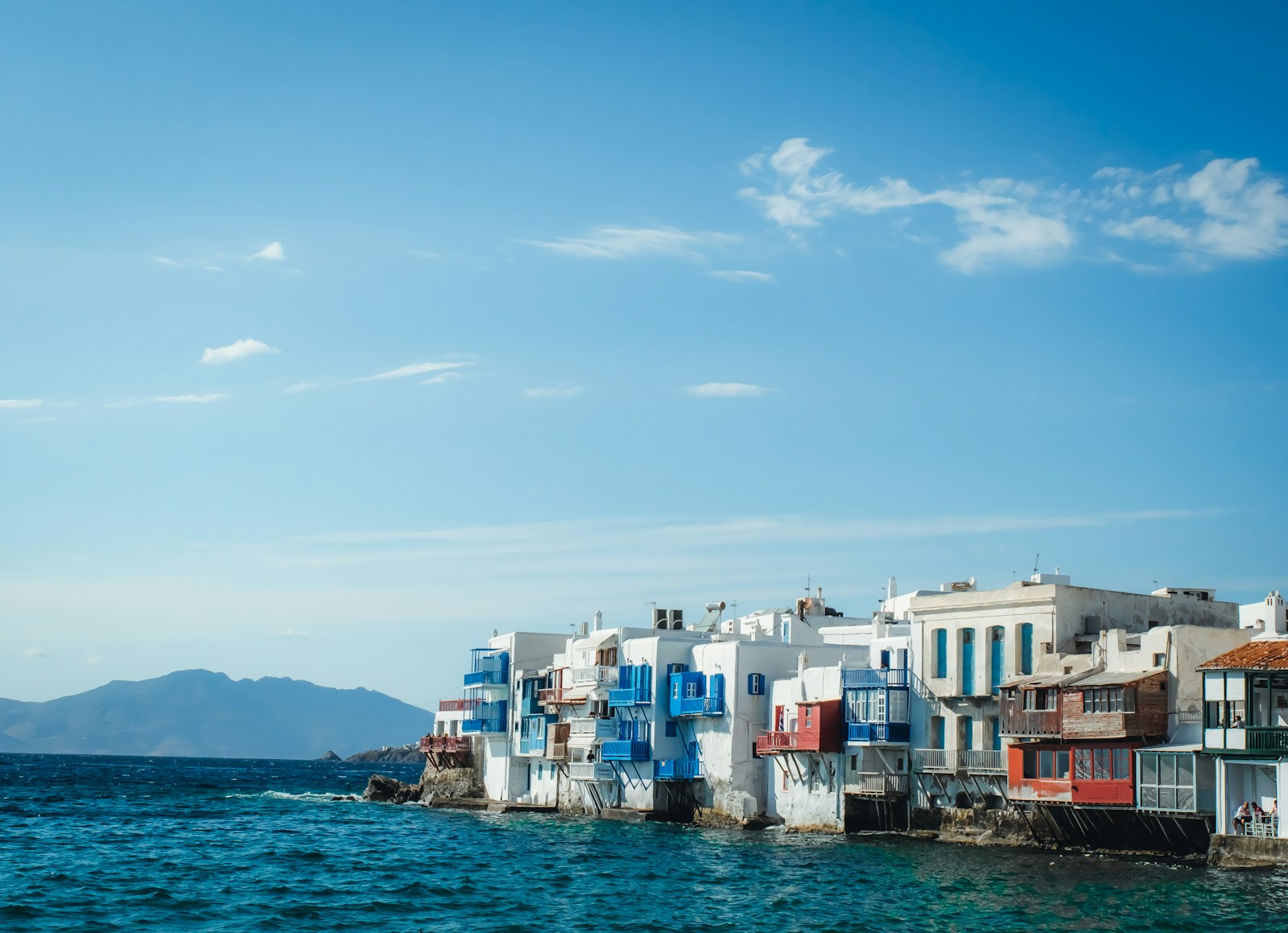
Photo: Harrison Fitts / Unsplash
Key facts
Eligibility
South African citizens (non-EU) can apply; South Africans with EU passports do not need it
Single discretionary allowance
R2 million a year from 8 April 2026, no tax clearance needed (SARB Circular 6/2026)
Foreign capital allowance
Up to R10 million a year with a SARS tax compliance status (TCS) PIN
Above R12 million
Application to the SARB Financial Surveillance Department
Documents
South Africa is a Hague Apostille member: apostille, then Greek translation
Schengen visa
Required for South African passport holders for the first trip
Exchange control limits per calendar year per adult; check with your authorised dealer before transferring.
Contents
Who can apply from South Africa
The Golden Visa is open to citizens of countries outside the EU, the EEA and Switzerland, so South African citizens qualify. Many South Africans also hold a European passport, for example through Greek, Portuguese, British or Dutch ancestry; EU citizens can live in Greece without a Golden Visa, and if you have Greek ancestry, check Greek citizenship by descent first. Your family members, including your parents and your spouse’s parents, can be included.
Moving money: South African exchange control in 2026
South African residents can send money abroad within annual allowances administered by authorised dealers, usually your bank:
Allowance
Limit per calendar year
Requirement
Single discretionary allowance (SDA)
R2 million (from 8 April 2026)
Aged 18+, no SARS tax clearance needed
Foreign capital allowance (FCA)
R10 million
Valid SARS tax compliance status (TCS) PIN
Above R12 million
Case by case
Application to the SARB Financial Surveillance Department, with the TCS PIN
Sources: SARB Exchange Control Circular 6/2026 and the Currency and Exchanges Guidelines for Individuals.
The SDA was raised from R1 million to R2 million per calendar year from 8 April 2026 (SARB Circular 6/2026). The foreign capital allowance of up to R10 million needs a TCS PIN from SARS and must be converted to foreign currency through an authorised dealer (Exchange Control Guidelines, 3.6). A couple can combine their individual allowances. At an exchange rate of, for example, R20 to the euro, €800,000 is R16 million, more than one person’s combined SDA and FCA, so couples often use both partners’ allowances or apply for approval above the limits.
Managing the rand risk
Greek property is priced in euros, and the price must be paid through a Greek bank. Because the rand can move sharply, agree with your bank or a foreign-exchange provider how and when you will convert. Some buyers fix the rate for the amount due at signing; others move funds in stages within each calendar year’s allowances. Leave a margin for purchase costs, which are also paid in euros.
Documents: apostilles and translations
South Africa is a member of the Hague Apostille Convention (HCCH status table), so South African public documents, such as marriage and unabridged birth certificates for family members, can be apostilled by the Department of International Relations and Cooperation (DIRCO) or the High Court. After the apostille, each document needs an official Greek translation. Order unabridged certificates from Home Affairs early, because they can take time.
Visas for the first trip
South African passport holders need a Schengen visa to visit Greece (European Commission). Apply at the Greek embassy or visa centre in South Africa for a short-stay visa to view properties and sign. Golden Visa applicants must apply in Greece while their visa is still valid, so time the purchase and application within the visa period, or let our partner lawyers handle the purchase under a power of attorney.
Greek Golden Visa from South Africa: step by step
Plan the funds: confirm your SDA and FCA position and apply for the TCS PIN.
Work with our partner lawyers: sign a power of attorney, apostilled and translated.
Greek tax number and bank account: our partner lawyers can obtain the AFM and help open the account.
Choose the property: check zone, value and the 120 m² main space.
Transfer funds through your authorised dealer to your Greek account.
Purchase: notary contract, payment through the Greek bank and Cadastre registration.
Apply online, then give biometrics in person in Greece.
Receive the permit: official target 50 days after a complete file.
Costs for South African buyers
Transfer tax of generally 3% on resale homes, or VAT on some new builds (AADE).
Notary, Cadastre, lawyer and any agent fees in Greece.
Permit fees: €2,000 for the main applicant, €150 per adult family member, €16 per card.
Schengen visa fees, apostilles, unabridged certificates and translations.
Bank and currency conversion costs.
Private health insurance for every applicant, annual ENFIA and building charges.
Tax points for South Africans
South African tax residents are taxed on worldwide income, so rent from a Greek property is taxable in Greece and must also be declared to SARS, with relief for tax paid in Greece under the applicable rules. In Greece, long-term rental income is taxed at 15% up to €12,000 a year, then 25%, 35% and 45% (Ministry of Finance). Spending more than 183 days a year in Greece would usually make you Greek tax resident. Take advice from a cross-border tax adviser before you move.
Where South Africans buy
South African buyers often look at the Athens Riviera, where the coast, the tram and international schools appeal to families, and at the northern suburbs. Read our guide for South African buyers and compare Glyfada and Vouliagmeni with Marousi.
Greek Golden Visa from South Africa: choosing the property
The zone rules apply as for any applicant: €800,000 in Attica, Thessaloniki, Mykonos, Santorini and islands over 3,100 residents, €400,000 elsewhere, both with 120 m² of main space, or €250,000 for conversions and listed restorations. Because exchange control limits apply per person per year, some South African families choose the €400,000 zone or the €250,000 conversion route to keep transfers within allowances, while others combine both spouses’ allowances for an Athens home.
Area
Average asking price
Notes
Glyfada
€5,669/m² (Q2 2026)
Riviera, tram, schools
Voula, homes over 120 m²
€6,866/m² (Q3 2026)
Family homes near the beach
Marousi, homes over 120 m²
€3,625/m² (Q3 2026)
Northern suburbs, metro, schools
Chania (Crete)
€3,102/m² (Q2 2026)
€800,000 zone; island lifestyle
Sources: Spitogatos and xe.gr asking prices.
Keeping the permit
There is no minimum stay, so you can keep living in South Africa and use the permit for visits and Schengen travel under the short-stay rules. Renew every five years with proof that you still own the property, and keep health insurance valid in Greece for every family member.
Can South Africans apply for the Greek Golden Visa?
Yes. South African citizens are non-EU nationals, so they can apply by buying a single qualifying property: €800,000 in Attica, Thessaloniki, Mykonos, Santorini and islands over 3,100 residents, €400,000 elsewhere, or €250,000 for conversions and listed restorations. Spouses, children under 21 and both sets of parents can be included.
How much money can I take out of South Africa to buy property in Greece?
Adults can transfer up to R2 million a year under the single discretionary allowance, raised from 8 April 2026, and up to R10 million under the foreign capital allowance with a SARS tax compliance status PIN. Larger amounts need approval from the SARB Financial Surveillance Department through your bank.
Do South Africans need a visa for Greece?
Yes. South African passport holders need a Schengen visa to visit Greece, including for property viewings. Golden Visa applicants apply for the residence permit in Greece while the visa is still valid, or our partner lawyers can buy for them under a power of attorney so the application can be timed for a single trip.
Can South African documents be apostilled for Greece?
Yes. South Africa is a member of the Hague Apostille Convention, so public documents such as unabridged birth and marriage certificates can be apostilled by DIRCO or the High Court. Each apostilled document then needs an official Greek translation before it is submitted with the application.
How long does the Golden Visa take for South Africans?
Allow time for the TCS PIN, unabridged certificates, apostilles and the Schengen visa before you buy. The purchase usually takes a few weeks to several months, and the official target for the permit decision is 50 days after a complete application. Starting the paperwork early is the best way to save time.
Is Greek rental income taxed in South Africa?
South African tax residents are taxed on worldwide income, so Greek rent must be declared to SARS as well as taxed in Greece, at 15% up to €12,000 a year and higher bands above. Relief for Greek tax paid is usually available; ask a cross-border tax adviser how it applies to you.
Last checked: October 2026. General information only, checked against the sources listed above. It is not legal, tax or immigration advice, and rules change. Before you commit, ask our partner lawyers to confirm your own case, and a tax adviser for tax questions. AtticaKey may receive a referral fee from its partner lawyers; you are free to use your own lawyer instead.
Free Golden Visa consultation
Tell us what you are looking for and we will reply by email within one working day with eligible properties, the current investment thresholds and the next steps. No obligation.
Greece Golden Visa Requirements 2026: The Complete, Clear Checklist
The Greece Golden Visa requirements fit on one checklist, but each line has details that trip up applicants. Since Law 5100/2024 and Ministry Circular 1/21.04.2026, the rules on zones, property size, letting, family members and health insurance are stricter than many older guides suggest. Use this checklist to prepare your application in the right order: applicant, investment, property, payment, documents, family, fees and renewal.
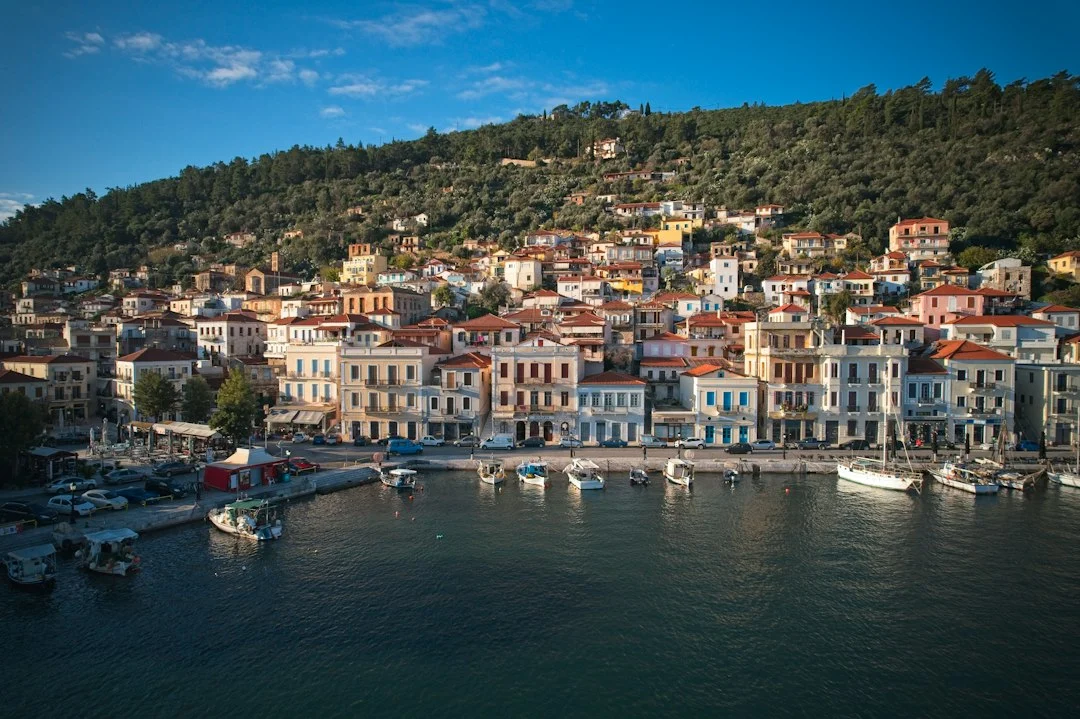
Photo: Constantinos Kollias / Unsplash
Key facts
Applicant
Non-EU citizen, adult; Russian and Belarusian applications suspended
Investment
Single property: €800,000 / €400,000 (120 m²) or €250,000 conversion or listed restoration
Payment
Through a Greek bank by traceable means
Health insurance
Required for every applicant at application (from 2026)
Fees
€2,000 main applicant, €150 per adult family member, €16 per card
Decision target
50 days after a complete application
Sources: Law 5038/2023 Art. 100 as amended; Circular 1/21.04.2026; mitos.gov.gr.
Contents
Greece Golden Visa requirements, part 1: the applicant
Citizen of a country outside the EU, the EEA and Switzerland.
Adult with a valid passport.
Not considered a threat to public order or security.
Not a Russian or Belarusian national (applications suspended under the 2026 circular).
Legal entry to Greece if applying in Greece: visa-free or on a valid visa.
2. Investment requirements
Route
Minimum
Where
Standard property
€800,000
Attica, Thessaloniki regional unit, Mykonos, Santorini, islands over 3,100 residents
Standard property
€400,000
Everywhere else in Greece
Conversion or listed restoration
€250,000
Anywhere, with conditions
Law 5038/2023 Art. 100 as amended by Law 5100/2024.
Financial routes also exist, such as €500,000 in Greek government bonds or a fixed-term deposit; see Greece residency by investment.
3. Property requirements
One property meets the threshold; two smaller homes cannot be combined.
At least 120 m² of main space on the €800,000 and €400,000 routes.
Parking or storage in the same building and contract can count towards the price, not the area.
Joint owners: each share meets the threshold; the 120 m² applies to the whole property.
For conversions: change of use completed before you apply.
No short-term platform letting; long leases allowed.
4. Payment requirements
Greek tax number (AFM) and a Greek bank account.
Price paid through a Greek bank by bank transfer or other traceable means.
Bank confirmation of payment for the application.
5. Documents checklist
Application form and four recent digital passport photos.
Certified copy of all passport pages.
Notarial purchase contract and proof of Cadastre registration.
Bank proof of payment.
Private health insurance valid in Greece, or foreign cover that explicitly includes Greece.
Paid e-fees (e-paravolo).
Power of attorney if our partner lawyers file for you.
6. Family member requirements
Spouse or registered partner.
Unmarried children under 21.
Parents of both the investor and the spouse.
For each: passport, health insurance, and apostilled or legalised, translated certificates proving the relationship.
Apply online through the Ministry of Migration and Asylum, yourself or through our partner lawyers.
Pay the fees and upload the documents.
Give fingerprints and photo in person at the competent migration office.
Keep the certificate of application while the decision is pending.
Collect the residence cards.
9. After approval and renewal
No minimum stay to keep the permit.
No employment; company shareholding and non-executive board roles allowed.
Renew every five years by showing you still own the property, with a recent E9 return or Cadastre extract.
To sell, buy a qualifying replacement first, notify the authority, then sell.
Children who turn 21 can move to their own permit.
Common reasons for delays
Main space below 120 m² on the official plans.
Untranslated or uncertified family documents.
Health insurance that does not explicitly cover Greece.
Payment not traceable through a Greek bank.
Expired visa or legal stay at the time of application.
Written confirmation from our partner lawyers that the property and documents meet these requirements, before you pay a deposit, avoids most of them. See our guide to choosing a Greece Golden Visa lawyer.
Greece Golden Visa requirements for documents from abroad
Documents issued outside Greece, such as marriage and birth certificates for family members, must be certified for use in Greece. Countries that are members of the Hague Apostille Convention issue an apostille; documents from other countries need consular legalisation. Each document then needs an official Greek translation. Start early, because these steps take longer than any other part of the file.
Greece residency requirements after you receive the permit
Keep the qualifying property for as long as you want the permit.
Keep health insurance valid in Greece.
File Greek tax returns if you receive Greek income, such as rent.
Do not let the property short term through digital platforms.
Notify the authority and buy a replacement before selling.
Requirements that changed in 2024 and 2026
Change
Effect
Higher thresholds (Law 5100/2024)
€800,000 in the main areas, €400,000 elsewhere
120 m² rule (Law 5100/2024)
Minimum main space on the two higher routes
Short-term letting ban
No platform holiday lets for Golden Visa homes
Health insurance at application (2026)
Required for every applicant
Circular 1/21.04.2026
Joint ownership, auxiliary spaces and replacement rules clarified
Sources: Law 5100/2024; Circular 1/21.04.2026 (EY summary).
Because the Greece Golden Visa requirements have changed several times, check any older guide or quote against these points and ask our partner lawyers to confirm the rules on the day you apply.
How long the checklist takes
With a property chosen, collecting documents, opening a bank account and completing the purchase usually takes a few weeks to a few months. The official target for the decision is 50 days after a complete application. Most delays come from missing translations or certificates, not the decision itself.
What are the requirements for the Greece Golden Visa?
You must be a non-EU citizen with a valid passport, buy a single qualifying property (€800,000 or €400,000 by zone with 120 m² of main space, or €250,000 for conversions and listed restorations), pay through a Greek bank, hold private health insurance valid in Greece and pay the government fees.
What documents do I need for the Greek Golden Visa?
The application form and photos, a certified copy of your passport, the notarial purchase contract with proof of Cadastre registration, bank proof of payment, private health insurance valid in Greece and the paid e-fees. Family members add apostilled or legalised, translated certificates proving the relationship.
Is health insurance required for the Greek Golden Visa?
Yes. From 2026, every applicant must show private health insurance valid in Greece, or foreign insurance that explicitly covers Greece, at the time of application. Choose a policy with in-patient and out-patient cover in Greece and enough limits, and keep it valid for the life of the permit.
What are the residency requirements to keep the Golden Visa?
There is no minimum stay. You keep the Golden Visa by keeping the qualifying property and renewing every five years with proof of ownership, such as a recent E9 return or Cadastre extract. If you sell, you must first buy a qualifying replacement and notify the authority.
Can my parents be included in my Golden Visa?
Yes. The Golden Visa can include the parents of both the investor and the spouse, as well as the spouse or registered partner and unmarried children under 21. Each family member needs a passport, private health insurance and certified, translated documents proving the relationship, and pays the family fee if over 18.
How much are the Greek Golden Visa fees?
The government fee is €2,000 for the main applicant’s five-year permit, €150 for each adult family member, with children under 18 exempt, and €16 per residence card, including children. Purchase taxes, notary, Cadastre, lawyer and translation costs come on top of these fees.
Last checked: October 2026. General information only, checked against the sources listed above. It is not legal, tax or immigration advice, and rules change. Before you commit, ask our partner lawyers to confirm your own case, and a tax adviser for tax questions. AtticaKey may receive a referral fee from its partner lawyers; you are free to use your own lawyer instead.
Free Golden Visa consultation
Tell us what you are looking for and we will reply by email within one working day with eligible properties, the current investment thresholds and the next steps. No obligation.
Greek Golden Visa from the UAE: 2026 Step-by-Step Guide for UAE Residents
Applying for the Greek Golden Visa from the UAE is straightforward once you know which documents need attestation and how to move funds. UAE residents include Emiratis and expatriates of many nationalities, and the steps differ slightly: Emiratis travel visa-free to Greece, while many expatriates need a Schengen visa for the first trip. This guide walks through eligibility, documents, money transfers, the purchase and the application, with the costs and tax points for 2026.
Photo: Constantinos Kollias / Unsplash
Key facts
Who can apply
Any non-EU citizen, including Emiratis and non-EU expatriates living in the UAE
UAE is not a Hague Apostille member: MOFA attestation, then Greek consular verification
Greek mission
Embassy of Greece in Abu Dhabi (consular section)
Permit
5 years, renewable; family included; no minimum stay
Government fees
€2,000 main applicant, €150 per adult family member, €16 per card
Check your own nationality’s visa rules and document requirements before travel.
Contents
Who in the UAE can apply
The Golden Visa is open to citizens of any country outside the EU, the EEA and Switzerland. That includes Emirati citizens and expatriates in the UAE from India, Pakistan, Egypt, Lebanon, Jordan, the UK, the US, South Africa and elsewhere. What matters is your nationality, not your UAE residence. EU citizens living in the UAE do not need a Golden Visa to live in Greece. Applications from Russian and Belarusian nationals are suspended under the 2026 circular.
Visas for the first trip
Emirati citizens can visit the Schengen area, including Greece, without a visa for short stays. Many expatriates need a Schengen visa depending on their passport; check the EU list for your nationality (European Commission). Golden Visa applicants can enter on a valid visa or visa-free and apply in Greece while their legal stay is still valid.
Documents: attestation and translation
The UAE is not a member of the Hague Apostille Convention, so UAE-issued documents, such as marriage and birth certificates for family members, cannot be apostilled. Instead, they are attested by the UAE Ministry of Foreign Affairs (MOFA attestation) and then verified by the Greek consular authority responsible for the UAE, at the Embassy of Greece in Abu Dhabi (Greek consular verification). Documents issued by your home country follow that country’s rules: if it is a Hague member, an apostille is enough (HCCH status table). All documents then need an official Greek translation.
Passport copies for every applicant.
Marriage certificate and children’s birth certificates (attested or apostilled, and translated).
Power of attorney for our partner lawyers, signed before a notary or at the Greek consulate.
Private health insurance valid in Greece for every applicant.
Proof of the bank transfer of the purchase price.
Moving money from the UAE
The UAE has no exchange controls, so transfers to Greece are mainly a matter of bank compliance. The purchase price must be paid through a Greek bank by traceable means, so open a Greek account early and be ready to show the source of funds: salary or business income, sale of assets or savings statements. The dirham is pegged to the US dollar, so the euro amount you need will move with the EUR/USD exchange rate; consider fixing the rate when you sign.
If you plan to borrow, some Greek banks accept income in UAE dirhams: the National Bank of Greece lists AED among eligible income currencies for international buyers (NBG). See mortgages in Greece.
Greek Golden Visa from the UAE: step by step
Brief and zone: choose the area and budget, remembering the 120 m² rule on the €800,000 and €400,000 routes.
Lawyers and power of attorney: sign a power of attorney so our partner lawyers can act for you.
AFM and bank account: our partner lawyers obtain your Greek tax number and help open an account.
Viewings: in person or by video; most buyers make one trip to see the shortlist.
Purchase: checks, notary contract, payment through the Greek bank and Cadastre registration.
Application: filed online by our partner lawyers once the contract is registered.
Biometrics: in person at the migration office in Greece.
Permit: official target 50 days after a complete application.
Costs for UAE buyers
Transfer tax of generally 3% on resale homes, or VAT on some new builds (AADE).
Notary, Cadastre, lawyer and any agent fees.
Permit fees: €2,000 for the main applicant, €150 per adult family member, €16 per card.
Attestation, verification and translation fees for documents.
Health insurance for each applicant; annual ENFIA and building charges.
Tax points for UAE residents
The UAE has no personal income tax, but Greece taxes Greek income such as rent whatever your residence: long-term rental income is taxed at 15% up to €12,000 a year, then 25%, 35% and 45% (Ministry of Finance). The Golden Visa does not by itself make you Greek tax resident; spending more than 183 days a year in Greece usually would. Owners also pay ENFIA each year. Take advice on how a tax treaty applies to your situation.
Buyers applying for the Greek Golden Visa from the UAE usually fall into two groups. Some want a summer base close to the sea, often on the Athens Riviera or an island in the €800,000 zone. Others want a city home in Athens for children’s education or business. Think about flight times, school options, and whether you will let the home on long leases when you are away, because short-term platform letting is not allowed.
Area
Average asking price
Notes
Glyfada
€5,669/m² (Q2 2026)
Riviera, marina, tram, international community
Kolonaki
€6,086/m² (2026)
Central, prime apartments
Marousi, homes over 120 m²
€3,625/m² (Q3 2026)
Northern suburbs, schools, metro
Thessaloniki, Kalamaria
€3,175/m² (Q2 2026)
Second city, seafront
Sources: Spitogatos, Engel & Völkers and xe.gr asking prices.
Managing a Greek property from the UAE
Appoint a local property manager or a trusted contact for keys, repairs and tenants.
Set up direct debits for electricity, water, building charges and ENFIA.
File a Greek tax return each year if you receive Greek rent.
Insure the home against earthquake, fire and flood.
Keep copies of the contract, Cadastre extract and E9 return for renewals.
Renewal every five years requires proof that you still own the property, such as a recent E9 return or Cadastre extract, so keep these documents up to date.
Can UAE residents apply for the Greek Golden Visa?
Yes. The Golden Visa is open to any non-EU citizen, so Emiratis and non-EU expatriates living in the UAE can apply. Your nationality, not your UAE residence, determines eligibility and visa needs. Applications from Russian and Belarusian nationals are currently suspended, and EU citizens do not need a Golden Visa.
Can documents from the UAE be apostilled for Greece?
No. The UAE is not a member of the Hague Apostille Convention, so UAE documents are attested by the UAE Ministry of Foreign Affairs and then verified by the Greek consular authority at the Embassy in Abu Dhabi. Documents from your home country can be apostilled if it is a Hague member.
Do Emiratis need a visa to visit Greece?
No, not for short stays. Emirati citizens can visit the Schengen area, including Greece, without a visa for up to 90 days in any 180. Many expatriates living in the UAE need a Schengen visa depending on their passport, so check the EU visa list for your nationality before booking.
How do I transfer money from the UAE to buy property in Greece?
Open a Greek bank account and transfer the funds through regular banking channels; the price must be paid by traceable means through a Greek bank. The UAE has no exchange controls, but both banks will ask for the source of funds, so prepare salary, business or asset-sale documents in advance.
How long does the Greek Golden Visa take from the UAE?
The search and purchase usually take a few weeks to several months, and the official target for the permit decision is 50 days after a complete application. Document attestation and translation can add several weeks, so start collecting attested certificates before you choose the property.
Do I have to live in Greece to keep the Golden Visa?
No. The Golden Visa has no minimum stay requirement, so UAE residents can keep living in the UAE and renew every five years while they own the property. Spending more than 183 days a year in Greece would usually make you a Greek tax resident.
Last checked: October 2026. General information only, checked against the sources listed above. It is not legal, tax or immigration advice, and rules change. Before you commit, ask our partner lawyers to confirm your own case, and a tax adviser for tax questions. AtticaKey may receive a referral fee from its partner lawyers; you are free to use your own lawyer instead.
Free Golden Visa consultation
Tell us what you are looking for and we will reply by email within one working day with eligible properties, the current investment thresholds and the next steps. No obligation.
Greece FIP Visa Explained: 2026 Requirements for Financially Independent Persons
The Greece FIP visa is the route for financially independent persons: people with a stable income from outside Greece, such as pensions, rents or dividends, who want to live in Greece without working there. It is the main alternative to the Golden Visa for retirees and others who do not want to buy property; if you are still weighing the two, start with our overview of Greece residency by investment. This guide explains the income requirement, the two-stage application, documents, family members, health insurance, renewals, long-term residence and the tax consequences of moving.
Eligibility is decided by the Greek authorities, and the rules are set in law, so use this guide to prepare your questions rather than as a promise of approval. Confirm every figure on the official pages before you apply.
Photo: Harrison Fitts / Unsplash
Key facts
Item
Detail
Who it is for
Non-EU citizens with stable passive income from abroad
Income requirement
€3,500 a month for the main applicant
Family uplift
+20% for a spouse, +15% per child
Stages
National (type D) visa at a Greek consulate, then a residence permit in Greece
Permit fee
€1,000 for the main applicant, plus €16 for the card
Typical permit length
Three years, renewable
Investment needed
None; you do not have to buy property
Work in Greece
Not allowed
Contents
Figures as reported in the sources listed below; confirm current values with the Ministry of Migration and Asylum before you apply.
What the Greece FIP visa is
The Greece FIP visa lets non-EU citizens live in Greece on income earned elsewhere, without working there. Strictly it is two steps: a national (type D) visa issued by a Greek consulate, then a residence permit for financially independent persons issued in Greece. Most people call the whole process the “FIP visa”.
It is not an investment programme: you do not need to buy property, and there is no minimum investment. In exchange you must show a steady income above the threshold, health insurance and accommodation, and you may not work in Greece as an employee or self-employed person.
Greece retirement visa requirements: is there a separate visa?
No. Greece has no separate retirement visa; retirees normally use the financially independent person route and show their pension as the recurring income. The tests are the same whether you are retired or live on investments: income, insurance, accommodation and a criminal record certificate. For state pensions and the statutory retirement age, see retirement age and pensions in Greece.
Income requirements
The main applicant needs stable income from outside Greece of at least €3,500 a month, with 20% added for a spouse and 15% for each child (TaxLaw; Kanellos Legal summary). The threshold is set in law and can change, so confirm it on the Ministry of Migration and Asylum’s legislation page before you apply.
Household
Minimum monthly income
Main applicant
€3,500
Main applicant and one child (+15%)
€4,025
With spouse (+20%)
€4,200
Spouse and one child (+15%)
€4,725
Spouse and two children
€5,250
Our calculation: €3,500 plus 20% for a spouse and 15% for each child, as set by Joint Ministerial Decision 225679/2024. For example, €3,500 + 15% (€525) = €4,025 for an applicant with one child. The consulate applies the rule to your case.
What counts as income
The income must come from outside Greece and be stable, for example pensions, rental income from property abroad, dividends or interest. Consulates generally expect recurring income; savings alone may be accepted in some cases, but recurring pension or investment income is what most consulates expect (Kanellos Legal summary). Income that arises in Greece, including rent from a Greek property you buy, does not fit the “from outside Greece” description, so ask our partner lawyers before you rely on it.
A simple income self-check
List each income source, its currency and how often it is paid.
Keep only recurring income from outside Greece.
Convert it to euros at a recent official reference rate.
Compare the monthly total with the household figure in the table above.
Leave headroom, then collect several months of statements for each source.
Plan for currency swings: if your income is in dollars or pounds, keep a margin above the threshold, because a weaker currency can pull you below it at renewal.
Documents for the FIP visa
You need a valid passport, proof of recurring income from abroad, health insurance valid in Greece, proof of accommodation and a criminal record certificate. Family members add civil-status documents. The consulate’s own list is the one that counts.
Valid passport and recent photos.
Proof of income for the period the consulate asks for, such as pension statements and bank statements.
Health insurance valid in Greece.
Proof of accommodation, such as a lease or a property you own.
A criminal record certificate from your country of residence.
For family members: apostilled and translated marriage and birth certificates.
Preparing documents issued abroad
Documents issued abroad generally need an apostille or consular legalisation and a Greek translation, in the form your consulate specifies. Ask the consulate which translations it accepts before you order them. Certificates have issue-date limits, so request them close to your appointment, and check that names and dates match your passport on every document. Requirements vary slightly between consulates; check the list on your consulate’s website before booking.
Family members on the FIP permit
A spouse and children can be included, and the income test rises with each person: +20% for a spouse and +15% per child. The household shows the total, not each person separately.
Each family member needs health insurance valid in Greece, and the accommodation you show must suit the household. Marriage and birth certificates are apostilled and translated as described above. Family members pay their own permit fees; check the current fee list on the Ministry’s service pages, as we do not quote family fees here.
The FIP route does not include your parents, which is one reason families with older relatives compare it with the Golden Visa (see the comparison below). If you have adult children or other dependants, ask our partner lawyers whether and how they can be included.
Health insurance for the FIP permit
You must have health insurance valid in Greece, and the consulate checks it at the visa stage. The policy should say clearly that it covers you in Greece for the whole period of the visa and, later, the permit.
Choose in-patient and out-patient cover, and confirm both appear in the policy document.
Ask the consulate whether it wants a certificate in a particular format or language.
Do not assume a short travel policy will satisfy the requirement; confirm with the consulate first.
Insurers treat age and pre-existing conditions differently, so ask before you buy.
Every family member on the application needs cover.
Whether you can later join the public system, with its social security number (AMKA), depends on your status, so do not plan on it for the application. Our guide to healthcare in Greece compares public and private care for residents.
How to apply: two stages
You apply in two stages: a type D national visa at the Greek consulate responsible for where you live, then a residence permit from the Ministry of Migration and Asylum after you arrive in Greece. Processing times vary, and we do not quote one; the consulate and the Ministry’s service pages give current guidance.
Prepare: confirm your income against the threshold, arrange insurance and secure accommodation in Greece.
National visa: apply for a type D visa at the consulate. Consular fees are listed by the Ministry of Foreign Affairs (fee schedule).
Travel to Greece on the visa.
Residence permit: apply to the Ministry of Migration and Asylum before the visa expires, pay €1,000 for the main applicant plus €16 for the card, and give biometrics.
Receive the permit, typically for three years.
Renew while you still meet the conditions.
A Greek tax number (AFM) and a Greek bank account are practical steps you will need either way. We help you get your Greek tax number (AFM) and open a Greek bank account, and the lawyers we work with can obtain the AFM and help open an account under a power of attorney.
Renewal and long-term residence
To renew, show that you still have the required income, insurance and accommodation before the permit expires. After five years of legal, continuous residence you may be able to apply for EU long-term resident status, which Greek law applies under the EU Directive.
Renewing the permit
Late renewals filed within one month after expiry carry a €100 penalty, and later ones can be refused, so diarise the date (Ministry of Migration and Asylum). Keep a folder with each year’s income statements, insurance certificate and proof of address, so the renewal file is ready.
From FIP permit to long-term residence
EU long-term resident status is built on five years of legal, continuous residence (Directive 2003/109/EC). Greek authorities decide whether you qualify, and long absences or gaps in your permit can matter, so ask our partner lawyers whether your own years count. Citizenship is a separate route that requires naturalisation. See residence permit types in Greece.
Tax for FIP holders
FIP holders who live in Greece usually become Greek tax residents after more than 183 days a year, taxed on worldwide income on a scale from 9% to 44% (Ministry of Finance). Ask a tax adviser about your own position; we give no personal tax advice here.
Tax residence is more than a day count
The day count is one test. Where your home and main interests are can also matter, and your home country may still treat you as resident. A tax adviser who knows both systems can map this before you move.
The 7% regime for foreign pensions
New residents with foreign pensions can apply for a 7% flat tax on foreign income for up to 15 years under Article 5B (AADE). Conditions apply, so read the AADE document and confirm with a tax adviser before you rely on it.
Treaties and home-country tax
Treaties decide which country taxes some pensions. Citizens of countries that tax on citizenship, the US being the best-known example, may still have filing duties at home after they move. See income tax in Greece.
FIP visa or Golden Visa?
The FIP visa suits people who will live in Greece and have steady foreign income; the Golden Visa suits people who will buy a qualifying property and want flexibility on where they spend their time.
FIP visa
Golden Visa
Requirement
€3,500 a month passive income
Property from €250,000 to €800,000, depending on route and location
Stay
You live in Greece
No minimum stay
Parents included
No
Yes, parents of both spouses
Main fee
€1,000
€2,000
Permit length
Typically three years, renewable
Five years, renewable
Tax residence
Usually yes
Only if you live in Greece
Property rules
None required
Single property; 120 m² minimum on the €800,000 and €400,000 routes; no short-term letting
Golden Visa figures: Law 5100/2024 Art. 64(1) and the Ministry’s Golden Visa page. The €800,000 threshold applies in Attica, Thessaloniki, Mykonos, Santorini and islands with more than 3,100 residents; €400,000 applies elsewhere; €250,000 applies to converting commercial space to residential use. Summary only; confirm details with our partner lawyers.
FIP suits you if you will live in Greece most of the year, have recurring income above the threshold and would rather not commit capital to property.
The Golden Visa suits you if you will buy anyway, travel often, want parents included or have income that is irregular.
Neither suits you if you want to work in Greece; see the section on who should not use the FIP visa.
Keep a margin above the €3,500 threshold, especially if your income is in another currency.
Show recurring income with several months of statements, not a single deposit.
Choose health insurance with in-patient and out-patient cover in Greece.
Sign a lease or buy before applying, so you can prove accommodation.
Check apostille and translation rules with the consulate before ordering documents.
Diarise the renewal date; late renewals can bring fines or refusal.
Speak to a tax adviser before you move, not after.
If you would like help with the practical steps or a check of your own case by the lawyers we work with, request a free consultation or email info@atticakey.gr. We will reply by email within one working day.
Living in Greece on an FIP permit
FIP holders can live anywhere in Greece and travel in the Schengen area under the short-stay rules. Many choose Athens and its suburbs for healthcare, flights and services, or mainland and island towns for lower living costs. We work across Greece in English and Greek, from Attica to the Cyclades, Crete and the Ionian islands.
A Greek tax number (AFM), a bank account and utility registrations are the first practical steps.
Budget for rent or ownership costs, health insurance and annual tax filings.
Within Attica, buyers and renters look at Glyfada and Vouliagmeni, Marousi, Piraeus, Kolonaki, Koukaki and Pangrati, and Nea Smyrni.
You do not need to buy property for the FIP permit, but many holders do after renting for a while. Any home can serve as accommodation; there is no minimum value.
Before you buy, have a Greek lawyer (one we work with or one of your choice) check the title, any charges on the property, building permits and the Ktimatologio (Greek land registry) entry. If you are not an EU or EFTA citizen and the property is in a border area, prior permission is needed, and a sale without it is void (Law 1892/1990, Art. 25). Our partner lawyers can check whether a given property lies in such an area.
If you later want a permit without the income test or the need to live in Greece, a qualifying purchase can support a Golden Visa instead. A Golden Visa property may not be let short term. See Golden Visa eligible property, and choosing a Greece Golden Visa lawyer if you want help.
Who should not use the FIP visa
The Greece FIP visa is not suitable if you want to work for Greek clients, run a local business, or spend most of the year outside Greece while keeping residence. It is also a poor fit if your income is irregular or sits close to the threshold, or if you want parents included.
For those plans, compare the digital nomad permit, a work permit or the Golden Visa in our guide to residence permit types.
It is a residence route for financially independent persons: non-EU citizens with stable income from outside Greece, such as pensions or rents, who want to live in Greece without working there. You first get a national visa at a Greek consulate, then a residence permit in Greece, typically for three years and renewable.
How much income do I need for the Greece FIP visa?
At least €3,500 a month for the main applicant, plus 20% for a spouse and 15% for each child. A couple therefore needs €4,200 a month. The income must come from outside Greece and be stable, such as pensions, rental income or dividends, and consulates may ask for several months of statements.
Can I work in Greece with an FIP visa?
No. The financially independent person permit does not allow employment or self-employment in Greece. Your income must come from sources outside Greece. If you want to work remotely for foreign clients, compare the digital nomad permit; for a Greek job you need a work-based permit.
What are the Greece retirement visa requirements?
Greece has no separate retirement visa; retirees usually use the financially independent person permit. You need €3,500 a month of stable passive income, plus uplifts for family, health insurance valid in Greece, accommodation and a criminal record certificate. You apply for a national visa first, then for the permit in Greece.
How much does the Greece FIP visa cost?
The residence permit fee is €1,000 for the main applicant plus €16 for the card, on top of the consular fee for the national visa, health insurance, translations, apostilles and any lawyer’s fees. Family members pay their own fees. Check the current consular fee schedule before you apply.
Is the FIP visa better than the Golden Visa?
It depends on your plans. The FIP visa needs income rather than a property purchase, but you live in Greece and usually become tax resident. The Golden Visa needs a qualifying property, has no minimum stay and covers parents. Retirees moving full time often prefer the FIP route.
Last checked: October 2026. General information only, checked against the sources listed above. It is not legal, tax or immigration advice, and rules change. Before you commit, ask our partner lawyers to confirm your own case, and a tax adviser for tax questions. AtticaKey may receive a referral fee from its partner lawyers; you are free to use your own lawyer instead.
Free Golden Visa consultation
Tell us what you are looking for and we will reply by email within one working day with eligible properties, the current investment thresholds and the next steps. No obligation.
Residence Permit in Greece: 2026 Guide to Every Permit Type for Non-EU Buyers
A residence permit in Greece is required if you are a non-EU citizen and want to stay longer than 90 days in any 180. Which Greek residence permit suits you depends on why you are coming: to buy a home, to retire, to work remotely, to take a job, to study or to join family. This guide compares the main permits in 2026, what each requires, how long it lasts and how it leads towards long-term residence. If property is your starting point, read our overview of Greece residency by investment first, then use this page to see how the other routes compare. When you are ready to talk through your own situation, request a free consultation.
Photo: Constantinos Kollias / Unsplash
Key facts
Item
Detail
Who needs a permit
Citizens of countries outside the EU, the EEA and Switzerland staying longer than 90 days in 180
Investment
Golden Visa: 5 years, renewable. Property from €250,000 (conversion of commercial to residential use), €400,000 or €800,000, depending on location
Passive income
FIP permit: €3,500 a month (+20% spouse, +15% per child)
Remote work
Digital nomad permit: €3,500 a month net from work outside Greece
Golden Visa fees
€2,000 main applicant; €150 per family member (minors exempt); €16 per card
Main law
Migration Code, Law 5038/2023
Long-term status
EU long-term residence after 5 years of legal, continuous residence, subject to conditions
Contents
Thresholds per the Ministry of Migration and Asylum. Confirm the FIP and digital nomad income figures on the official pages before applying.
Do you need a residence permit in Greece?
Yes, if you are a non-EU citizen who wants to stay longer than 90 days in any 180-day period. UK and US citizens are in this group. EU, EEA and Swiss citizens can live in Greece freely and register their residence after three months (Your Europe). Non-EU visitors can stay up to 90 days in any 180 in the Schengen area, with a visa if their nationality requires one. Owning property does not change this.
Three questions narrow down the right route:
How many months a year will you really spend in Greece?
Will you work, and if so for whom: a Greek employer or clients abroad?
Is a property purchase already part of your plan?
One buying point matters early. If the property is in a border area, non-EU buyers need prior permission, and a sale made without it is void (Law 1892/1990, Art. 25). The lawyers we work with can run this check before you sign anything.
Each residence permit in Greece compared
The table shows what each main permit asks for, how long it lasts and whether it lets you work. Read the Length column as a guide only, because the permit issued to you states the validity that applies.
Permit
Main requirement
Length
Work allowed
Golden Visa (investor)
Property from €250,000–€800,000 or a qualifying financial investment
5 years, renewable
No employment
Financially independent person (FIP)
€3,500 a month of passive income
Typically 3 years, renewable
No
Digital nomad
€3,500 a month net from work for clients outside Greece
2 years, renewable
Remote work for foreign clients only
Employment (incl. EU Blue Card)
Job offer from a Greek employer
Depends on the permit
Yes, for that employer or category
Studies
Admission to a Greek institution
Length of studies
Limited
Family reunification
Family member of a legal resident
Linked to the sponsor’s permit
Depends on the case
EU long-term resident
5 years of legal, continuous residence, stable resources, health insurance
See the long-term section below
Depends on the status granted
Summary based on the Migration Code and the Ministry of Migration and Asylum.
Golden Visa: residence through investment
The Golden Visa is the only permit here that is granted because of a property purchase, and it needs no income test and no minimum stay. A qualifying investment gives a five-year renewable permit for you, your spouse, your children under 21 and the parents of both spouses (Ministry of Migration and Asylum). Eligibility is decided by the Greek authorities.
Route
Threshold
Attica, Thessaloniki, Mykonos, Santorini (Thira) and islands with more than 3,100 residents
€800,000
Rest of Greece
€400,000
Conversion of commercial to residential use
€250,000
Law 5100/2024, Art. 64(1) (replacing Art. 100 of Law 5038/2023), and Circular 9/24.09.2024 on migration.gov.gr. A listed-building route also exists; check its current threshold on mitos.gov.gr before relying on it.
On the €800,000 and €400,000 routes the investment must be a single property with at least 120 m² of main area. The property may not be let short term, so do not plan holiday-rental income around a Golden Visa home. You can enter visa-free if your nationality allows and apply in Greece. The state fee is €2,000 for the main applicant, €150 per family member (minors are exempt) and €16 per residence card (Law 5038/2023, Art. 171; mitos.gov.gr fee codes 2112, 2107 and 2119). See Golden Visa Greece and the requirements checklist.
Financially independent person (FIP) permit
The FIP permit is for people with stable income from outside Greece who do not work there, such as retirees and investors. The threshold is €3,500 a month for one person, plus 20% for a spouse and 15% for each child. You apply for a national (type D) visa at a Greek consulate first, then for the permit in Greece. The fee for the main applicant is €1,000 plus €16 for the card (summary by Kanellos Legal; confirm on the official pages).
It suits you if you want to live in Greece for most of the year without working there. It does not suit you if you plan to take local employment. Retirees should also compare the Golden Visa; see the Greece FIP visa explained.
Digital nomad permit
Remote workers employed by, or providing services to, companies outside Greece can apply for the digital nomad visa and then a two-year permit, renewable, if they earn at least €3,500 a month net (gov.gr). The permit covers remote work for clients outside Greece only, not Greek clients or a Greek employer.
Holders who spend more than 183 days a year in Greece usually become Greek tax residents, so take tax advice before you move. The tax authority publishes a summary of tax incentives for new residents, and a tax adviser can tell you which, if any, apply to you.
Work, study and family permits
These three routes depend on your circumstances rather than on money or property. Each has its own documents and conditions, so take advice from our partner lawyers.
Work: permits depend on a job offer and, for many categories, on the annual quotas and procedures for hiring non-EU workers. Highly qualified workers can use the EU Blue Card.
Study: you need admission to a recognised Greek institution. The permit generally runs for the length of the studies, and work rights are limited.
Family: family members of legal residents can apply for family reunification, covered in the next section.
Family reunification
Family reunification lets a legal resident of Greece apply for close family members to join them. The sponsor’s permit, the family relationship and the documents decide what is possible. The EU framework is Directive 2003/86/EC, and Greece applies it through the Migration Code (Law 5038/2023).
Golden Visa families are a separate case: the spouse, children under 21 and parents of both spouses are covered by the Golden Visa itself, with the €150 per family member fee (minors exempt) described above.
Whatever the route, prepare the same basics early:
Passports for every family member.
Marriage and birth certificates, apostilled or legalised and translated into Greek.
Proof of accommodation and health insurance valid in Greece.
Evidence that the sponsor holds a valid permit.
The permit of a reunified family member is linked to the sponsor’s, so a change in the sponsor’s status can affect the whole family. Ask our partner lawyers to confirm the current checklist for your case.
How to apply for a Greek residence permit
Choose the permit that fits your purpose and check whether you need a national (type D) visa first.
Get a Greek tax number (AFM, the tax identification number used for property, banking and permits). We help you get your Greek tax number (AFM), and the lawyers we work with can also obtain it under a power of attorney.
Gather documents: passport, photos, health insurance, proof of income or investment, and civil-status documents for family members.
Have foreign documents apostilled or legalised, and translated into Greek.
Open a Greek bank account if your permit requires one. We help you open a Greek bank account, and our partner lawyers can assist under a power of attorney.
Apply through the Ministry of Migration and Asylum, online or at the competent office, and pay the fees through the e-paravolo (the electronic fee stamp on gov.gr).
Give biometrics in person and receive your residence card.
Keep the certificate of application throughout. It shows you have applied while the decision is pending.
Health insurance and documents
All the main permits require health insurance valid in Greece. The exact insurance and document requirements differ by permit, so check the current checklist on the Ministry of Migration and Asylum pages for yours. Documents issued abroad generally need an apostille or consular legalisation and an official Greek translation. Start early: certified copies and translations are the most common cause of delay.
If you sign a power of attorney in the UK, the Greek consulate in London charges the equivalent of €60 per double-sided sheet, including one certified copy. London signs only for Greek, British and EU citizens, so other nationalities must contact the consulate first (Greek Ministry of Foreign Affairs).
Permanent residency in Greece
Greece does not issue a permanent residence permit simply for buying property. Non-EU citizens who have lived in Greece legally and continuously for five years can apply for EU long-term resident status, subject to conditions such as stable resources and health insurance (EU summary). Citizenship requires naturalisation, with years of residence, Greek language skills and an exam; see how to get Greek citizenship.
What are the requirements to obtain a 10-year residence permit in Greece?
The Golden Visa is not a 10-year permit: it lasts five years and is renewable. The longer-term status people usually mean is EU long-term resident status. Under Directive 2003/109/EC it generally needs five years of legal and continuous residence, stable and regular resources and sickness insurance, subject to conditions.
Five years of legal residence immediately before the application (Directive 2003/109/EC, Art. 4).
Continuity: absences shorter than six consecutive months, and no more than ten months in total over the period, do not break it (Art. 4(3)).
Stable and regular resources to support yourself and your family without social assistance, plus sickness insurance (Art. 5).
Integration conditions: Member States may add them (Art. 5(2)).
The validity period and document list of the Greek long-term permit are set in the Migration Code and shown on the official procedure page, so check the legislation page rather than relying on a headline duration. Whether years on a particular permit count towards the five is decided by the Greek authorities. Ask our partner lawyers to confirm it for your own case.
Which permit should you choose?
You will buy a home but not move full time: the Golden Visa.
Each permit is issued for a specific purpose, so a different purpose means meeting the conditions of the new category. Whether a switch is available in your case, and whether time already spent in Greece counts, is decided by the Greek authorities. Settle these points before you change anything:
Expiry: apply before your current permit expires, and keep your certificate of application.
Work rights: check what the new permit allows. The Golden Visa and FIP permit do not allow employment in Greece.
Property: a home bought below the Golden Visa thresholds does not qualify on its own, and a Golden Visa property cannot be let short term.
Tax residence: a change of permit can change how much time you spend in Greece, so ask a tax adviser.
For example, a digital nomad who later buys a qualifying property should ask whether a Golden Visa application is possible and how the earlier permit is treated. Our partner lawyers can confirm this in writing for your case.
Residence permit in Greece for property owners: practical notes
Owning a home does not give you residence rights unless it meets the Golden Visa conditions. A lease or title deed is commonly used as proof of accommodation for the FIP and digital nomad routes, but only the Golden Visa is granted because of the property itself. If you buy below the Golden Visa thresholds, you still need an income-based or work permit to live in Greece for more than 90 days in any 180.
A lawyer is not mandatory at the property contract (Law 4194/2013, the Lawyers’ Code), but you are free to appoint a Greek lawyer, one we work with or one of your choice.
Notary and Cadastre (Ktimatologio, the land registry) fees are proportional to the property value and set by ministerial decision, so ask for the current figures in writing.
Border-area purchases by non-EU buyers need prior permission (Law 1892/1990, Art. 25).
Questions on a specific purchase can go to our contact page or to info@atticakey.gr.
Fees and timing
Permit
Main applicant fee
Notes
Golden Visa
€2,000
€150 per family member (minors exempt), €16 per card
Financially independent person
€1,000
€16 per card; national visa fee on top
Digital nomad
Consular visa fee, then the permit fee
Check the current fee before applying
Golden Visa fees: Law 5038/2023, Art. 171; mitos.gov.gr codes 2112, 2107 and 2119. FIP fee as summarised in the Kanellos Legal source below; confirm on the official pages.
Applications for a residence permit in Greece are now largely digital, but biometrics are taken in person. Book appointments early in busy seasons.
Permit timelines on mitos.gov.gr
The only timeline we quote is the one the state publishes. The Golden Visa initial-issuance procedure on mitos.gov.gr lists a completion deadline of 50 days (mitos.gov.gr). For the other permits, open the procedure page on mitos.gov.gr and read its completion deadline there. Consular visa appointments come on top and vary by consulate.
Renewals
Every permit has its own renewal rules. Golden Visa holders show they still own the property, and the permit is renewable. FIP holders show their income, insurance and accommodation. Digital nomads show their continuing remote work and income. Late renewals can lead to fines or refusal, so apply before the permit expires. Put the expiry date in your diary, and gather insurance, income or ownership documents well ahead.
What types of residence permits are there in Greece?
The main permits for non-EU citizens are the Golden Visa for investors, the financially independent person permit for passive income, the digital nomad permit for remote workers, employment permits including the EU Blue Card, student permits and family reunification. Each has its own requirements, duration and rules on working in Greece.
What are the requirements for a 10-year residence permit in Greece?
The Golden Visa is not a 10-year permit: it lasts five years and is renewable. The longer-term status is EU long-term resident status, which generally needs five years of legal, continuous residence, stable resources and health insurance, subject to conditions. Confirm the validity and documents of the Greek permit on migration.gov.gr or with our partner lawyers.
Can I get permanent residency in Greece by buying property?
Not directly. Buying a qualifying property gives a five-year Golden Visa, renewable while you own it. EU long-term resident status is available after five years of legal, continuous residence, subject to conditions, and citizenship requires naturalisation with years of residence, Greek language skills and an exam.
How much income do I need for a Greek residence permit?
For the financially independent person permit, at least €3,500 a month of passive income for one person, plus 20% for a spouse and 15% per child. The digital nomad permit needs €3,500 a month net from work outside Greece. The Golden Visa has no income test; the investment is the requirement. Confirm current figures on the official pages.
Can I work in Greece with a residence permit?
It depends on the permit. Employment permits and the EU Blue Card allow work. The digital nomad permit allows remote work for clients outside Greece only. The Golden Visa and the financially independent person permit do not allow employment in Greece. Check the conditions printed on your own permit and ask our partner lawyers if unsure.
How long does a Greek residence permit take?
mitos.gov.gr lists a completion deadline of 50 days for the Golden Visa procedure. Other permits have their own deadlines on their mitos procedure pages, and in practice depend on the consulate and migration office. Collecting apostilled, translated documents often takes longer than the decision itself, so start early.
Last checked: October 2026. General information only, checked against the sources listed above. It is not legal, tax or immigration advice, and rules change. Before you commit, ask our partner lawyers to confirm your own case, and a tax adviser for tax questions. AtticaKey may receive a referral fee from its partner lawyers; you are free to use your own lawyer instead.
Free Golden Visa consultation
Tell us what you are looking for and we will reply by email within one working day with eligible properties, the current investment thresholds and the next steps. No obligation.
Golden Visa Costs: The Total Cost of a Greek Golden Visa in 2026
Golden visa costs in Greece go well beyond the property price. The fixed government fees are small next to the purchase (€2,000 for the main applicant), but purchase taxes or VAT, notary and Cadastre charges, professional fees, translations, health insurance and annual property tax all add to the total. This guide lists every cost line for 2026. It gives the official figures where they exist and says plainly where a cost is quoted case by case. If you are still asking how much a golden visa in Greece is, start with the thresholds in our Golden Visa Greece guide, then use this page to build your budget.
Photo: Harrison Fitts / Unsplash
Key facts
The total cost of a Greek Golden Visa is the property price (at least €250,000, €400,000 or €800,000, depending on route and zone), plus percentage-based taxes and fees, plus fixed government fees that start at €2,000 for the main applicant. The table separates what is officially fixed from what is not.
Item
Figure
Source
Property minimum
€800,000 (Attica, Thessaloniki, Mykonos, Santorini, islands with more than 3,100 residents); €400,000 (rest of Greece); €250,000 (conversion of commercial to residential use)
Law 5100/2024 Art. 64(1); Circular 9/24.09.2024; migration.gov.gr
Permit fee, main applicant
€2,000
Law 5038/2023 Art. 171; mitos.gov.gr
Permit fee, each family member
€150 (under-18s exempt)
Law 5038/2023 Art. 171; mitos.gov.gr
Residence card
€16 per card
mitos.gov.gr
Permit validity
5 years, renewable
mitos.gov.gr
Completion time listed on mitos
50 days
mitos.gov.gr (change-of-use procedure page)
Transfer tax (resale)
Generally 3% of taxable value
AADE
VAT (new builds)
24% unless suspended (suspension to 31 Dec 2026)
Ministry of Finance
Contents
1. The property
The property price is the largest golden visa cost. The minimum is €800,000 for a single property in Attica, Thessaloniki, Mykonos, Santorini (Thira) and islands with more than 3,100 residents, and €400,000 in the rest of Greece. A €250,000 route exists for converting a commercial building to residential use. The thresholds come from Law 5100/2024 Art. 64(1) and Circular 9/24.09.2024, summarised on the Ministry’s Golden Visa page.
On the €800,000 and €400,000 routes the property needs at least 120 m² of main area. Greece also has a listed-building route. Confirm its threshold on mitos.gov.gr before you budget for it, because we do not quote it here.
The price in the contract must meet the threshold and be paid through a bank. Whether a parking space or storage room bought in the same contract counts towards the threshold depends on the facts, so ask our partner lawyers to confirm before you rely on it.
The price also drives every percentage-based line below. Transfer tax, notary fees and Cadastre charges all scale with value, so a property priced close to the threshold carries lower percentage costs than one priced far above it. Remember that a Golden Visa property may not be let short term, so do not budget for holiday-rental income.
2. Government permit fees
The Greek government charges €2,000 for the main applicant, €150 for each family member (minors are exempt) and €16 per residence card. These are the fixed government fees. Most other lines in this guide are percentage-based or quoted.
Fee
Amount
Legal basis and fee code
Main applicant (5-year permit)
€2,000
Law 5038/2023 Art. 171; mitos code 2112
Each family member
€150; children under 18 exempt
Law 5038/2023 Art. 171(1)(b) and 171(2)(c); mitos code 2107
Residence card
€16 per card, including children
mitos code 2119
Fees are paid online as e-paravolo (an electronic fee stamp) before the application is filed. See the Ministry’s Golden Visa page and mitos.gov.gr. The permit is valid for 5 years and is renewable. For the change-of-use route, mitos lists 50 days for completing the procedure.
What the permit fees do not cover
The permit fees do not include taxes on the purchase, notary or Cadastre charges, professional fees, translations or insurance. Fee schedules can change, so check mitos on the day you file. Our residence permit guide compares the permit types if you are weighing alternatives.
3. Purchase taxes
A resale home pays transfer tax, generally 3% of the taxable value, according to AADE (the Greek tax authority). At 3%, every €100,000 of taxable value carries €3,000 of transfer tax. Ask our partner lawyers to confirm the taxable value and whether any further levy applies to your purchase.
New buildings are in principle subject to 24% VAT. Developers can opt into a suspension that runs to 31 December 2026, in which case transfer tax applies instead, according to the Ministry of Finance. Always ask which regime applies before signing, and whether a developer’s price includes or excludes VAT. The end date should be re-checked on the Ministry page at the time of signing. See our guide to VAT on new-build property in Greece.
4. Notary and Cadastre
Notary fees and Cadastre (Ktimatologio, the Greek land registry) fees are proportional to the value of the property and are set by ministerial decision (for notaries, KYA 111376/2011 as amended). We do not quote a rate here because it depends on the current decision. Expect the notary fee, VAT on that fee, costs for copies, the Cadastre registration charge and certificates.
Our partner lawyers can give you an estimate for your price. Ask for it as a line-by-line sheet so that you can compare it with the final invoices.
5. Lawyer, engineer and agent
These fees are agreed privately and vary, so we state no amounts. You are free to appoint a Greek lawyer of your choice, or to use one of the lawyers we work with. A lawyer is not mandatory at the contract signing, because the requirement was removed by Law 4093/2012 (see the Lawyers’ Code, Law 4194/2013, via dsa.gr). Most Golden Visa buyers still use one for title checks and the residence application.
Fee structures you may be offered:
Lawyer: a fixed fee per stage, a percentage of the price, an hourly rate or a bundled package. Ask what is included (title and planning checks, contract review, tax number, power of attorney, residence application) and what is billed separately.
Engineer: usually a quote per property or per inspection. An engineer can check the building permit, the legality of construction and the measured main area, which matters for the 120 m² rule.
Agent: a commission. Ask who pays it, whether VAT is added and whether it is written into an agreement before you view properties.
Get each quote in writing, in euro, stating whether VAT is included. Read what a Greece Golden Visa lawyer does and how fees are usually structured. If you want to talk through your own cost line, request a free consultation; we will reply by email within one working day.
6. Documents, translations and apostilles
Foreign documents such as birth and marriage certificates need an apostille and an official translation into Greek. The cost depends on the number of documents and family members. The apostille is issued by the competent authority of the country that issued the document, and official translations are charged by the translator, usually per document.
Order extra copies: certified copies of passports and civil documents are often needed more than once.
Power of attorney: if you sign abroad, a Greek consulate or a notary can handle it. For example, the Greek consulate in London lists €60 equivalent per double-sided sheet, including one certified copy, and signs only for Greek, British and EU citizens. Others must contact the consulate first (Greek Ministry of Foreign Affairs).
Tax number and bank account: you need an AFM (the Greek tax number) and a Greek bank account to buy. We help you get your Greek tax number (AFM) and open a Greek bank account, and the lawyers we work with can also obtain the AFM and help open an account under a power of attorney.
Money transfer: the price must go through a bank, so ask your sending bank about transfer and currency conversion charges.
Prepare documents and apostilles before you travel, so you pay for one round of translation rather than several.
7. Health insurance
From 2026, applicants need comprehensive private health insurance valid in Greece, or foreign insurance that explicitly covers Greece, at the time of application. This is as summarised by EY Greece from Ministry Circular 1/21.04.2026. We have found only this secondary source for the circular, so ask our partner lawyers to confirm the current requirement.
Premiums depend on age and cover, so get a quote for each applicant. Check that the policy certificate shows cover in Greece, because that is the part reviewers look for.
8. Yearly costs after purchase
After the purchase, yearly costs are ENFIA (the annual property tax), building charges, utilities, maintenance, insurance and an accountant. Their size depends on the property and the building, so we give no figures. Our property taxes in Greece guide explains how ENFIA is built up.
ENFIA annual property tax, based on value and location.
Building common charges for apartments.
Utilities, maintenance and insurance.
An accountant for Greek tax returns.
Property management if you let long-term. Short-term letting is not allowed on a Golden Visa property.
Golden visa costs: worked framework
To work out your total golden visa costs, add the property price, the percentage-based taxes and fees, the fixed government fees and your written quotes. We do not publish an “all-in” example with invented fees. Use this framework with real quotes:
Line
Fixed or quoted
How to estimate
Property price
Contract price
At or above the threshold for your route
Transfer tax or VAT
Rate-based
3% of taxable value (resale) or VAT if not suspended
Notary + Cadastre
Proportional to value
Ask our partner lawyers for the estimate at your price
Lawyer, engineer, agent
Quoted
Written quotes
Permit fees
Fixed
€2,000 + €150 per family member aged 18 or over + €16 per card
Costs arrive in a rough order, and knowing it avoids surprises. Your lawyer confirms the sequence for your own purchase.
Before you commit: engineer and legal checks on the property, and any fee you agree with an agent.
At the contract: the price through a bank, transfer tax or VAT, notary fees and Cadastre registration.
Before filing: the e-paravolo permit fees.
With the application: health insurance, apostilles and translations.
After approval: the €16 card fee for each card, then yearly holding costs.
Every five years: renewal.
Ways to keep golden visa costs down
You keep golden visa costs down mainly by choosing the right zone, checking tax status early and preparing documents once. None of these tips changes the legal requirements.
Consider the €400,000 zone if you do not need Athens or a large island. The percentage-based costs scale with the lower price.
Check whether a new build is under the VAT suspension before you compare it with a resale home.
Ask our partner lawyers whether a parking space or storage room in the same contract can count towards the threshold, rather than assuming it will.
Prepare documents and apostilles before you travel.
Collect all quotes in writing and compare them line by line.
How much does a golden visa cost by zone?
The zone changes the property minimum, not the fixed government fees. The €2,000, €150 and €16 fees are the same in every zone, while the percentage-based costs scale with the price you pay.
Zone
Property minimum
Typical extra taxes and fees
Attica, Thessaloniki, Mykonos, Santorini, islands over 3,100 residents
€800,000
Transfer tax or VAT + notary + Cadastre + lawyer
Rest of Greece
€400,000
Same items, on a lower price
Conversion of commercial to residential use
€250,000
Same items, plus the cost of the conversion works
Renewal costs
The Golden Visa permit is valid for five years and is renewable while you still own the qualifying property. Renewal involves a new application and fees, updated health insurance and proof of continued ownership. We have not verified the current renewal fee amounts, so check mitos when you renew. Keep your ENFIA and tax filings up to date to avoid delays.
Golden visa price traps
The main golden visa price traps are a headline price that does not reach the threshold, a hidden mark-up and a plan that cannot legally work. Watch for these:
Hidden mark-up: an “all-inclusive” package that adds a margin to the property price.
Threshold gap: a low headline price that falls below the threshold once storage or parking is excluded.
Area: a property under 120 m² of main space on the €800,000 or €400,000 route, which cannot qualify.
Payment outside the contract: the contract price must meet the threshold and be paid through a bank, so any side payment can put the application at risk.
VAT unclear: a developer price that does not say whether VAT is included.
Holiday-let projections: a return based on short-term letting, which is not allowed on a Golden Visa property.
Golden visa costs for family members
Each family member adds €150 in permit fees (minors are exempt) and €16 for their card. Use this formula: government fees = €2,000 + (€150 × family members aged 18 or over) + (€16 × total number of cards, including the main applicant and children).
Applicant
Permit fee
Card
Main applicant
€2,000
€16
Spouse or adult family member
€150
€16
Children under 18
Exempt
€16
Government fees by household size
This is arithmetic from the fixed fees above. It excludes taxes, professional fees, translations and insurance, and each person must meet the family-member rules.
Household
Calculation
Government fees only
Main applicant alone
€2,000 + €16
€2,016
Applicant and spouse
€2,000 + €150 + (2 × €16)
€2,182
Applicant, spouse and 2 children under 18
€2,000 + €150 + (4 × €16)
€2,214
Applicant, spouse and 1 adult parent
€2,000 + (2 × €150) + (3 × €16)
€2,348
Every family member also needs private health insurance valid in Greece from 2026, and apostilled, translated documents proving the family link. The Ministry’s page lists who counts as a family member, including the parents of both spouses. Eligibility is decided by the Greek authorities.
Golden visa costs in border areas
If you buy in a border area, non-EU/EFTA buyers need prior permission under Law 1892/1990 Art. 25, and a sale without it is void (ELRA). Whether a property falls in a designated border area is a question for our partner lawyers, not a guess from the island name. Budget for the extra legal work and for the time the permission takes.
Holding costs over five years
Holding costs over five years are the yearly costs multiplied by five, plus renewal. Use this formula: five-year holding cost = 5 × (ENFIA + building charges + utilities + maintenance + insurance + accountant) + renewal fees and renewal health insurance.
ENFIA every year. Check with a tax adviser whether any discount, such as one for insured homes, applies to you in 2026.
Insurance, service charges and maintenance.
Renewal fees and health insurance at renewal.
Tax on long-term rental income if you let the property. Rates depend on the amount, so ask a tax adviser; our property taxes guide explains the basics.
The total is the property price (at least €250,000, €400,000 or €800,000, depending on route and zone) plus purchase taxes or VAT, notary and Cadastre charges, professional fees, translations, health insurance and government fees of €2,000 for the main applicant. Add annual holding costs. Ask for written quotes to fix your own total.
What is the government fee for the Greek Golden Visa?
The fee is €2,000 for the main applicant and €150 for each family member, with children under 18 exempt. Each residence card also costs €16. The fees are paid online as e-paravolo before filing, according to the Ministry of Migration and Asylum and mitos.gov.gr. Check the current amounts when you apply.
Do I pay VAT on a Golden Visa property?
Only on new buildings where VAT applies, normally 24%. The Ministry of Finance lists a VAT suspension for new builds that runs to 31 December 2026; where it applies, transfer tax is charged instead. Resale homes pay transfer tax, generally 3%. Ask which regime applies to your property before signing the contract.
Are there yearly golden visa costs?
Yes. Expect ENFIA annual property tax, building common charges for apartments, utilities, maintenance, insurance and an accountant for Greek tax returns. Renewal after five years brings a new application, fees and updated health insurance. Golden Visa properties may not be let short term, so any rental income must come from long-term letting.
Can I include parking in the golden visa price?
It depends on the facts, so ask our partner lawyers before relying on it. A parking space or storage room in the same building, bought in the same contract, may be counted in some cases, but the main property must still meet the minimum area rule. Eligibility is decided by the Greek authorities.
Last checked: October 2026. General information only, checked against the sources listed above. It is not legal, tax or immigration advice, and rules change. Before you commit, ask our partner lawyers to confirm your own case, and a tax adviser for tax questions. AtticaKey may receive a referral fee from its partner lawyers; you are free to use your own lawyer instead.
Free Golden Visa consultation
Tell us what you are looking for and we will reply by email within one working day with eligible properties, the current investment thresholds and the next steps. No obligation.
Cheapest Golden Visa in Europe: Greece vs the Rest (2026)
The cheapest golden visa in Europe depends on what you count. On headline minimums, three programmes start at €250,000: Greece (a converted commercial building), Hungary (a real estate fund) and Italy (an innovative start-up). Only Greece gives you a home that you own and can use. This guide compares the low-cost options on total cost, not just the entry ticket, and sets them beside Greece’s own €400,000 and €800,000 routes. Our Greece Golden Visa guide explains the programme itself, and the best golden visa programs in Europe compares quality as well as price.
How we compare: Greek figures come from the Ministry of Migration and Asylum, the Greek law texts and mitos.gov.gr (the Greek government’s service catalogue). Italy’s figure comes from the official Italian investor visa page. For other countries we rely on a dated third-party summary and say so. Eligibility is decided by the Greek authorities for the Greek programme, and by each country’s own authorities for theirs.
Key facts
These are the lowest headline minimums as checked in October 2026, each with its source. A headline minimum is not the total cost, which the sections below work through.
Programme
Headline minimum
Source
Greece, conversion route
€250,000: building converted from commercial to residential use
Compare what you own, what you can get back, what you can never get back and what the status costs each year. A €250,000 fund investment and a €250,000 home are very different. A fund ties up capital in a financial product you cannot use; a home can be lived in, let long-term and sold. Non-refundable fees, taxes on purchase, annual holding costs and the exit value all count.
Put four questions to every programme before you compare prices:
What do you hold? A home, fund units, company shares or a donation each behave differently.
How do you exit? A property is sold on the open market. A fund has redemption terms and sometimes a lock-up period.
What is never returned? Government fees, contributions, taxes and professional costs.
What does it cost each year? Property taxes, building charges, insurance, fund fees and travel.
The rest of this guide applies those four questions to the Greek routes first, then to the other low-cost programmes.
Greece: from €250,000
The cheapest Greek route is €250,000, and it applies to a building converted from commercial to residential use, with the conversion complete before you apply. The same €250,000 minimum applies to a listed building bought for restoration, and a transfer before the restoration is complete is void (Law 5100/2024, Art. 64). Conversion projects exist mainly in cities, including central Athens.
The standard route for an ordinary home is €400,000 in most of the country. It rises to €800,000 in Attica, Thessaloniki, Mykonos, Santorini (Thira) and islands with more than 3,100 residents. On the €400,000 and €800,000 routes the single property needs at least 120 m² of main area. Golden Visa properties may not be let short term. These rules sit in Law 5100/2024, Art. 64(1), which replaced Art. 100 of Law 5038/2023, in Circular 9/24.09.2024 and on the Ministry’s Golden Visa page. See Golden Visa eligible property for what qualifies, and the Golden Visa requirements checklist for the full list of conditions.
Stay: the Ministry’s Golden Visa page describes no minimum stay for the permit. Check the current conditions there before you plan around this.
Border areas: buyers who are not EU or EFTA citizens need prior permission to buy in border areas, and a sale made without it is void (Law 1892/1990, Art. 25).
Checks before you commit to a conversion project
A conversion is a project, not just a purchase. Before paying a deposit, these are the points to have checked by a Greek lawyer (one we work with or one of your choice) and by an engineer:
The building permit and the documents showing that the conversion to residential use has been completed.
That the property is a single property and that its price in the contract meets the threshold.
Clean title: ownership history and any mortgages or encumbrances, using the Cadastre (Ktimatologio, the Greek land registry) and the relevant registry.
Areas and permits as built, compared with what the documents say.
Whether the property lies in a border area that needs prior permission.
That the property will not be used for short-term letting, which a Golden Visa property may not be.
Greek Golden Visa costs on top of the investment
Beyond the purchase price, the fixed Greek government fees are €2,000 for the main applicant, €150 per family member (minors are exempt) and €16 per residence card. The other costs are not fixed amounts: they depend on the property, the contract and your own circumstances.
Permit fee: €2,000 for the main applicant (Law 5038/2023, Art. 171; mitos.gov.gr, e-paravolo code 2112).
Family members: €150 per family member, minors exempt (Law 5038/2023, Art. 171(1)(b) and 171(2)(c); mitos code 2107).
Residence card: €16 per card (mitos code 2119).
Transfer tax or VAT: transfer tax, generally 3% of the taxable value, applies to resale homes (AADE); new builds can carry VAT unless the builder has opted for the VAT suspension, now extended to 31 December 2026 (Law 5246/2025, Art. 12). A tax adviser should confirm which applies to your purchase.
Notary and Cadastre fees: proportional to the value and set by ministerial decision (KYA 111376/2011 as amended, and the Cadastre fees decision). We give no rate because it depends on the decision in force when you sign.
Lawyer and engineer: a lawyer is not mandatory at the contract (since Law 4093/2012; Lawyers’ Code 4194/2013), but legal checks matter on a Golden Visa file. You may appoint a lawyer of your choice or use the lawyers we work with. An engineer can check areas and permits on site.
Health insurance: private health insurance valid in Greece is part of the file according to a 2026 summary by EY Greece of Ministry Circular 1/21.04.2026. We have only found that secondary source, so ask our partner lawyers to confirm the current document list.
ENFIA: the annual property tax. The amount depends on the property and its location.
Besides Greece, the programmes that most often appear in “cheapest” lists are in Hungary, Italy, Cyprus, Portugal and Malta. Most of them are not property routes. They differ in kind, not only in price.
Hungary: €250,000 in an approved real estate fund under the Guest Investor programme, launched in 2024; you do not own a home (Euronews, 25 March 2026).
Italy: €250,000 in an innovative start-up, as set out on the official Italian investor visa page. Higher tiers exist for other kinds of investment. There is no property route, and a start-up is a higher-risk investment.
Cyprus: €300,000 investment, mostly new property from a developer, plus income proof; permanent residence. Cyprus is not yet in Schengen (Euronews, 25 March 2026).
Portugal: from €500,000 in qualifying funds; no property route since 2023 (see the closed routes section below).
Malta: permanent residence, but with significant non-refundable government fees and contributions. We give no amounts because we have not confirmed current ones on an official page.
Cheapest golden visa countries ranked by headline minimum
Programme
Lowest headline amount
Is it a home you own?
Refundable on exit?
Source
Greece (conversion)
€250,000
Yes
Sell the property; value can rise or fall
Ministry of Migration and Asylum
Hungary
€250,000 in a real estate fund
No
Fund redemption terms
Euronews, 25 March 2026 (secondary)
Italy
€250,000 in an innovative start-up
No
Higher risk; depends on the company
investorvisa.mise.gov.it (official)
Cyprus
€300,000
Usually yes
Sell the property
Euronews, 25 March 2026 (secondary)
Greece (standard, outside main areas)
€400,000
Yes
Sell the property
Ministry of Migration and Asylum
Portugal
€500,000 in qualifying funds
No
Fund terms
Euronews, 25 March 2026 (secondary)
Greece (main areas)
€800,000
Yes
Sell the property
Ministry of Migration and Asylum
The table is simplified and ordered by headline minimum. Greek rows follow Law 5100/2024, Art. 64(1) and Circular 9/24.09.2024. Rows marked secondary should be checked against the country’s own official programme page before you rely on them.
Countries that closed their real-estate routes
Several countries once known for cheap property golden visas no longer offer them. Spain, Portugal and Ireland are the best-known cases, and Greece itself raised its thresholds in 2024. Old articles that still list these routes are out of date.
Spain: Organic Law 1/2025 of 2 January ended the investor visa, including the real-estate route, with effect from 3 April 2025 (Spanish Official State Gazette, BOE).
Portugal: Law 56/2023 of 6 October removed real estate from the Golden Visa route in October 2023 (Diário da República). Investment funds remain as an option.
Ireland: the Immigrant Investor Programme closed to new applications from 15 February 2023 (Irish Department of Justice).
Greece: Law 5100/2024, Art. 64(1) set the €800,000 threshold for the main areas, replacing Art. 100 of Law 5038/2023. The €400,000 route remains for the rest of the country.
When you read any comparison, check its date and whether the route it describes is still open. Programme rules can change again, so confirm against the official page of the country concerned before you commit money.
Is the cheapest golden visa the best value?
Not always. The best value is the route that matches how you will actually use the country, and a lower entry price can cost more in fees, risk or unused capital. We do not advise on financial products, so this section covers only the property routes.
A €400,000 home in the Peloponnese or on a smaller island gives you a property to use and a residence permit with no minimum stay. A €250,000 conversion in central Athens may suit investors who want a city base, but these projects need careful legal checks to confirm the conversion meets the conditions.
Questions that usually settle the choice:
How many weeks a year will you really spend in Greece, and will your family use the home?
Do you prefer a city flat or a house with land, and how much upkeep are you willing to manage from abroad?
Would you like to let the home long-term? Golden Visa properties may not be let short term.
Do you intend to keep the property for a decade or more, or is a sale in the first years likely?
Where €400,000 homes are found in Greece
The €400,000 threshold applies everywhere except the €800,000 areas, so it covers most of the mainland and many islands. Whether a specific home qualifies is decided by the Greek authorities on the facts of the property.
Peloponnese towns such as Nafplio and Kalamata.
Halkidiki and northern Greece outside the Thessaloniki regional unit.
Smaller islands with 3,100 residents or fewer.
Mainland coastal areas such as Pelion.
What a buyer gets for the threshold varies by area and condition, so we quote no price per m². Two practical checks apply. First, the single property must offer at least 120 m² of main area. Second, border areas and some islands need prior permission for non-EU/EFTA buyers (Law 1892/1990, Art. 25). For island options, see the cheapest Greek islands to buy property.
Cheapest, best for citizenship or lowest stay requirement
The cheapest programme, the best path to citizenship and the lowest stay requirement are usually three different programmes. Decide which one you are optimising before you rank anything.
Ownership, area rules, the size rule, short-term letting limits
Greek Ministry page and a Greek lawyer
Lowest stay requirement
Stay conditions for keeping and renewing the permit
The Ministry’s Golden Visa page and mitos.gov.gr
Path to citizenship
Years of residence, language and integration tests, and whether permit years count
Citizenship law and the national authority
Flexible exit
Sale process or fund redemption, and the effect on the permit
Contract terms and the official page
A buyer who wants a low stay requirement and a usable home will often look at the Greek €400,000 route. A buyer focused only on the lowest entry ticket will compare several headline minimums. These are different questions, and a comparison that mixes them can be misleading.
Cheapest golden visa vs fastest path to citizenship
A low entry cost does not mean a quick route to an EU passport, and a golden visa residence permit is not citizenship. Greek naturalisation generally requires seven years of legal residence under the Greek Citizenship Code (Law 3284/2004, Art. 5, as amended), together with other conditions such as language and integration requirements. Whether and how years on a Golden Visa permit count is a question for the Greek authorities and a Greek lawyer, so ask before you plan around it.
Other countries have their own residence periods, processing times and tests, and several have changed them in recent years. If citizenship is your goal, compare required years of residence, language requirements and current processing practice on each country’s official site, not only the investment amount. See Greek citizenship for the Greek process.
Cheapest EU golden visa: hidden costs
The hidden costs of a cheap EU golden visa are the ones outside the headline figure: contributions and fees you never recover, taxes on purchase, professional fees and the paperwork around your own documents. They make a smaller difference to a €250,000 headline than to a €500,000 one, but they never disappear.
Non-refundable government contributions (Malta).
Fund management fees and lock-up periods (Portugal, Hungary).
Transfer tax or VAT on property (Greece, Cyprus).
Annual property taxes and maintenance.
Translations, apostilles and legal fees in every country.
Powers of attorney when you cannot be present for each step.
On the last point, costs vary by consulate and by your nationality. The Greek consulate in London lists €60 equivalent per double-sided sheet for a power of attorney, including one certified copy. It signs only for Greek, British and EU citizens, and others must contact the consulate first (Greek Ministry of Foreign Affairs). Buyers elsewhere should check their nearest Greek consulate.
Documents issued abroad, such as birth or marriage certificates, usually need an apostille and a certified Greek translation. Ask our partner lawyers which documents your file needs. We help you get your Greek tax number (AFM) and open a Greek bank account, and the lawyers we work with can obtain the AFM and help open an account under a power of attorney, which can save a trip. Neither AtticaKey nor the lawyers’ work replaces the official fees above.
Is the €250,000 Greek route right for you?
The €250,000 route suits buyers who are comfortable with a project: a building converted from commercial to residential use, completed before you apply. Expect fewer options than the standard market, and expect to rely on documents more than on viewings. Ask our partner lawyers to check the conversion permit and that the conversion is complete.
It tends to fit you if:
you want a city base, often in a central neighbourhood, rather than land or a larger house;
you are happy to buy a flat that must be held, not let on Airbnb-style short stays;
you accept that a small, specialised market can mean a longer search and a harder resale.
It tends to fit less well if you want a family house, land or sea views, which usually point to the €400,000 route. For help choosing a lawyer, see choosing a Greece Golden Visa lawyer. If you would like to discuss a specific project, request a free consultation; we will reply by email within one working day. You can also write to info@atticakey.gr or use our contact page.
Cheapest golden visa in Europe: total budget at the €250,000 Greek route
For the cheapest Greek route, the day-one budget is the €250,000 minimum plus fixed permit fees plus several quote-based items. We show only sourced fees and leave the rest as lines to fill from written quotes.
Item
Amount
Source or status
Qualifying conversion property
From €250,000 (single property)
Ministry of Migration and Asylum; Law 5100/2024, Art. 64(1)
Permit fee, main applicant
€2,000 + €16 card
Law 5038/2023, Art. 171; mitos codes 2112 and 2119
Each family member
€150 + €16 card; minors exempt
Law 5038/2023, Art. 171; mitos codes 2107 and 2119
Transfer tax (resale) or VAT
Rate to be confirmed
Ask a tax adviser
Notary and Cadastre fees
Proportional to value
Ministerial decision (KYA 111376/2011 as amended)
Legal and engineer fees
Quote-based
Written quotes
Private health insurance
Quote-based
Required per the EY Greece summary of Circular 1/21.04.2026 (secondary source)
Five-year cost model for a Greek Golden Visa home
To compare programmes fairly, build one five-year model with four blocks: one-off purchase costs, one-off permit costs, yearly holding costs and exit. Five years matches the Greek permit’s validity, which is renewable (mitos.gov.gr).
Block
Line
How to fill it
Purchase, one-off
Price, transfer tax or VAT, notary, Cadastre, lawyer, engineer, translations, power of attorney
Contract, written quotes and the ministerial decisions above
Permit, one-off
€2,000 main applicant; €150 per family member (minors exempt); €16 per card
Law 5038/2023, Art. 171; mitos
Holding, yearly
ENFIA, building charges, insurance, maintenance, utilities, health insurance
Current notices and quotes
Renewal, year five
Renewal fee and procedure
Confirm on mitos.gov.gr before you renew
Exit
Costs of sale, sale price and effect on the permit
If you sell, the permit ends unless you buy another qualifying property
To use the model:
Fill the one-off lines with real quotes, and mark any line you could not source.
Multiply each yearly line by five.
Show the exit as a range, not a single number, because a sale can be higher or lower than the price you paid.
Add the non-recoverable items: fees, taxes and professional costs.
Repeat the same blocks for each other country using its official page.
The result is a comparison of what each programme costs you to hold, not of its headline price. Buyers who want help putting numbers into the model can ask a tax adviser for the tax lines and our partner lawyers for the legal steps.
Running costs that change the ranking
A low entry price can be offset by yearly costs. In Greece these are ENFIA, building charges, insurance and maintenance. In Portugal and Hungary the equivalent is fund fees and lock-up periods. Elsewhere, minimum-stay travel can become the largest recurring cost.
Greek Golden Visa homes cannot be let short term, which limits income on small city flats. Long-term rental income is taxable in Greece, and the rate depends on the amount. Ask a tax adviser for your own position and see property taxes in Greece for the overview. If retirement is your plan, compare the Golden Visa with the FIP visa in how to retire in Greece.
On headline minimums, Greece (conversion route), Hungary (real estate fund) and Italy (innovative start-up) all start at €250,000. Greece is the only one of the three where you own a home. The cheapest programme on paper is not always the cheapest once fees, taxes and yearly costs are counted.
Is the €250,000 Greek Golden Visa still available?
Yes, for a building converted from commercial to residential use, with the conversion completed before you apply. The same €250,000 minimum applies to a listed building bought for restoration. It does not apply to ordinary homes, which need €400,000 or €800,000 depending on location. Eligibility is decided by the Greek authorities.
What is the cheapest standard home for the Greek Golden Visa?
The threshold is €400,000 for a single property of at least 120 m² of main area, outside Attica, Thessaloniki, Mykonos, Santorini and islands with more than 3,100 residents, where the threshold is €800,000. Prices for homes of that size vary by area and condition, so have a specific property checked against the rule before you pay a deposit.
Are there extra costs beyond the investment?
Yes. Fixed government fees are €2,000 for the main applicant, €150 per family member (minors exempt) and €16 per card. On top come transfer tax or VAT, notary and Cadastre fees, legal and engineer costs, health insurance and annual ENFIA property tax. Our golden visa cost guide lists each line.
Can I get my money back?
With a property you can sell, subject to market conditions, and the sale price may be higher or lower than you paid. If you sell, the residence permit ends unless you buy another qualifying property. Funds and start-ups follow their own redemption or exit terms, which you should read before investing.
Law 5100/2024, Art. 64(1); Law 5038/2023, Arts. 100 and 171; Law 1892/1990, Art. 25; Law 3284/2004, Art. 5; Circular 9/24.09.2024 (Greek legal texts cited in the body)
Last checked: October 2026. General information only, checked against the sources listed above. It is not legal, tax or immigration advice, and rules change. Before you commit, ask our partner lawyers to confirm your own case, and a tax adviser for tax questions. AtticaKey may receive a referral fee from its partner lawyers; you are free to use your own lawyer instead.
Free Golden Visa consultation
Tell us what you are looking for and we will reply by email within one working day with eligible properties, the current investment thresholds and the next steps. No obligation.
Greece Golden Visa Lawyer: What They Do and What They Cost
A good Greece Golden Visa lawyer is the most important adviser in your purchase. In Greece the notary is neutral, and anyone who helps you find a property may have an interest in the sale completing. AtticaKey works with partner lawyers in Greece who can carry out these checks for you, for a fixed fee agreed in advance that covers due diligence and the paperwork. They never act for the seller or developer in the same deal. AtticaKey may receive a referral fee from its partner lawyers; you are free to use your own lawyer instead. If you do, we will work with your lawyer. This guide explains what a Greek Golden Visa lawyer does at each stage, how fees are usually set, the red flags to watch for and the questions to ask before you sign an engagement letter. For the rules themselves, read our Golden Visa Greece guide.
Photo: Constantinos Kollias / Unsplash
Key facts
Who regulates lawyers
Bar associations (e.g. Athens Bar Association)
Notary’s role
Neutral; drafts and executes the deed
Typical lawyer tasks
AFM, bank, due diligence, contract, permit filing
Power of attorney
Lets the lawyer act for you remotely
Government permit fee
€2,000 main applicant; €150 per adult family member; €16 per card
Official processing deadline
50 days (completion deadline listed on mitos.gov.gr)
Contents
Why you need a Greece Golden Visa lawyer
The Golden Visa depends on the property meeting strict legal conditions: the zone threshold, the single-property rule, the 120 m² main area for the €800,000 and €400,000 routes, and the ban on short-term letting. If the property fails any of these, the permit fails – and you still own the property. Eligibility is decided by the Greek authorities; your lawyer checks the property against these conditions before you commit and makes sure the purchase is legally clean.
What a Greek Golden Visa lawyer does
Power of attorney: drafts a POA so they can act for you; signed at a Greek consulate or abroad with an apostille.
Tax number (AFM) and help with a Greek bank account.
Due diligence: title chain, Cadastre record, encumbrances, planning, permits, unauthorised works (with an engineer), debts.
Eligibility check: zone, value in the contract, main floor area, use.
Contract: reviews or negotiates the preliminary and final contracts with the notary.
Payment: ensures payment through the bank as the law requires.
Registration: files the deed with the Cadastre.
Permit application: online filing with the Ministry of Migration and Asylum, fees (e-paravolo), health insurance, biometrics appointment.
Family members: their applications and documents.
Renewals and after-care: ENFIA, tax returns, renewal after five years.
How fees are usually structured
Greek lawyers’ fees for property and immigration work are agreed with the client. Common models are a fixed fee per service, a package for purchase plus Golden Visa, or a percentage of the price for the purchase work. We do not quote typical amounts because they vary widely with complexity and firm. Ask for a written engagement letter that lists what is included (number of family members, translations, apostilles, appointments) and what costs extra, and whether VAT is included.
Cost item
Paid to
Notes
Lawyer fee
Your lawyer
Agree in writing
Golden Visa permit fee
Greek state
€2,000 main applicant
Family members
Greek state
€150 each adult; under-18s exempt
Residence card
Greek state
€16 per card
Notary
Notary
Set by law, percentage of price
Cadastre
Cadastre
Percentage of price plus certificates
Translations and apostilles
Translators / authorities
Per document
Red flags
The lawyer also acts for the seller or developer, or a payment, commission or referral link between the lawyer and the seller, developer or agent is not disclosed to you in writing.
A promise that “any property will qualify” before checking it.
Pressure to pay a large deposit before due diligence.
No written engagement letter or vague scope.
Advice to understate the price in the contract.
Guaranteed rental income on a Golden Visa property (short-term letting is banned).
Questions to ask before you hire
Are you registered with a Greek bar association, and for how long?
How many Golden Visa applications have you handled since the 2024 changes?
Do you act for sellers or developers in the same transaction?
Who pays your fee, and is there any referral fee or commission between you and the agent, seller or developer?
Who in your team will do the work, and in which language?
What exactly does your fee include?
How will you report progress?
Lawyer, notary, agent: who does what
Professional
Works for
Main job
Your lawyer
You
Protect your interests, due diligence, permit
Notary
Neutral
Draft and execute the deed, collect taxes
Engineer
Usually you
Building status, unauthorised works, areas
Agent
Usually the seller and/or you
Find property, negotiate
Timeline with a lawyer
With the property chosen, a straightforward purchase can complete in a few weeks to a few months. The completion deadline listed on mitos.gov.gr is 50 days, although the overall process from search to card usually takes several months.
Greek lawyers and the 2026 rules
The Golden Visa has changed several times: Law 5100/2024 raised thresholds and introduced the 120 m² rule and short-term rental ban, and Ministry Circular 1/21.04.2026 clarified how the rules apply, including health insurance at application and joint ownership. Ask any Greek lawyer you consider how they handled these changes for clients, and whether they track ministry circulars.
Power of attorney: what to include
Applying for an AFM and registering with the tax office.
Opening and operating a Greek bank account (where the bank accepts it).
Signing preliminary and final contracts.
Representing you before the Cadastre, tax office and Ministry of Migration.
Filing and following the Golden Visa application.
Keep the scope as narrow as possible and set an expiry date. A Greek-language POA signed at a consulate is usually the most widely accepted.
Using one lawyer or several?
Many buyers use one firm for both the purchase and the Golden Visa, which avoids gaps. Larger or complex cases (companies, joint ownership, conversions under the €250,000 route) may need a team with both real estate and immigration specialists. For the costs side, see our Golden Visa cost breakdown.
A Greece Golden Visa lawyer and border-area permits
If the property is in a border area, such as the Dodecanese, Lesvos, Chios, Samos or Santorini, a non-EU buyer needs prior permission under Law 1892/1990, and a sale without it is void (ELRA). Your lawyer should spot this early, prepare the application and make the deposit conditional on approval.
Documents your lawyer will usually ask for
Passport copies for all applicants.
Birth and marriage certificates, apostilled and translated, to prove family links.
Power of attorney signed before a notary or Greek consulate (consular fee in London: the equivalent of €60 per double-sided sheet, including one certified copy; the London consulate signs POAs for Greek, British and EU citizens, and others must contact it before booking; fee schedule).
Proof of funds and their source for the bank.
Private health insurance valid in Greece for the permit.
After the permit: ongoing legal tasks
A good Greece Golden Visa lawyer also helps after the card is issued: renewal every five years, adding family members, changes of address, and selling or replacing the property while keeping the permit. Ask whether these are included or billed separately.
It is not mandatory, but it is strongly advised, because the notary is neutral and does not act for you. AtticaKey works with partner lawyers in Greece, and you are free to appoint a lawyer of your choice.
How much does a Greece Golden Visa lawyer cost?
Fees vary by firm and complexity and are agreed in writing, as a fixed fee, a package or a percentage. Ask for a detailed engagement letter.
Can a Greek lawyer do everything remotely?
Most steps, yes, with a power of attorney. You must still attend in person for biometrics.
Is the notary my lawyer?
No. The notary is neutral and does not act for either party.
How do I check a Greek lawyer is registered?
Ask for their bar association and registration number, and check with the relevant bar association.
Can I use a lawyer of my choice?
Yes. You are free to appoint any lawyer registered with a Greek bar association, and AtticaKey will work with them.
Does AtticaKey receive a fee from its partner lawyers?
It may. AtticaKey may receive a referral fee from its partner lawyers. Their own fee is fixed, agreed in advance and covers due diligence and the paperwork, and they never act for the seller or developer in the same deal. You are free to use your own lawyer instead.
Who decides whether I qualify?
The Greek authorities decide on the permit application. A lawyer checks the property and documents against the rules before you commit.
Last checked: October 2026. General information only, checked against the sources listed above. It is not legal, tax or immigration advice, and rules change. Eligibility is decided by the Greek authorities. Confirm your own case with a Greek lawyer, either one of our partner lawyers or one of your choice, or with a tax adviser before you commit. AtticaKey may receive a referral fee from its partner lawyers; you are free to use your own lawyer instead.
Free Golden Visa consultation
Tell us what you are looking for and we will reply by email within one working day with eligible properties, the current investment thresholds and the next steps. No obligation.
The best golden visa programs in Europe look very different in 2026 from a few years ago. Spain closed its investor visa to new applications in April 2025, Portugal removed real estate from its scheme, and Greece raised its thresholds while keeping property as its core route. Our Golden Visa Greece guide covers that route in full. This page compares the main European options still discussed in 2026, what each requires and who each suits. Programmes change quickly, so confirm current terms on the official sources linked below before you commit.
Key facts
Greece and Cyprus are the main property-led routes in this summary. Portugal and Italy rely on funds, companies or bonds, and Malta combines government fees with a property purchase or lease. Spain is closed to new applicants. Each figure is explained, with its source, in the section for that country.
Country
Headline terms (2026)
Greece
Property from €250,000 (commercial-to-residential conversion), €400,000 or €800,000 depending on location; 5-year permit; no minimum stay
Portugal
Real estate route removed; qualifying funds from €500,000
Spain
Investor visa closed to new applications since 3 April 2025
Italy
No property route; €250,000 start-up, €500,000 company, €2m bonds
Malta
Permanent residence with government fees plus property buy or lease
Cyprus
Permanent residence with €300,000 investment, mostly new property
Contents
What makes the best golden visa programs stand out?
There is no single winner among the best golden visa programs, because the right one depends on what you want from the investment. A buyer who wants a home to use will rank programmes differently from someone who wants a financial holding, the fastest route to permanent residence or the fewest days spent in the country. Eligibility is decided by each country’s authorities, not by this page or by any adviser.
Use these criteria to compare any programme:
Total cost, not headline cost. Add government fees, taxes, professional costs and any non-refundable contribution to the investment itself. A property or fund holding can usually be sold or redeemed later, while fees and donations cannot be recovered.
What you actually hold. A home, fund units, company shares and government bonds behave very differently in a downturn, and each has a different exit.
Presence. Some schemes set a minimum number of days per year and others do not. Check the rule for the first permit and for renewals.
Family cover. Look at spouses, children (and the age limit) and parents.
Type of status. A renewable temporary permit and permanent residence from the start are different products.
Long-term path. A permit rarely leads to citizenship on its own, because naturalisation rules are separate.
Track record. Ask how often the rules have changed and whether existing holders were protected.
This guide covers residence by investment, meaning a residence permit. It does not cover citizenship by investment, where a passport is the product.
Greece Golden Visa
Greece remains the main European golden visa built around buying a home. The minimum investment depends on where the property is and what it is:
€800,000 for property in Attica, Thessaloniki, Mykonos, Santorini (Thira) and islands with more than 3,100 residents.
€400,000 for the rest of Greece.
€250,000 for the conversion of a commercial property to residential use. The same €250,000 minimum applies to a listed building bought for restoration, and a transfer before the restoration is complete is void (Law 5100/2024, Art. 64).
These thresholds come from Law 5100/2024, Article 64(1), which replaced Article 100 of Law 5038/2023. See Circular 9/24.09.2024 on the Greek Golden Visa legislation page and the Ministry’s Golden Visa page. On the €800,000 and €400,000 routes the investment must be a single property with at least 120 m² of main area, and the property cannot be let short term.
The permit lasts five years and is renewable. It has no minimum stay and covers the spouse, children under 21 and the parents of both spouses. The state fee is €2,000 for the main applicant and €150 for each family member, with minors exempt, plus €16 per residence card (Law 5038/2023, Article 171, and mitos.gov.gr). The mitos.gov.gr procedure page lists a completion deadline of 50 days.
If you choose Greece, the lawyers we work with can carry out the legal checks on the property, and you are free to appoint a Greek lawyer of your choice instead. We can also help you get your Greek tax number (AFM) and open a Greek bank account. For detail, read our guides to the Golden Visa requirements, Golden Visa properties and choosing a Golden Visa lawyer. The overview is in Golden Visa Greece.
Portugal
Portugal no longer offers a real estate golden visa. It removed real estate and capital transfers from the scheme in 2023, so buying a home does not qualify. The main routes now involve investment funds (from €500,000), research or cultural contributions and company creation. The official agency is AIMA, where you should check current rules.
A fund route means you hold fund units, not a home. Before committing, ask what the fund invests in, its term, how and when units can be redeemed, and what fees apply. These are financial questions as well as immigration ones. Presence rules, family cover and the timeline to permanent residence or citizenship should be confirmed with AIMA and the Portuguese nationality authorities, because we have not verified current periods for this guide.
Spain
Spain’s golden visa closed to new applications on 3 April 2025. Existing holders keep their rights, and Spain still offers non-lucrative and digital nomad visas, which require income rather than investment. If you read a page that presents the Spanish investor visa as open, check its date and the official Spanish sources before acting.
For buyers who liked the idea of a Spanish home, the practical question is now different: do you want a residence route based on income, or a programme that still accepts investment? If the second, Greece and the fund or company routes elsewhere are the usual comparisons. Spanish property can of course still be bought, but ownership no longer leads to a golden visa.
Italy
Italy’s investor visa has no property route. The main options are €250,000 in an innovative start-up, €500,000 in an Italian company, €1 million in philanthropic donations or €2 million in government bonds. It suits investors who want a financial investment rather than a home. See the official Investor Visa for Italy portal.
The four categories carry very different risk. Start-up and company equity can lose value, bonds are the largest sum, and a donation is not recoverable. Owning a home in Italy does not by itself qualify. Check the portal for the application process, the permit’s initial term, renewal and family cover.
Malta
Malta’s Permanent Residence Programme grants permanent residence from the start in exchange for government fees and contributions plus buying or leasing a property. It is English-speaking and in the EU, but the non-refundable costs are significant. See Residency Malta Agency for the current amounts.
When you compare Malta with a property-led route, separate what you could recover (a purchased property, if sold) from what you could not (government fees and contributions). Also ask whether leasing instead of buying changes the contribution, and what the programme requires you to maintain after approval.
Cyprus
Cyprus offers permanent residence for a €300,000 investment, generally in new residential property from a developer, plus proof of secure annual income, as reported in the Euronews 2026 roundup. Cyprus is in the EU but not yet in the Schengen area, so check what that means for your travel plans.
Buying new property from a developer makes contract and completion checks especially important. Confirm the terms with the Cypriot authorities and a lawyer in Cyprus before paying any deposit.
Hungary and others
Hungary launched a Guest Investor programme in 2024, with routes including a €250,000 investment in an approved real estate fund. Check each government’s site, as these programmes change often. A useful overview is Euronews’ 2026 roundup.
When you rely on a news roundup or a competitor’s list, check four things on the government’s own site: the legal text, whether applications are currently open, the date of the last change and whether any suspension applies. A roundup is a good place to find options, not to confirm them.
Which golden visa programs have closed or changed?
Several European schemes have closed or narrowed since 2023, including Spain, Portugal’s property route and Ireland. The table lists each change and where to verify it. Where we could not confirm an official source, we say so.
Programme
What changed
Where to verify
Spain
Closed to new applications on 3 April 2025; existing holders keep their rights
The table compares minimum investment, presence, family cover and the long-term path side by side. Where a cell says “check”, we have not verified a figure and you should confirm it with the official body in the last column. The long-term path is separate in every country: a permit alone is not citizenship.
Country
Minimum and main route
Minimum stay
Family cover
Path to citizenship
Official source
Greece
Home: €250,000 (conversion), €400,000 or €800,000 by location
None
Spouse, children under 21, parents of both spouses
€300,000, generally new residential property, plus secure annual income
Check official terms
Check official terms
Check official terms
Euronews 2026 roundup; official source pending
Greece vs Portugal vs Spain: head-to-head
For a buyer who wants a home, Greece is the only one of the three that is open for property in 2026. Portugal is open through funds and other routes, and Spain is closed to new applicants. The table sets the three side by side.
Question
Greece
Portugal
Spain
Open to new applicants?
Yes
Yes, non-property routes
No, since 3 April 2025
What you invest in
Property (or a commercial-to-residential conversion)
Funds from €500,000, research or cultural contributions, company creation
Choose Greece if you want a usable home, no minimum stay and cover for parents as well as spouse and children, and you accept that the permit depends on keeping the property.
Choose Portugal if you want a financial holding rather than a home and are comfortable assessing a fund’s fees, term and redemption rules.
Look elsewhere than Spain’s golden visa if you hoped to invest your way into Spanish residence. Income-based visas remain, but they work differently.
Golden visa programs for US citizens
US citizens can apply for European residence-by-investment programmes that are open to non-EU nationals, and Greece is the most direct property-based option. Eligibility is decided by each country’s authorities. For Americans, the biggest planning issue is usually tax rather than the visa itself.
Decide the asset first. A home (Greece) and a fund or company holding (Portugal, Italy) lead to different legal checks and different exits.
Plan the US tax position. US citizens living abroad generally remain subject to US filing requirements, and foreign bank accounts and certain foreign assets can trigger separate reporting. See the IRS international taxpayers pages and ask a tax adviser who knows both systems.
Check border areas. Non-EU/EFTA buyers need prior permission to buy in border areas of Greece, and a sale without it is void (Law 1892/1990, Article 25). Ask the lawyers we work with, or a lawyer of your choice, to check the property’s location.
Ask about remote steps. The lawyers we work with can obtain the AFM and help open a Greek bank account under a power of attorney. Confirm with them which form of power of attorney is needed.
Do not confuse a permit with citizenship. Naturalisation is a separate process in every country.
Outside the EU, the UAE is the alternative most often compared with European programmes. It offers long-term residence visas to certain investors, including property-based routes, with conditions and thresholds set by the UAE authorities, which you should check on the official UAE government portal. Comparing the two means comparing different rights: a Greek permit is residence in an EU country, while a UAE visa is residence in the UAE.
You own a real, usable home in a popular location.
No minimum stay to keep the permit.
Parents of both spouses can be included.
Five-year renewable permit while you own the property.
Choice of city, coast or island and lower thresholds outside the main areas.
The trade-offs are real too. Property carries market risk, the entry price is higher in Attica than elsewhere, the home cannot be let short term and the permit is tied to holding the property. A permit also does not lead to citizenship by itself.
Since 2023 several EU golden visa schemes have closed or narrowed. Spain closed its programme in 2025, Portugal removed property in 2023, Ireland closed its investor programme in 2023, and Latvia’s property route is reported closed in 2026. Greece raised its thresholds but kept property at the core. Stability is a feature to compare, so put these questions to any programme:
Is the rule set in a published law, and where can you read it?
Have the thresholds or eligible assets changed recently, and how were people who had already applied treated?
Are fees, forms and deadlines published by the authority? Greece lists its state fees and a 50-day completion deadline on mitos.gov.gr.
Does the government still describe the scheme as a policy it wants to keep?
How to choose an EU golden visa
Decide whether you want a home or a financial investment. This single choice removes most programmes from your list.
Check the stay requirement and whether you will meet it every year, including at renewal.
Compare total costs, including taxes and non-refundable fees, not just the headline investment.
Check family coverage, especially parents and the age limit for children.
Look at the long-term path: permanent residence and citizenship rules are separate from the permit.
Get legal checks from a lawyer in that country. In Greece, that can be a lawyer we work with or one of your choice.
If your priority is
Start with
Verify
A home you will use
Greece, Cyprus
Threshold, property rules, letting restrictions
A financial holding, no property
Portugal funds, Italy
Fund or company terms, risk, exit
Permanent residence from the start
Malta
Non-refundable costs
Cover for parents
Greece
Family rules on migration.gov.gr
If Greece is on your shortlist, you can request a free consultation. We will reply by email within one working day, or you can write to info@atticakey.gr.
European golden visa and tax
A residence permit does not decide your tax residence. Where you live and spend your time does, and if you move you may become tax resident and taxed on worldwide income. Greece offers special regimes for new residents, including a flat-tax regime for foreign income (Article 5A of the Income Tax Code), a reduced rate for foreign pensioners (Article 5B) and an income exemption for relocating workers (Article 5C). Each has its own conditions and amounts, so check the current text with a tax adviser. See income tax in Greece.
Best golden visa programs: how the rules have shifted
The European golden visa map has narrowed. Spain closed its golden visa on 3 April 2025, Portugal no longer accepts real estate, and Italy’s investor visa has no property route. Greece keeps a property route with higher thresholds since 2024: €800,000 in the most popular areas, €400,000 elsewhere and €250,000 for commercial-to-residential conversions. The table of changes above shows where to verify each shift.
For buyers, the practical effect is that most “best golden visa programs” lists now compare very different products. Check whether a ranking compares like with like, and whether its date is recent.
Golden visa programs: hidden conditions to compare
The conditions that surprise buyers are rarely in the headline price. Compare these before you commit, using the Greek example as a reference point.
Condition
Why it matters
Greek example
Minimum stay
Some programs require days in the country each year
Greece has none
Family coverage
Parents and adult children are often excluded
Spouse, children under 21 and both sets of parents
Letting rules
Restrictions can affect how you use the asset
Golden Visa homes cannot be let short term
Renewal
Permits can depend on keeping the asset
Five-year permits renew while you keep the property
State fees
Fees are on top of the investment
€2,000 main applicant, €150 per family member (minors exempt), €16 per card
Processing
Published deadlines help planning
50 days listed on mitos.gov.gr
Border areas
Non-EU buyers may need prior permission
Law 1892/1990, Article 25; a sale without it is void
EU free movement
A national permit is not an EU-wide right to live and work
Check the rules for any country you plan to use
Path to citizenship
Usually needs years of actual residence, not just a permit
A golden visa does not make you tax resident by itself, and tax can matter more than the visa. If you move to Greece, special regimes under Articles 5A, 5B and 5C of the Income Tax Code may apply. Compare them with the regimes in other countries before choosing. See income tax in Greece.
Bring these questions to a tax adviser before you invest:
Which country will treat you as tax resident, and what happens to your current country’s rules when you move?
Is there a double tax treaty between your home country and the programme country?
How are the asset’s income, gains and annual taxes treated (for Greek property, including the annual ENFIA property tax)?
For US citizens, how do US reporting and filing rules apply to the investment and to any local bank account?
What is the best golden visa program in Europe in 2026?
It depends on your goals. Greece is the main European programme built around buying a home, with no minimum stay. Portugal and Italy suit buyers who want a financial investment rather than property. Malta is a different, fee-based route. Compare total cost, stay rules and family cover, and confirm terms with each government.
Is the Spanish golden visa still available?
No. Spain stopped accepting new golden visa applications on 3 April 2025. Existing holders keep their rights. Spain still offers non-lucrative and digital nomad visas, but these are based on income rather than investment. Check the Spanish government’s official pages for any transitional rules before relying on this.
Can I still get a Portuguese golden visa through real estate?
No. Portugal removed real estate and capital transfers from its golden visa in 2023, so buying a home no longer qualifies by itself. The main routes now involve investment funds (from €500,000), research or cultural contributions and company creation. Confirm current terms with AIMA, Portugal’s immigration agency, before relying on any route.
Which EU golden visa has no minimum stay?
The Greek Golden Visa has no minimum stay requirement to keep or renew the permit, as described on the Greek Ministry of Migration and Asylum’s Golden Visa page. Other programmes set their own presence rules, so check each one’s official terms rather than assuming.
Does a golden visa give EU citizenship?
No. A golden visa grants residence, not citizenship. Citizenship usually requires naturalisation, normally after years of actual residence and other conditions set by each country. In Greece, a permit alone is not a citizenship route, so read our guide to Greek citizenship before assuming a timeline.
Can US citizens apply for a European golden visa?
In principle, yes. US citizens can apply for programmes open to non-EU nationals, such as the Greek Golden Visa, if they meet the requirements. Eligibility is decided by the Greek authorities. A permit does not change US tax filing obligations, so ask a tax adviser about both countries before investing.
Last checked: October 2026. General information only, checked against the sources listed above. It is not legal, tax or immigration advice, and rules change. Before you commit, ask our partner lawyers to confirm your own case, and a tax adviser for tax questions. AtticaKey may receive a referral fee from its partner lawyers; you are free to use your own lawyer instead.
Free Golden Visa consultation
Tell us what you are looking for and we will reply by email within one working day with eligible properties, the current investment thresholds and the next steps. No obligation.
Retire in Greece: Golden Visa vs FIP Retirement Visa (2026)
Every year more people decide to retire in Greece for the climate, the food, the pace of life and a cost of living below the EU average. Non-EU retirees have two main residence routes: the Golden Visa, based on buying property, and the Financially Independent Person (FIP) permit, often called the Greece retirement visa, based on passive income. Greece also offers a 7% flat tax on foreign pensions for new tax residents. This guide compares the routes so you can choose the right one. For all residence options, see Greece residency by investment.
EU citizens have different rights from non-EU citizens, so the guide explains that difference first. It then covers each route, the pension tax regime, healthcare, budgeting and where to live. Eligibility is decided by the Greek authorities, and nothing here is a guarantee for your own case.
Key facts
The table summarises the two retirement routes and the main numbers. Each one is explained, with its source, in the sections below.
Item
Detail
FIP income requirement
€3,500/month; +20% for a spouse, +15% per child
FIP permit length
Typically 3 years, renewable (Art. 163 Law 5038/2023)
Golden Visa
One property: €250,000 (conversion), €400,000 or €800,000 depending on route and area; 5-year renewable permit
Retirees choose Greece mainly for lifestyle and value: a mild climate with long, sunny summers, one of Europe’s longest coastlines, safe towns, a strong food culture and a price level below the EU average. Eurostat’s price-level data for 2025 puts household consumption prices in Greece roughly 12–13% below the EU average, although Athens and the popular islands are more expensive than rural areas. For many retirees from the US, UK, Canada, Australia and South Africa, the question is not whether to retire in Greece but how to get the right to live there.
Weigh the trade-offs early. Most of them are practical rather than financial:
Paperwork: permits, tax registration and health cover each involve a different office, and documents from abroad usually need apostilles and translations.
Language: English is widely spoken in Athens and tourist areas, but offices, doctors and neighbours in smaller towns are easier to deal with in Greek.
Heat and seasons: summers can be very hot on the mainland, and many islands are quiet in winter.
Healthcare access: it depends on where you live far more than on which permit you hold.
Distance from family: check flight and ferry connections before you choose a town.
Who can retire in Greece: EU citizens vs non-EU citizens
EU citizens can move to Greece under EU free-movement rules and do not need a Greek visa or an investment route. Non-EU citizens, including US, UK, Canadian, Australian and South African nationals, need a residence permit for anything beyond a short visit. For most retirees that means the FIP permit or the Golden Visa.
For EU citizens, a right to live in Greece beyond the initial short period depends on having sufficient resources and comprehensive health cover, and on registering with the Greek authorities (Directive 2004/38/EC, Articles 7 and 8). The local registration steps are set by the Greek authorities, so ask our partner lawyers to confirm them for your case.
Non-EU citizens can often visit visa-free, but a visit is not residence. Visa-free short stays are limited to 90 days in any 180-day period across the Schengen area (Schengen Borders Code, Regulation (EU) 2016/399, Art. 6(1)). Living in Greece for longer needs a permit.
Your citizenship
Usual route to retire in Greece
EU citizen
EU free movement: register locally, show sufficient resources and health cover
US citizen
FIP permit or Golden Visa; see the US tax section below
UK citizen
FIP permit or Golden Visa; separate rights may apply if you were already living in Greece before the end of 2020
South African and other non-EU citizens
FIP permit or Golden Visa; check the visa rules for your passport before you travel
Route 1: the FIP permit (Greece retirement visa)
The Financially Independent Person (FIP) permit, now called the permit for persons with sufficient resources, is the usual Greek retirement visa for non-EU citizens. It rests on stable passive income from outside Greece and does not require you to buy property. It is type I.8 under Article 163 of Law 5038/2023.
You must show stable passive income – pensions, rental income, dividends or interest – of at least €3,500 per month, increased by 20% for a spouse and 15% for each child, according to Ministerial Decision 225679/2024. For a couple, the spouse increase brings the level to €4,200 a month. You first apply for a national type D visa at a Greek consulate, then for the residence permit in Greece. The permit does not allow you to work in Greece. See the legal summary by TaxLaw for the detail, and our Greece FIP visa guide for documents and taxes.
How to test your income before you apply
List every recurring source: state pension, private pension, rent, dividends, interest. Only recurring, documented income helps.
Convert each source to euros at a cautious exchange rate, not the best rate of the last year.
Work out the threshold for your household, including the 20% increase for a spouse and the 15% increase for each child. Ask our partner lawyers to confirm the calculation for a family.
Leave a margin. Currency swings can push income below the level on the day you apply or renew.
Collect statements that show the payer, the amount, the currency and the payment history.
What the permit does and does not give you
It gives you residence in Greece, typically for 3 years at a time, renewable.
It does not allow you to work in Greece, so it suits pension and investment income rather than a Greek job.
It does not require a property purchase, so you can rent first and decide later.
Years of actual residence can count towards later options such as long-term residence (see below).
Route 2: the Golden Visa
The Golden Visa needs no income test. You buy a single qualifying property and receive a five-year renewable permit covering your spouse, children under 21 and both sets of parents. There is no minimum stay. Read our Golden Visa Greece guide.
€800,000: Attica, Thessaloniki, Mykonos, Santorini (Thira) and islands with more than 3,100 residents.
€400,000: the rest of Greece.
€250,000: conversion of a commercial property to residential use. A listed-building route also exists, and its threshold should be checked on mitos.gov.gr before you rely on it.
On the €800,000 and €400,000 routes the property must be a single property with a main area of at least 120 m², and short-term letting is banned. The permit is a residence right. It is not a pension regime or a tax status, so tax residence is a separate decision.
Golden Visa vs FIP visa at a glance
The FIP permit is an income-based route with no purchase, while the Golden Visa is a property-based route with no income test. The table sets them side by side.
FIP permit
Golden Visa
Main requirement
€3,500/month passive income
Qualifying property purchase
Investment needed
None
€250,000–€800,000+
Length
Typically 3 years, renewable
5 years, renewable
Family
Spouse and children
Spouse, children under 21, parents
Work in Greece
No
No (can own companies)
Minimum stay
Residence expected
None
Short-term letting of the home
Not a permit condition
Banned on the property
Government fee, main applicant
Set by Law 5038/2023 Art. 171; confirm the amount for this permit type on mitos.gov.gr
€2,000 (Law 5038/2023 Art. 171; mitos code 2112)
Path to citizenship
Years of actual residence can count
Only with actual residence
The 7% flat tax for foreign pensioners
Under Article 5B of the Greek Income Tax Code (Law 4172/2013), people who move their tax residence to Greece and receive foreign pensions can pay a flat 7% tax on all their foreign-source income for up to 15 years. It is a tax regime, not a residence permit, so you need a permit or EU right of residence as well. See AADE’s guide to the incentives and our Greek income tax guide.
The conditions to check with a tax adviser are:
You must not have been Greek tax resident in five of the six previous years.
You must move from a country that has a tax cooperation agreement with Greece.
You must apply by the deadline. AADE Decision A.1192/2026 set it at 31 October of the year of the move or the following year.
Income from Greek sources, for example rent from a Greek property, may be taxed differently. Ask a tax adviser how your own income would be treated.
Healthcare for retirees
Expect to show health insurance cover valid in Greece when you apply. The exact requirement depends on the permit type, so confirm it with the consulate or authority handling your case. Greece has a public system (ESY, the National Health System) and many private hospitals, concentrated in Athens and Thessaloniki.
When you compare private policies, ask about:
pre-existing conditions and age limits at entry and at renewal;
cover for chronic medication and regular specialist visits;
annual and per-claim caps, and which hospitals are in network;
emergency transfer from an island to a mainland hospital;
claims in English and direct billing, rather than paying and reclaiming.
UK state pensioners may be entitled to an S1 form, but entitlement depends on your circumstances, so confirm it with the UK authorities before relying on it. US Medicare generally does not cover care abroad. Read our guide to healthcare in Greece.
Where to retire in Greece
The best place to retire in Greece is the one that matches your health needs, budget and tolerance for quiet. Athens offers the most services, while the islands and smaller mainland towns offer a slower pace. These are the areas retirees most often consider:
Attica falls in the €800,000 Golden Visa zone, which matters if you plan to buy in the Athens areas. Our guide to the best places to live in Greece compares regions.
Retiring on the islands vs Athens
Athens gives the widest choice of hospitals, specialists and flights. The islands give a quieter life but fewer services and more seasonal transport. If you have an ongoing medical need, access to care usually matters more than the view.
Factor
Athens and Attica
Islands
Hospitals and specialists
The widest choice, public and private
Usually smaller facilities; serious cases may need transfer to a larger hospital
Airport and flights
Main international airport and metro link
Varies by island; some have airports, others rely on ferries
Winter
Services run all year
Many flights, ferries and businesses reduce service outside summer
Getting around
Metro, buses, trams, taxis
A car is often needed outside the main town
Golden Visa threshold
€800,000 in Attica
€800,000 on Mykonos, Santorini and islands over 3,100 residents; €400,000 elsewhere
Large islands such as Crete, Corfu and Rhodes have far more than 3,100 residents, so the €800,000 threshold may apply there. Ask our partner lawyers to confirm the threshold for a specific property before you make an offer. Non-EU buyers also need prior permission in border areas, and this matters for many island and northern locations (see the Golden Visa section below).
A practical test is to spend a winter month in your shortlisted place before you buy or sign a long lease. Then check how far the nearest hospital and pharmacy are, how often the ferry or flight runs, and which shops stay open.
Steps to retire to Greece
The route has the same shape for most retirees: choose the permit, assemble documents, apply, then register for tax, banking and health. These are the steps in order:
Choose the route: FIP (income) or Golden Visa (property). Ask a Greek lawyer (one we work with or one of your choice) to check your own case.
Gather documents: passport, proof of income or purchase, health insurance, criminal record certificate where required, apostilles and translations.
For the FIP route, apply for the national type D visa at your Greek consulate. For the Golden Visa route, complete a qualifying purchase and file the permit application.
Once in Greece, file the residence permit application and attend the biometrics appointment.
Get your AFM (Greek tax number) and AMKA (Greek social security number), and open a bank account. We help you get your Greek tax number (AFM) and open a Greek bank account. The lawyers we work with can also obtain the AFM and help open an account under a power of attorney.
Arrange health cover and register with local doctors.
Decide on tax residence and the 7% regime with a tax adviser before the application deadline.
Diarise the renewal date as soon as you receive the permit.
If you would like to talk through which route fits, request a free consultation; we will reply by email within one working day. You can also write to info@atticakey.gr.
How much does it cost to retire in Greece?
There is no single reliable figure, because budgets vary with location more than anything else. Athens and the popular islands cost more, while mainland towns in the Peloponnese, Epirus or northern Greece are cheaper. As a benchmark, the FIP permit’s €3,500 a month (€4,200 for a couple) is set as the level of sufficient resources for a residence permit, not as a typical spend. Build your own budget with our Athens cost of living template.
The one-off costs differ by route. The FIP route involves the consular fee for the type D visa, permit fees, translations and insurance. The Golden Visa route adds the property price, purchase taxes and legal and notary costs; the line-by-line breakdown is in our Golden Visa costs guide.
Retiree budget by region: Athens, the Riviera, Crete and the mainland
Build the retirement budget line by line for each place you are considering, because rent, car use and healthcare vary by area. The national price level (12–13% below the EU average in 2025, per Eurostat) says little about a specific town. The table shows what drives each line and how to check it.
Budget line
What changes it
How to check
Housing
Area, view, age and condition of the building, distance from the sea or centre
Compare current rental and sale listings for the same type of home in each area
Utilities and energy
Cooling in summer, heating in winter, insulation
Ask owners for recent bills for a similar home
Food and eating out
Local markets versus tourist areas
Shop for a week in each place
Transport
Athens has public transport; Crete and the Peloponnese often need a car
Count the trips you make in a normal week
Health
Your age and conditions, premium level, distance to hospitals
Get written quotes from insurers for your age
Travel home
Direct flights from Athens versus connections from regional airports
Price your usual journey in both seasons
Taxes and fees
Permit renewals, annual property tax (ENFIA), income tax regime
In general, Athens and the Riviera offer the most services at the highest living costs, the mainland towns the lowest costs with fewer services, and Crete a long season with a car often needed. For sourced comparisons, see our guides to the cost of living in Athens and Greece vs the US.
Retire to Greece from the US, UK or South Africa
Retirees from the US, UK and South Africa are all non-EU citizens, so the same two routes apply. What differs is how your pension, tax filing and healthcare at home interact with Greece.
US: Social Security can be paid to Greece, and US citizens continue to file US tax returns. The US–Greece tax treaty affects how pensions are taxed. See the US tax section below.
UK: UK state pensions can be paid in Greece. S1 entitlement for healthcare depends on your circumstances. See the UK section below and our guide to moving to Greece from the UK.
South Africa: check the rules on financial emigration and the tax treaty with Greece before you transfer pension income or savings.
Can a UK pensioner retire to Greece?
Yes, but UK citizens are non-EU citizens, so most need a residence route for long stays. The FIP permit suits pensioners whose recurring pension income clears the threshold, and the Golden Visa suits those who want to buy. Eligibility is decided by the Greek authorities.
Points UK retirees often ask about:
Residents before 2021: separate protections may apply if you were already lawfully living in Greece before the end of the Brexit transition period (31 December 2020). Ask our partner lawyers whether they cover you.
Pension income: pensions are listed among the forms of passive income for the FIP test, but you need statements showing regular payment.
Healthcare: S1 entitlement depends on your situation. Do not cancel private cover until the Greek and UK authorities have confirmed your position.
Tax: the UK–Greece double tax treaty decides which country may tax each type of pension, including government and private pensions. A tax adviser should check yours.
Does Greece tax US retirement income?
If you become Greek tax resident, Greece can tax your worldwide income, including US pensions, unless a treaty or a special regime changes the result. The Article 5B regime can replace the ordinary rates with a flat 7% on qualifying foreign-source income. US citizens also continue to file US tax returns, so both systems matter.
Questions to put to a tax adviser who knows both countries:
How does the US–Greece treaty treat Social Security benefits, private pensions and retirement account withdrawals?
Can tax paid in Greece be credited against US tax, or the other way round?
Do you qualify for Article 5B, including the tax cooperation agreement test and the application deadline?
How would Greek rental or investment income be taxed alongside the foreign pension?
Choose the FIP permit if recurring income is your strength and the Golden Visa if a property purchase is already your plan. The lists and table below set out the main situations.
Choose the FIP permit if your pension income clearly exceeds €3,500 a month and you prefer to rent or buy a modest home.
Choose the Golden Visa if you want to buy a home anyway, do not want income tests, or want to include parents.
Some retirees use both over time: FIP first while renting, then a Golden Visa purchase.
Your situation
Usually a better fit
Strong, stable pension; want to rent and test the move
FIP permit
Modest or variable income, capital available
Golden Visa
Want to include your parents
Golden Visa
Plan to let the home short-term for income
Not the Golden Visa, which bans short-term letting
Not sure Greece suits you yet
Rent first; avoid a large purchase until you have lived there
The income test of the FIP route is a continuing condition, so a fall in pension income or a currency move can matter at renewal. Compare other countries in our guides to the best golden visa programs and the cheapest golden visa in Europe.
Long-term residence and citizenship
After five years of legal residence on certain permits, residents can apply for long-term resident status, and after seven years of actual residence, for naturalisation. Which permits and which years count is decided by the Greek authorities, so do not assume every year on a permit counts. Read how to get Greek citizenship and our residence permit types in Greece.
Plan for this from the first year, not the fifth:
Residence is a fact, not a status: a permit held without living in Greece, which the Golden Visa allows, does not by itself build the residence record citizenship needs.
Keep evidence: travel records, rental or utility contracts and tax filings show where you actually lived.
Do not let the chain break: a lapsed permit can interrupt your record, so file renewals on time.
Decide whether you want it: many retirees are content with a renewable permit and never apply for long-term status or citizenship.
Greece retirement visa: documents and fees in 2026
The Greek retirement visa route has two stages: a national type D visa from a consulate, then the residence permit in Greece. The consular fee for a type D visa is €180 per applicant, according to the consular fee schedule of the Greek Embassy in London; check the fee at your own consulate. Once in Greece, and before the visa expires, you file the residence permit application with the decentralised administration for your area.
Item
Typical requirement
Visa application
Type D form, passport issued within the last 10 years, biometric appointment
Proof of income
Pension statements, rental, dividend or interest income of €3,500/month or more
Criminal record
Certificate from your country of residence, apostilled and translated
Health
Medical certificate for the visa; health insurance covering Greece
Permit fee
Set by Law 5038/2023 Art. 171; confirm the main-applicant amount for this permit type on mitos.gov.gr. Law 5038/2023 Art. 171 sets €150 per family member (minors exempt), and mitos lists €16 per residence card
Renewal
Every 3 years; file in the 2 months before expiry
This is a checklist of typical requirements. Requirements can change, so confirm them with the consulate.
Income must come from outside Greece and must be stable. Lump-sum savings alone may be accepted in some cases, but recurring pension or investment income is what most consulates expect to see. Late renewals filed within one month after expiry carry a €100 penalty, and later ones can be refused, so diarise the date. A practical summary of the procedure is given by Kanellos Law.
Document hygiene saves most delays:
Check passport validity and issue date before you book the appointment.
Order apostilles and sworn translations together, and note the validity period of each certificate.
Use pension statements that show payer, amount, currency and recent payments.
Keep copies of everything you submit, and of the receipts for fees.
Golden Visa for retirees: what to know before you buy
Retirees who choose the Golden Visa need one qualifying property, no income test and a plan that avoids short-term letting. These rules catch people out:
One property: the minimum value must be reached with one property, not several smaller ones.
Size: on the €800,000 and €400,000 routes the property needs a main area of at least 120 m².
No short-term letting: Golden Visa homes cannot be let on short-term platforms such as Airbnb, so do not plan for holiday-let income.
Border areas: non-EU buyers need prior permission to buy in border areas, and a sale without it is void (Law 1892/1990 Art. 25). The list covers many Aegean islands and regions near the land borders, so ask our partner lawyers to check the exact property.
The government fee for the main applicant is €2,000, plus €150 per family member (minors exempt) and €16 per residence card (Law 5038/2023 Art. 171; mitos codes 2112, 2107 and 2119). Mitos lists a completion deadline of 50 days for the initial issuance of the permit under the change-of-use procedure. Our Golden Visa costs guide breaks down the full budget.
In Attica the €800,000 threshold applies. Many retirees therefore look at €400,000 areas on the Peloponnese mainland or in northern Greece outside Thessaloniki, or at €250,000 conversion projects. Large islands such as Crete may fall in the €800,000 zone, as noted above. For retirees, the property itself also matters:
Step-free access, a lift and a manageable floor level.
Distance to a pharmacy, doctor and hospital.
Heating and cooling, and the condition of the building.
An inspection by an engineer, and legal checks by our partner lawyers or a Greek lawyer of your choice, before you sign.
If you spend more than 183 days a year in Greece you will normally become Greek tax resident and be taxed on worldwide income. Without a special regime, pensions are taxed on the ordinary progressive scale; our guide to income tax in Greece has the current bands. That is why most foreign retirees look at the Article 5B regime: a single 7% tax on all foreign-source income, paid each year for up to 15 years, regardless of the amount. Double tax treaties decide which country may tax government and private pensions, so ask a tax adviser to check yours before you move.
Greek inheritance tax is also worth knowing about if you buy a home. For close family (category A: spouse, children, grandchildren and parents) the first €150,000 per heir is tax-free, then 1%, 5% and 10% bands apply, according to AADE. A higher €400,000 exemption can apply to a spouse of at least five years and to minor children.
Owning a home also brings annual property taxes, and your home country may tax you as well. Ask a tax adviser for a joint view of both countries, ideally before you buy.
Daily life after you retire in Greece
Daily life is easiest if you set up the basics in the first weeks. The first steps are tax registration, social security, banking and transport.
Residence card and AMKA: once you have your permit, get a social security number (AMKA) so you can book doctors and pharmacies.
Banking: Greek banks will ask for your AFM, permit and proof of address; keep a foreign account for pension payments.
Driving: EU licences are valid; holders of other licences should check the exchange rules before their first year ends.
Transport: Athens public transport uses a time-based ticket covering metro, bus, trolley and tram. Check current fares and reduced-fare eligibility with the transport operator.
Language: you can live in Athens or on the islands in English, but basic Greek makes dealing with offices and neighbours much easier.
For the FIP permit, the stated level is at least €3,500 a month of stable passive income for one person, increased by 20% for a spouse and 15% per child. The Golden Visa has no income test but requires a qualifying property purchase. Eligibility is decided by the Greek authorities, so confirm your own case.
Does Greece have a retirement visa?
Not under that name. Most retirees use the financially independent person (FIP) permit, now called the sufficient-resources permit, which rests on stable passive income such as a pension. Retirees who buy property can use the Golden Visa instead. You normally apply for a national type D visa first, then for the permit in Greece.
Is there a tax break for retirees in Greece?
Yes, possibly. Under Article 5B of the Income Tax Code, qualifying foreign pensioners who move their tax residence to Greece can pay a flat 7% on foreign-source income for up to 15 years. Conditions and a filing deadline apply, so ask a tax adviser to check your case before you move.
Can Americans retire in Greece?
Yes, through the FIP permit or the Golden Visa, subject to the Greek authorities’ decision on your application. A visitor stay is not a residence right, so US citizens who plan to live in Greece need a permit. US citizens also generally continue to file US tax returns, so a tax adviser should look at both countries.
Can a UK pensioner retire to Greece?
Yes, but UK citizens are non-EU citizens, so most need a residence route such as the FIP permit or the Golden Visa for long stays. UK state pensions can be paid in Greece. Healthcare access depends on your circumstances, so confirm any S1 entitlement with the UK authorities before relying on it.
Is Greece a good place to retire?
For many people, yes: the climate, food, safe towns and a price level that Eurostat puts roughly 12–13% below the EU average in 2025. Costs and healthcare access differ sharply between Athens, the islands and rural areas, so match the location to your health needs and budget before you commit.
Last checked: October 2026. General information only, checked against the sources listed above. It is not legal, tax or immigration advice, and rules change. Before you commit, ask our partner lawyers to confirm your own case, and a tax adviser for tax questions. AtticaKey may receive a referral fee from its partner lawyers; you are free to use your own lawyer instead.
Free Golden Visa consultation
Tell us what you are looking for and we will reply by email within one working day with eligible properties, the current investment thresholds and the next steps. No obligation.